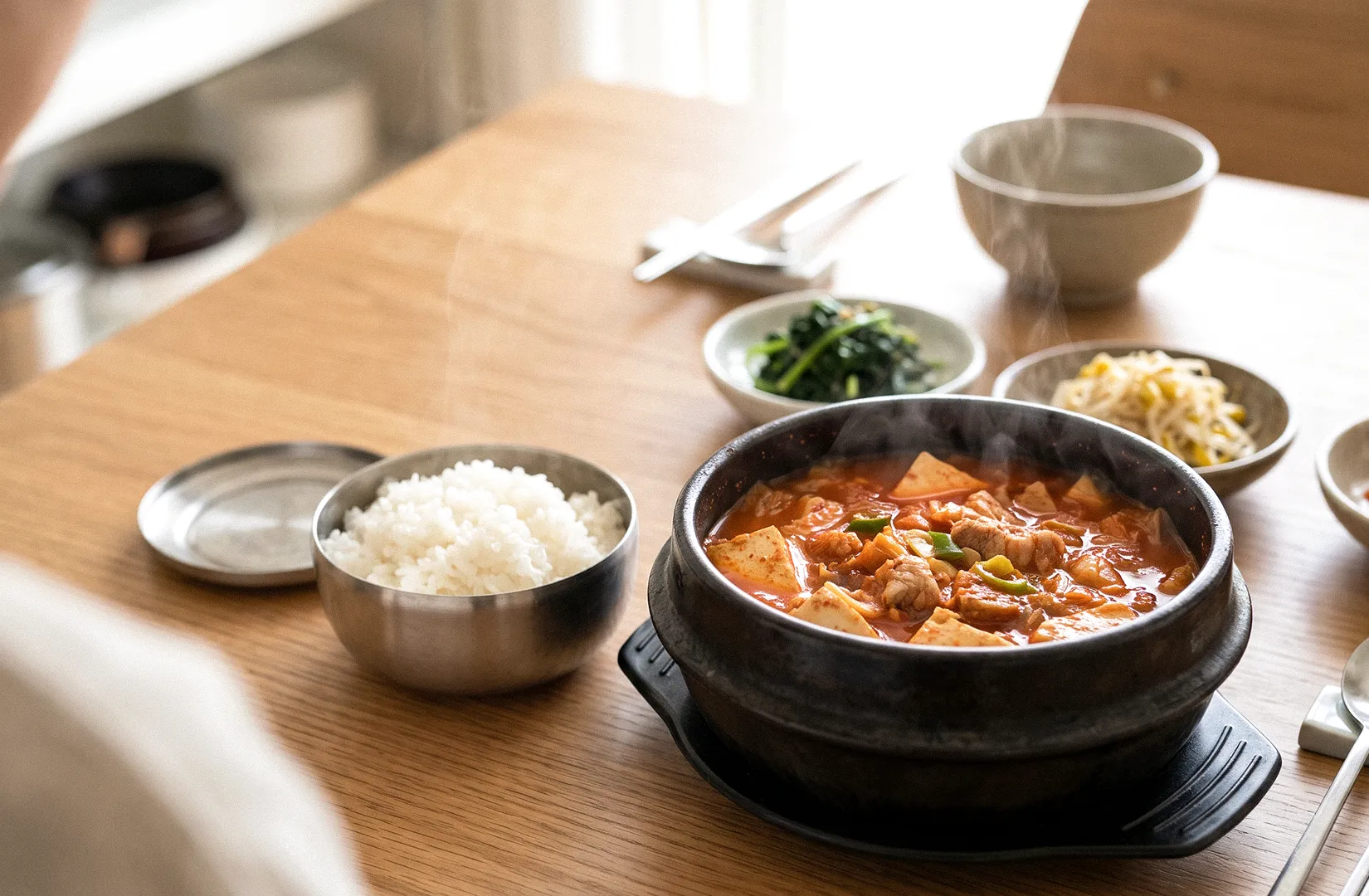
A bowl of white rice arrives beside a bubbling pot of kimchi jjigae. Nobody pays much attention to it. The stew gets the first look, with its red broth, soft tofu, and pieces of pork. The rice sits quietly at the side, waiting for someone to take a spoonful.
It's a familiar arrangement at Korean restaurants in Singapore, where rice often accompanies the dishes we actually came to eat.
Yet mention Korean rice dishes, and bibimbap is usually one of the first things that comes to mind. With its colourful vegetables, seasoned meat, egg, and gochujang, it's easy to understand why.
But Korean rice deserves to be appreciated beyond bibimbap, especially when some of its most satisfying roles are also its least noticeable.
Rice Doesn't Always Need to Be the Main Attraction
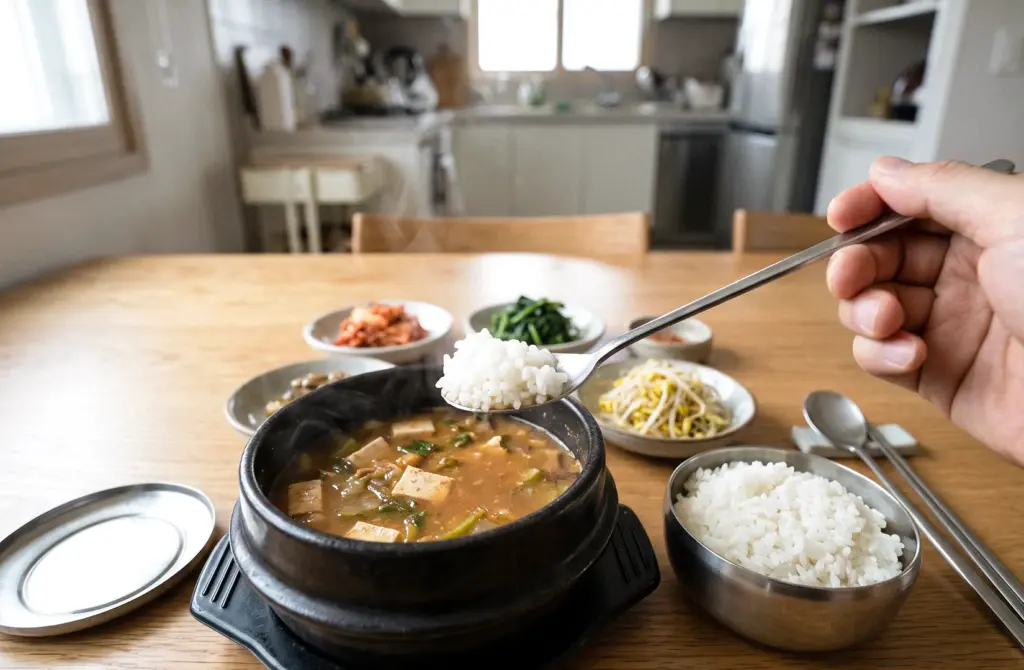
In Korean dining, a bowl of steamed rice, or bap, is often the foundation of an everyday meal. It sits alongside soups, stews, grilled meats, and banchan, allowing diners to move between different flavours without everything competing for attention.
Consider a spoonful of rice after a bite of spicy kimchi. Or the way plain rice softens the intensity of a rich doenjang jjigae.
Neither combination is particularly elaborate, but both explain why rice matters.
For Singapore diners, this relationship should feel familiar. Rice is already central to many local meals, from chicken rice to economical rice. The difference is often in how the meal is arranged.
Rather than having everything served over one plate of rice, a traditional Korean meal commonly keeps the rice separate, leaving diners to decide which dishes to pair with each spoonful.
It's a small distinction that changes how we experience the food.
Some of the Most Interesting Rice Dishes Are Less Familiar
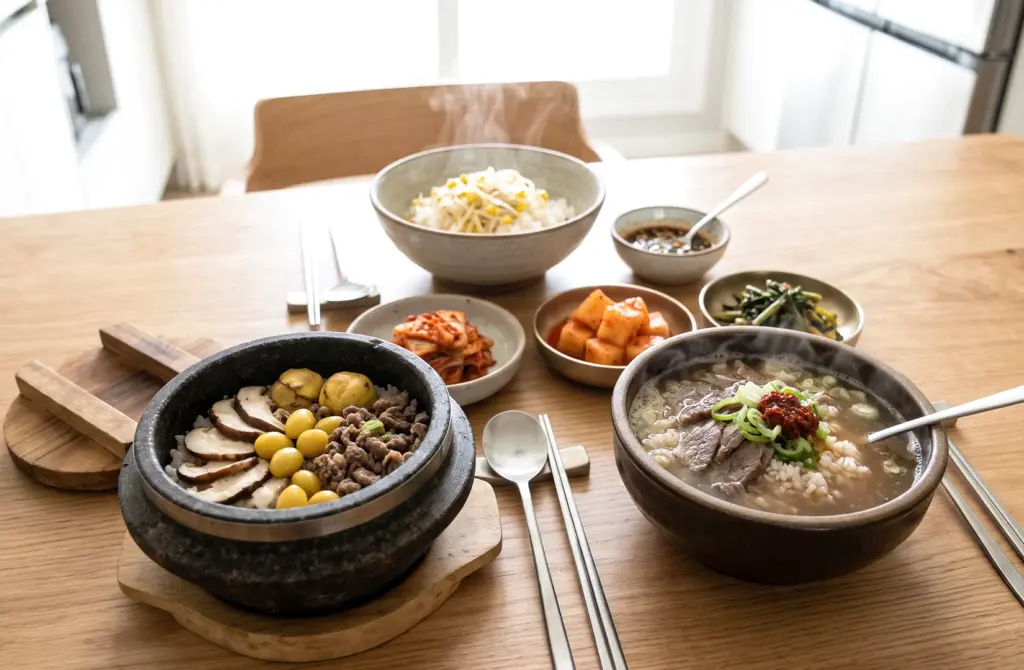
Bibimbap gets plenty of attention, but Korean cuisine has other rice preparations worth exploring.
Take gukbap, where rice is served with soup, sometimes already combined in the bowl. Depending on the variety, the broth might contain beef, pork, or other ingredients.
Then there's sotbap, rice cooked in a pot, sometimes with mushrooms, vegetables, seafood, or other toppings. The appeal comes partly from the rice itself, including the lightly toasted grains that can develop at the bottom.
Kongnamul bap, rice cooked with soybean sprouts, offers something quieter. Its mild flavour allows the accompanying seasoning sauce to make a noticeable difference.
These dishes don't necessarily have bibimbap's visual appeal. But that's precisely what makes them interesting. They remind us that Korean rice isn't always about mixing several ingredients into one impressive bowl. Sometimes, it's about texture, warmth, and the pleasure of something relatively simple.
Perhaps We're Too Quick to Overlook Plain Rice
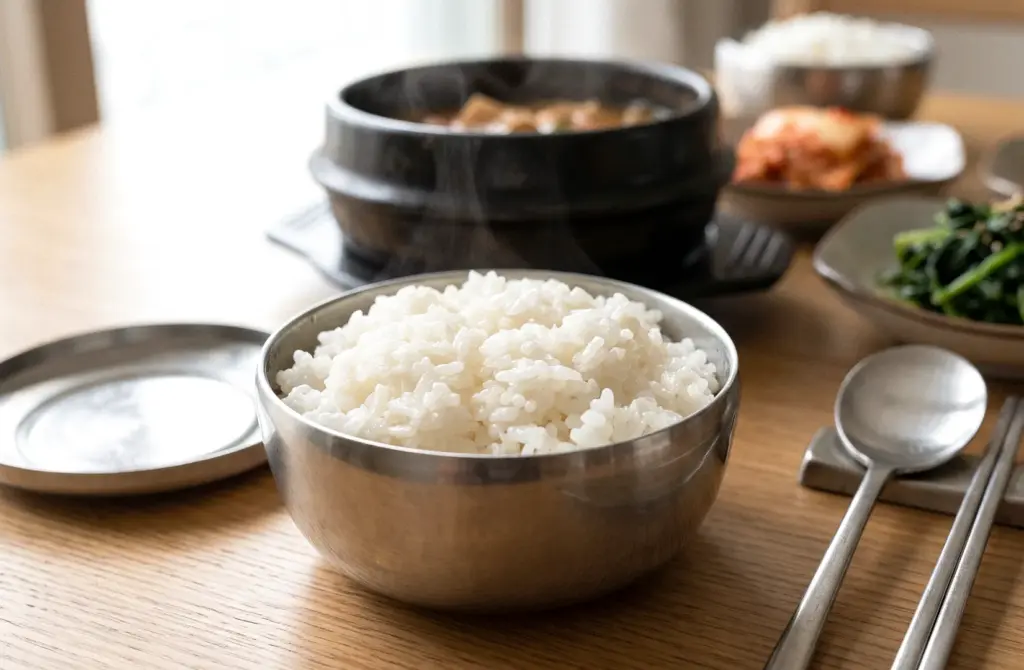
Singaporeans generally don't need convincing that rice can be satisfying. Still, when eating Korean food, it's easy to focus on the dishes that appear more distinctive.
The grilled pork belly gets discussed. The fried chicken gets photographed. The stew gets praised for its depth of flavour. Meanwhile, the rice is simply expected to be there.
Yet poorly cooked rice can affect an otherwise enjoyable meal. Grains that are too wet, too dry, or unpleasantly hard can make even a well-prepared stew less satisfying.
Good Korean-style short-grain rice has a pleasantly tender, slightly sticky texture that makes it easy to eat with a spoon while still retaining some definition between the grains. It may not be the most exciting part of the menu, but its quality deserves consideration.
The Quiet Importance of a Good Bowl of Rice
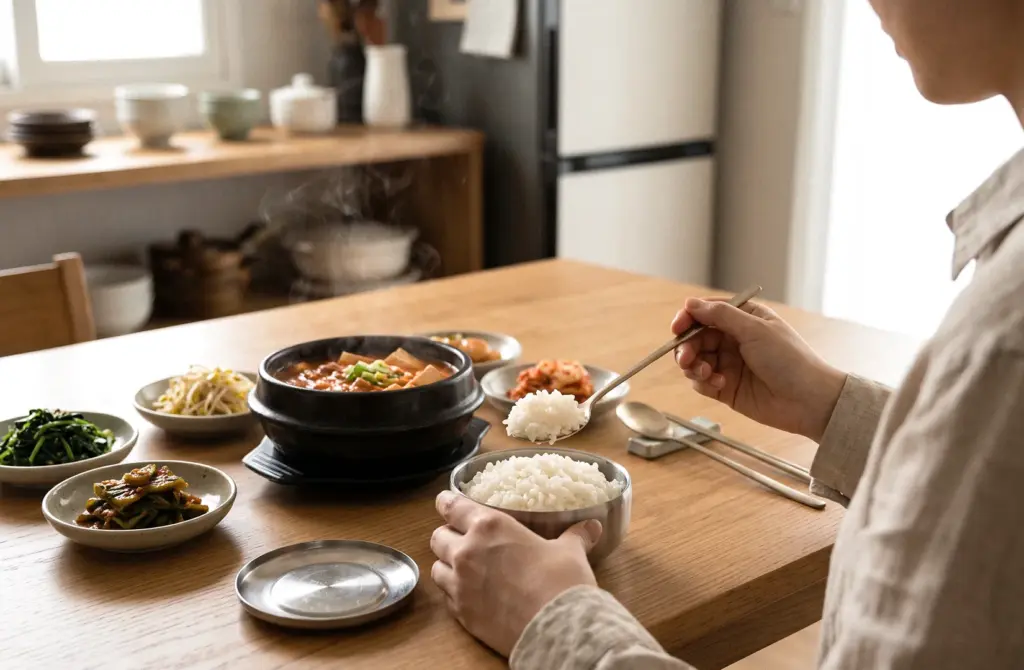
There's nothing wrong with bibimbap being someone's favourite Korean rice dish. Its combination of ingredients makes it approachable, satisfying, and endlessly adaptable.
But treating it as the main expression of Korean rice overlooks how much variety exists beyond it.
A bowl of rice beside a comforting stew, a pot of freshly cooked sotbap, or a simple serving of kongnamul bap can be just as revealing about Korean dining habits. Perhaps the next time rice arrives alongside a Korean meal, it's worth noticing its texture before reaching for the main dish.
After all, the most ordinary thing on the table might be doing more work than we realise.