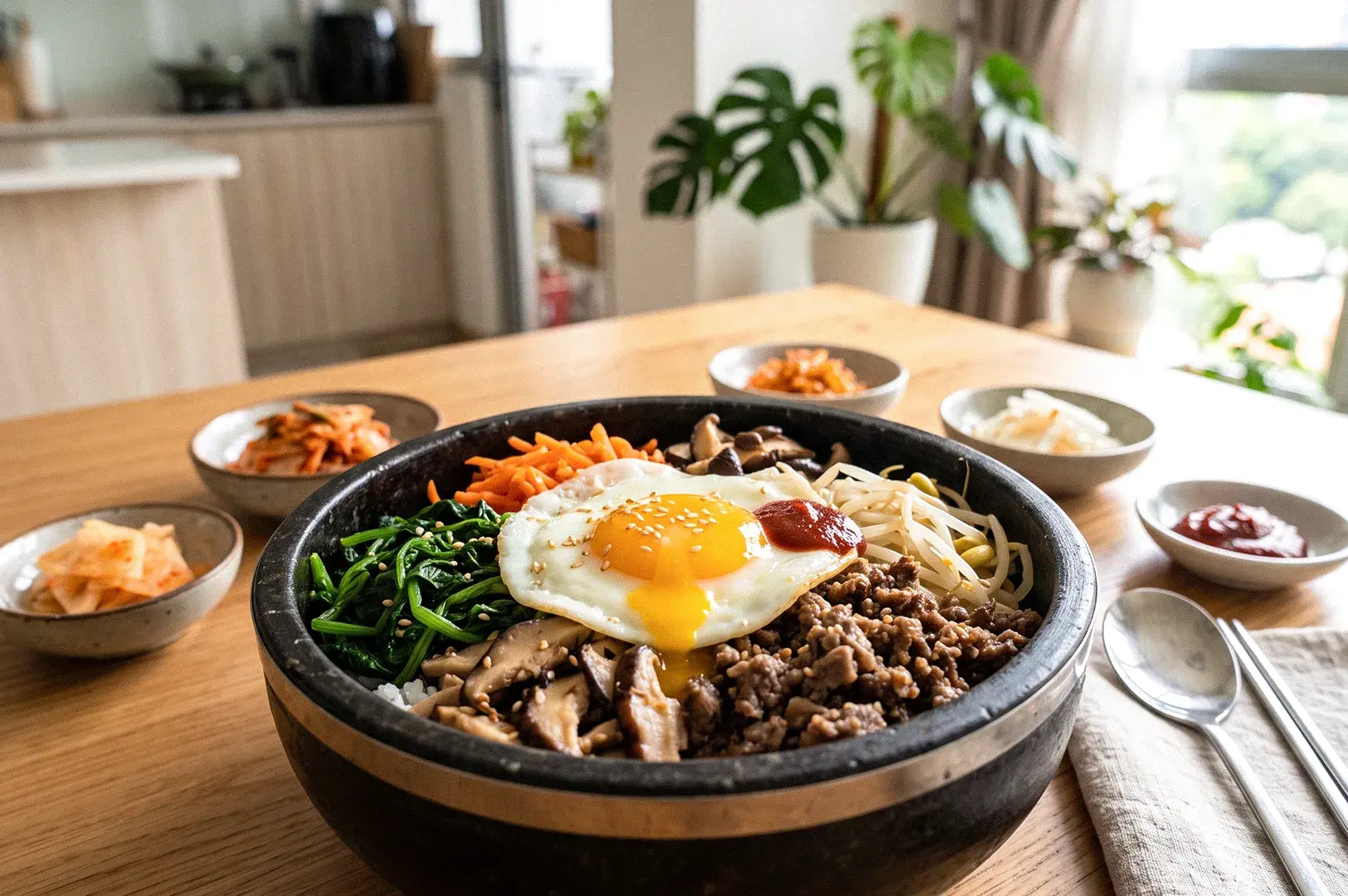
A bowl of bibimbap usually arrives looking finished. Spinach sits in one corner, shredded carrots in another. Mushrooms, sprouts, and beef each have their own small territory, and an egg rests on top.
Then you're expected to stir it all together.
What interests me about this dish is that its name tells you what to do. The careful arrangement is only the first half of the meal. In this guide, I'll walk through what bibimbap means, which bibimbap ingredients matter most, and how to make bibimbap at home in Singapore, one component at a time. I'll also cover the mistakes worth avoiding and the substitutions that still respect the spirit of the dish.
What Bibimbap Means: Mixed Rice
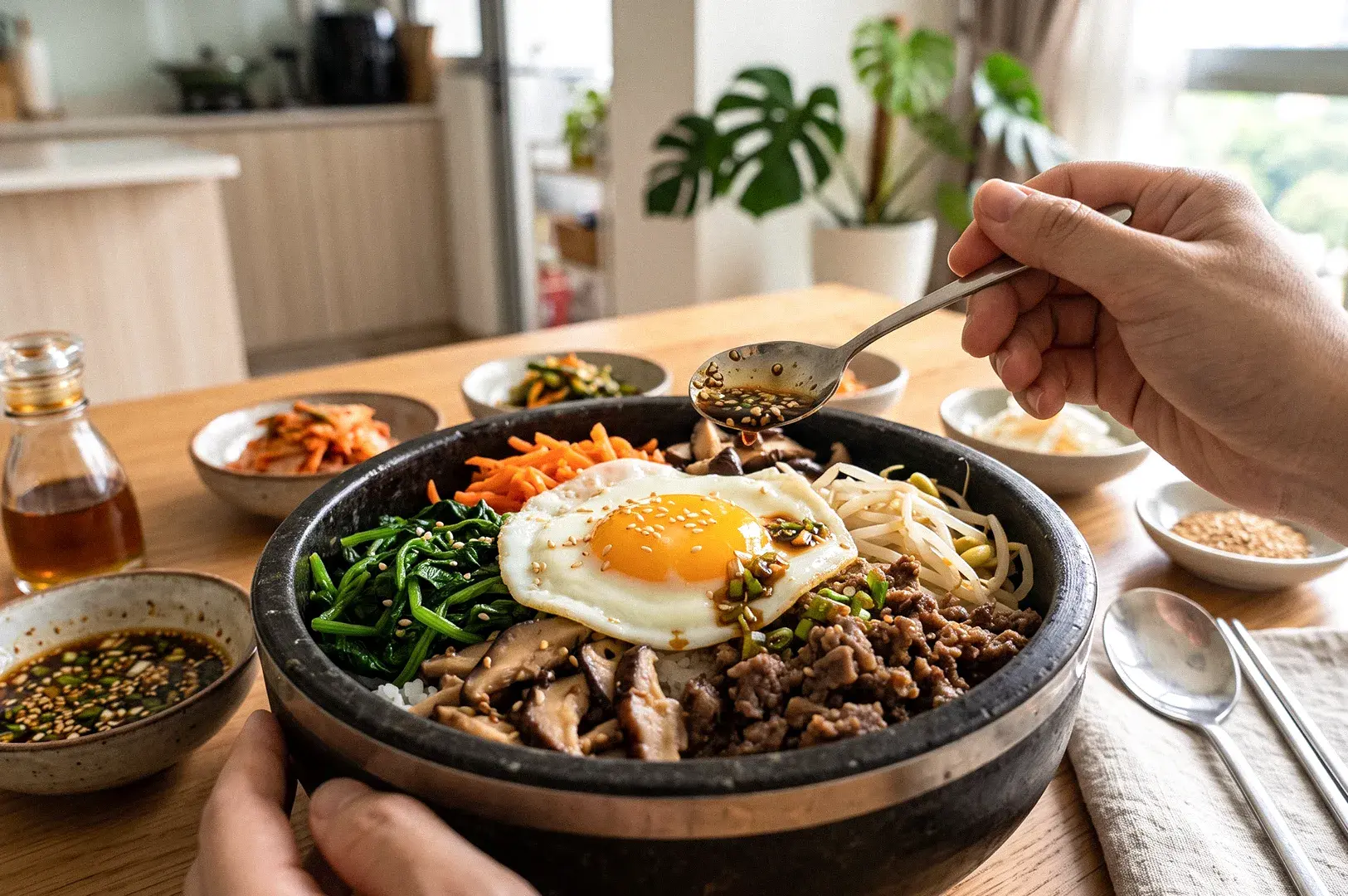
Bibimbap (비빔밥) joins two Korean words. Bibim means mixing or mixed, and bap means cooked rice. Put together, it means mixed rice.
One of the most beloved Korean dishes, it is cooked rice combined with assorted vegetables and seasonings, often with marinated meat and egg. Depending on what goes in, the flavors move between savory, nutty, earthy, and spicy. Mixing is what spreads the seasoning through every grain.
Its history is less tidy than the bowl. You may hear that bibimbap was made for royalty, or created to use up leftovers. The truth is that its precise origins are debated. Proposed explanations include links to royal cuisine and to food connected with ancestral rites, and the Korea Tourism Organization notes that even the origins of modern Jeonju bibimbap remain unclear. I find that uncertainty more honest than any single origin story.
Jeonju and Other Regional Traditions
Jeonju is the city most closely associated with bibimbap. According to the Korea Tourism Organization, its version may include rice cooked in beef-bone or bean-sprout broth, seasoned vegetables, beef, egg, and hwangpomuk, a yellow mung bean jelly. Not every Jeonju restaurant uses the same ingredients, and an everyday household bowl is often much simpler.
In Andong, a related dish called heotjesabap is seasoned with soy sauce, sesame oil, and sesame seeds instead of chili paste. That detail matters. Mild bibimbap isn't a modern shortcut. It has its own place in Korean food traditions.
Bibimbap Ingredients: What You'll Need
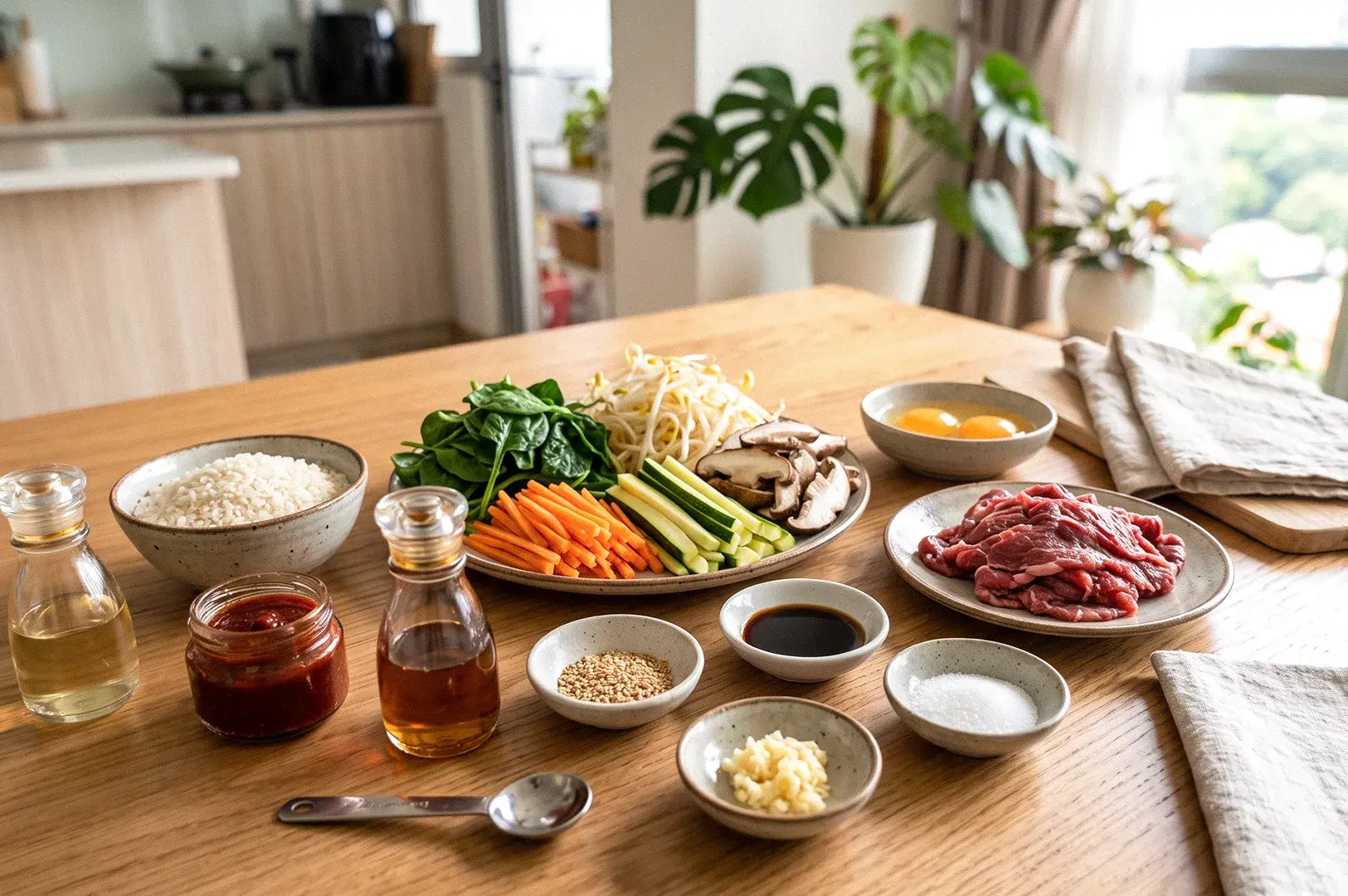
Most traditional Korean rice bowl preparations rest on five parts: rice, seasoned vegetables, a protein, a sauce, and a finishing touch of sesame. Regional versions may also include fernbrake (gosari) or root vegetables like bellflower root (doraji), but a good home bowl can be built with fewer vegetables.
The quantities below serve two. Think of them as a starting point and adjust to your own taste.
Rice and vegetables
1 cup uncooked short grain rice
100 g baby spinach
100 g soybean sprouts
1 small carrot, cut into thin matchsticks or shredded
½ medium zucchini, sliced into thin strips
100 g fresh mushrooms (shiitake work well), sliced
Neutral cooking oil, as needed
2 tsp toasted sesame oil, divided
1 tsp sesame seeds
Beef and eggs
150 to 200 g thinly sliced beef (a tender cut such as sirloin or flank)
1 tablespoon soy sauce
1 tsp minced garlic
1 tsp sugar or honey
1 tsp toasted sesame oil
2 eggs
Bibimbap sauce
1 tablespoon gochujang
1 tsp toasted sesame oil
1 tsp sugar or honey
1 to 2 tsp water
½ tsp rice vinegar (optional)
½ tsp toasted sesame seeds
Bean Sprouts: Soybean or Mung Bean Sprouts?
Both are sold as "bean sprouts," but they aren't the same. Soybean sprouts (kongnamul) have larger yellow heads, thicker stems, and a nutty, umami flavor. They're closely associated with many Korean bibimbap preparations.
Mung bean sprouts (sukju-namul) are smaller and more delicate, and you'll recognize them from plenty of local cooking. They work when soybean sprouts aren't available. Just expect a lighter flavor and softer texture.
Choosing Your Rice
Short grain white rice is the conventional choice because its slightly cohesive texture holds all the vegetables and sauce together. Japanese short grain rice works well too.
One small trap: "sushi rice" can mean the rice variety or rice already seasoned with vinegar. For bibimbap, use plain cooked rice. Brown rice is a fine alternative if you like a chewier bite, and jasmine rice will do, though its grains stay more separate.
Shopping in Singapore
You don't need a specialty shop for most of this. FairPrice's online catalogue has listed CJ Haechandle Gochujang Red Pepper Paste (500 g) at S$6.01 and CJ Bibigo Korean Sesame Oil (110 ml) at S$3.16. Prices and stock change, so check before you go. Vegetables and beef come easily from supermarkets or wet markets. Fernbrake and bellflower root may take more searching.
How to Make Bibimbap, Step by Step
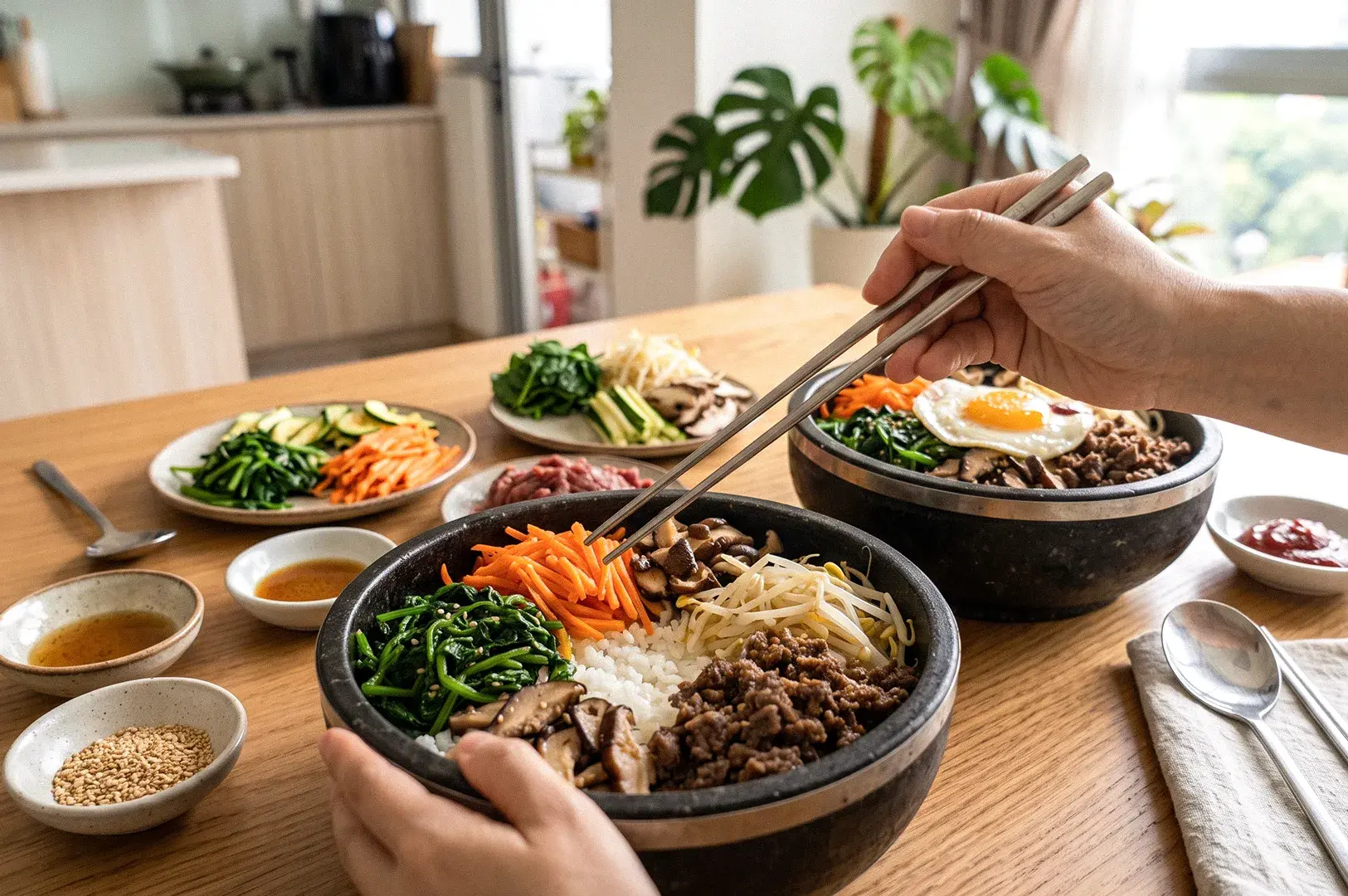
This bibimbap recipe looks long on paper, but much of it happens side by side. While one thing cooks, you prepare the next.
Cook the rice. Wash and cook it according to the package directions. A rice cooker makes this easy, though a saucepan works. While the rice finishes cooking, move on to the vegetables, beef, and sauce. The rice should still be warm when you assemble.
Prepare the vegetables one at a time. Blanch the spinach briefly, cool it, then squeeze out the excess water before seasoning it lightly. Cook the soybean sprouts until tender, drain, and season. Stir fry the carrots over medium heat in a little neutral oil until just softened. Sauté the zucchini until tender but not limp. Cook the mushrooms in the same pan until tender and their excess liquid has evaporated. Set aside each vegetable separately.
Cook the beef. Combine the thinly sliced marinated meat with soy sauce, garlic, sugar or honey, and sesame oil. Cook it in a skillet over medium-high heat until fully cooked. Work in batches if needed. A crowded pan makes the meat release liquid and steam instead of browning.
Make the gochujang sauce. In a small bowl, stir together the gochujang, sesame oil, sweetener, and water. Add rice vinegar and sesame seeds if you like. You want the spicy gochujang sauce loose enough to spread through the rice. Gochujang brands vary in sweetness, salt, and heat, so taste as you go.
Fry the eggs. A fried egg sunny side up is the familiar choice, and some diners prefer the richness of a soft raw egg yolk mixed through the rice. A fully cooked egg is just as welcome. Cook it the way you prefer, with care for food safety.
Assemble the Korean rice bowl. Divide the cooked rice between two bowls. Arrange all the vegetables and beef as meat toppings in separate sections, place an egg on top, and finish with sesame seeds and a few drops of toasted sesame oil. Serve the sauce on the side.
Mix before you eat. Add sauce a little at a time, then stir everything together with a spoon. Taste, adjust, and stir again.
Making a Milder Bibimbap Sauce
Gochujang is a fermented red chili paste, and it brings heat, sweetness, saltiness, savory depth, and body all at once. That's why ordinary chili sauce isn't a true substitute. The fermented character is part of what it does in the bowl.
If you'd prefer no chili, try soy sauce, toasted sesame oil, a little sugar or honey, and optional garlic and sesame seeds. It's a practical home seasoning, not the one definitive version, and it sits comfortably beside that Andong tradition.
Recipe Notes
Green onion can be added as a garnish if you'd like a little freshness and color. Slice it thinly and scatter it over the assembled bowl before serving. It's a small addition that some cooks swear by, though it isn't part of every preparation.
Why Bibimbap Vegetables Are Cooked Separately
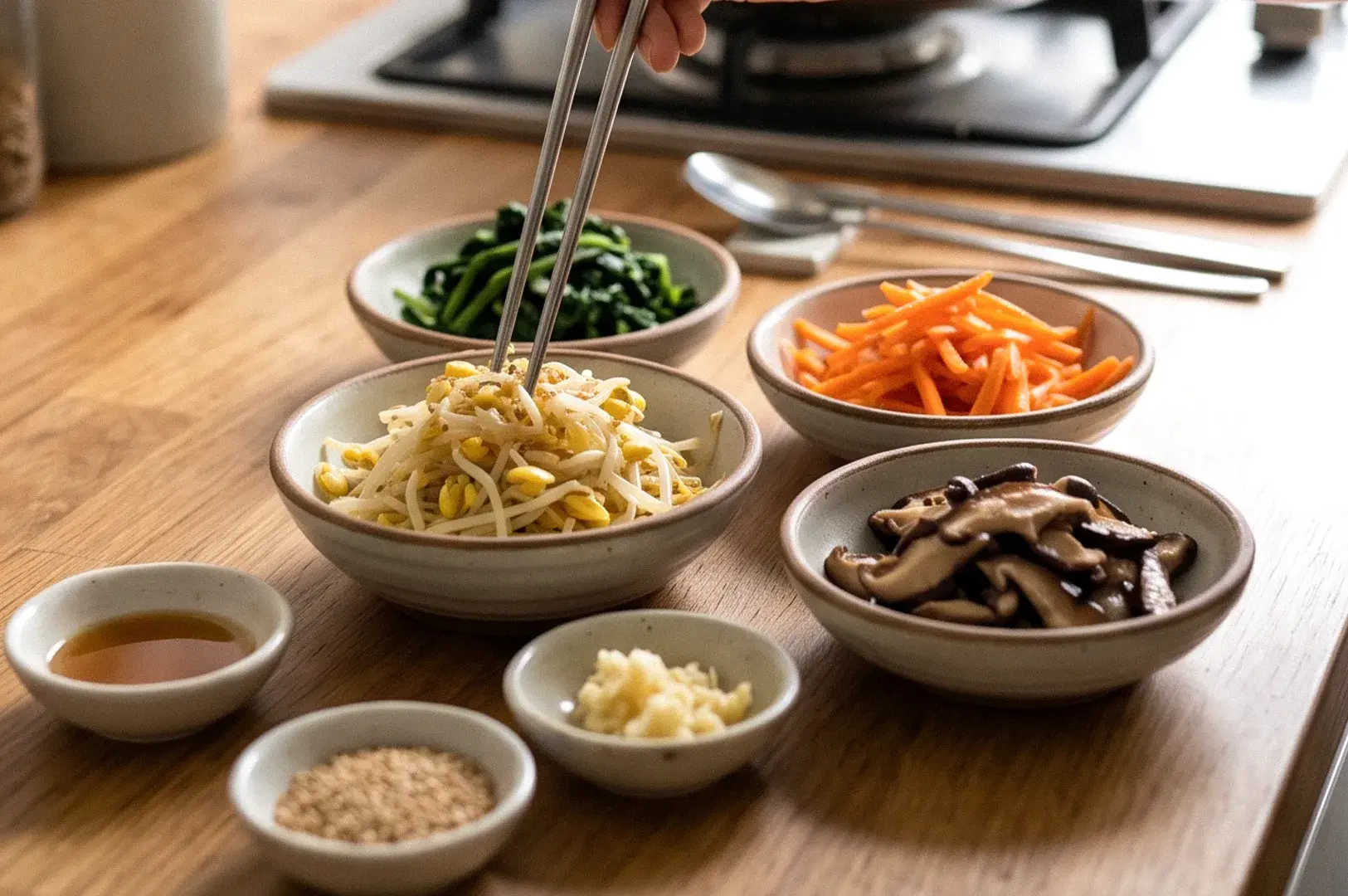
This is the part that makes me slow down. In Korean cooking, namul refers to vegetable and plant dishes, usually seasoned after blanching, boiling, or sautéing. Spinach, sprouts, root vegetables, and greens can all become namul.
Each vegetable asks for something different. Spinach wants a quick dip in hot water. Mushrooms need time for their moisture to cook off. Treated separately, each one keeps its own texture and aroma, so the final bowl has contrast instead of sameness. The Korea Tourism Organization highlights this separate preparation as an important feature of Jeonju bibimbap.
You don't need a dozen vegetables to learn the principle. Three to five assorted vegetables, each cooked with a little attention, make for an absolutely delicious meal.
Regular Bowl or Stone Pot?
A regular bowl is all you need. The stone-pot version, dolsot bibimbap (돌솥비빔밥), serves the rice in a heated stone pot. All the veggies and ingredients stay very hot, and the rice touching the pot can form a crisp layer.
It's a lovely variation, but it needs proper cookware. Never put an ordinary ceramic bowl over a flame. Only use vessels made for direct heat. I'd suggest mastering the regular bowl first.
Substitutions: Assorted Vegetables, Proteins, and Options for Meat Eaters
Bibimbap bends easily, though substitutions change the bowl rather than copy it.
Mung bean sprouts for soybean sprouts: more delicate.
Button mushrooms for shiitake: milder.
Choy sum for spinach: a different flavor and stem texture.
Other vegetables for zucchini: anything that sautés well.
Brown rice for white rice: chewier.
Beef appears in many established versions, including Jeonju's, but it isn't required. Meat eaters can swap in chicken or ground beef, which changes the texture and look. For a meat-free bowl, firm tofu works well.
Halal and Vegetarian Notes
Rice, vegetables, and beef don't make a bowl halal on their own. Halal cooks should choose appropriately certified meat and check labels on sauces and marinades rather than assuming every Korean condiment is suitable. MUIS provides official halal guidance and recognizes eligible foreign certification bodies for imported products.
For a vegetarian bowl, replace the beef with tofu or extra vegetables. For a vegan one, leave out the egg as well. Check prepared sauces and side dishes too, since some kimchi contains fish sauce or fermented seafood.
Bibimbap in Singapore

Before you cook, it can help to taste how others interpret the dish. OMOOMO at Kallang Wave Mall (1 Stadium Place, #01-40) lists a Beef Bibimbab at S$11.50 on its online ordering menu, alongside chicken versions. Note the spelling bibimbab. You'll see it on local menus, and it refers to the same dish.
If you'd rather order than cook, our guide to what travels well when you order Korean food for delivery in Singapore explains why it's worth mixing bibimbap only once it reaches you.
How to Eat Bibimbap: Absolutely Delicious When Mixed Right
Here's the simple part. Add the spicy bibimbap sauce a spoonful at a time, then stir. Keep going until the rice bowl topped with all its components looks evenly coated. Taste, adjust, and stir again. The mixing isn't optional. It's what turns a rice bowl topped with separate ingredients into one of the most satisfying Korean dishes you can make at home.
Bibimbap Blunders: What Not To Do
Leaving water in the spinach. It seeps into the rice. Squeeze it well.
Overcrowding the pan. The beef steams instead of browning.
Using pre-seasoned sushi rice. The vinegar pulls the flavor in a direction the dish doesn't need.
Adding all the sauce at once. It can drown the vegetables. Go gradually.
Too much sesame oil. A little connects the flavors. A lot takes over.
Overcooking the vegetables. Texture contrast is half the point.
Bringing It All Together: The Bibimbap Moment
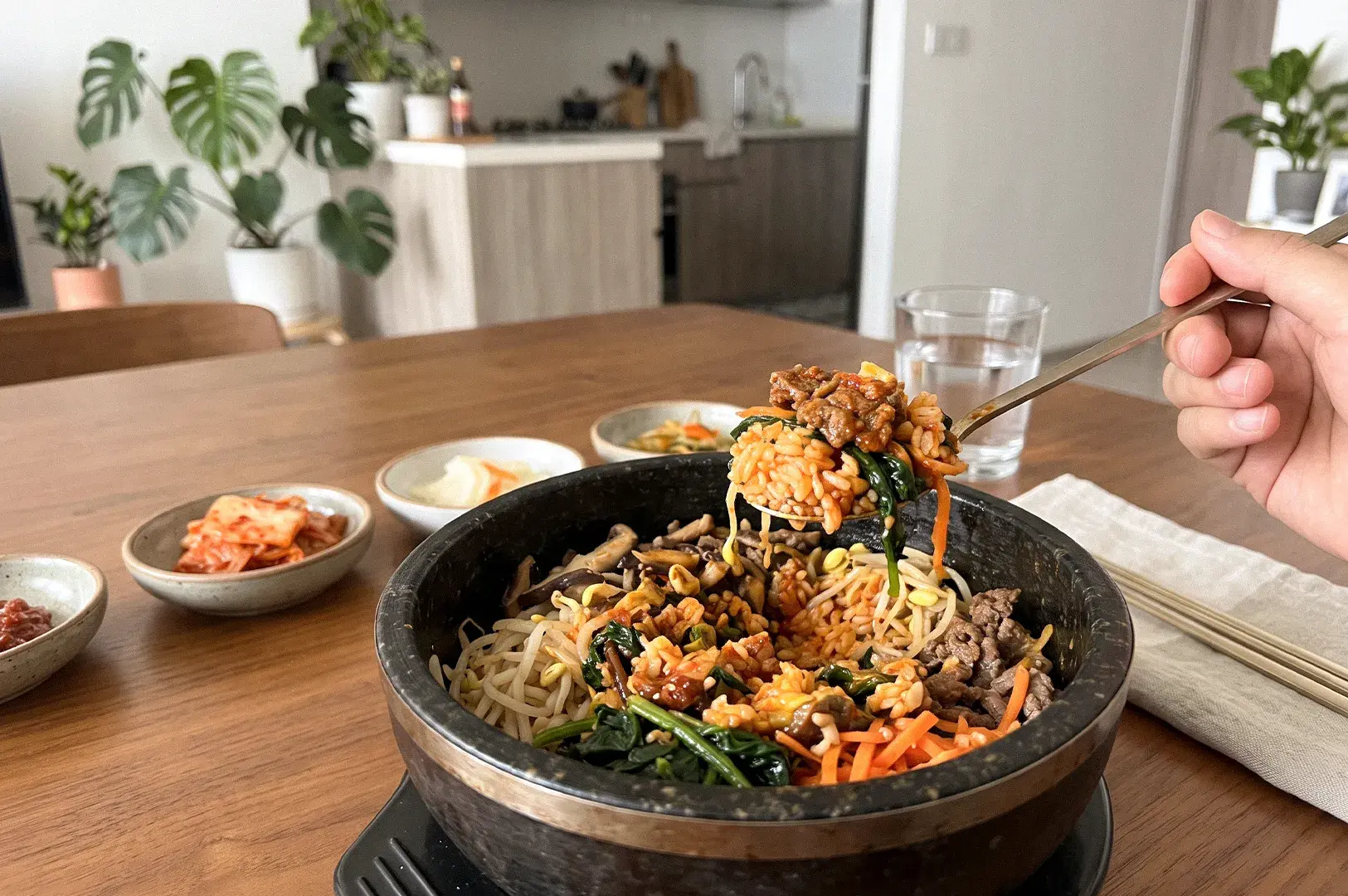
What stays with me about bibimbap is how much care goes into keeping things apart, only to bring them together at the very end. Each vegetable is cooked on its own terms, then everything meets in one bowl, under one spoon.
Start simple. Three vegetables, a fried egg, a spoonful of sauce. Then stir, and taste what the mixing does.