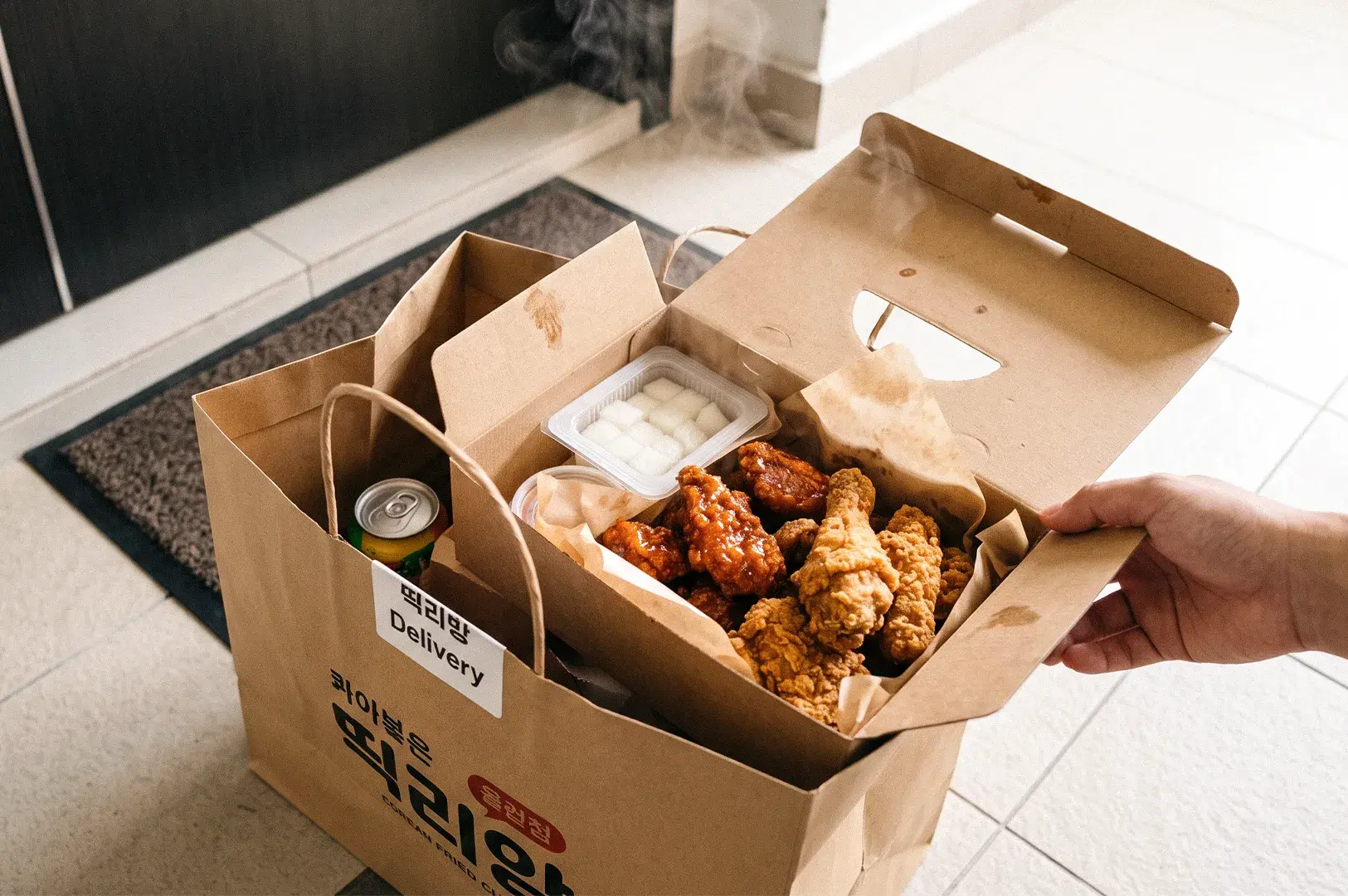
The bag lands at your doorstep. You open the fried chicken box and a small cloud of steam drifts up. Twenty minutes ago, that steam was part of the crunch.
Korean food for delivery covers far more than fried chicken. Singapore menus also offer rice bowls, bubbling hearty stews, marinated premium cuts of meats, noodles, seaweed snacks, and party sets. Each one handles the journey to your home differently.
This guide covers what to order, what to expect when it arrives, and what to check before you hit checkout.
What Korean Food Is Good for Delivery?
Three things happen inside a delivery pot. First, hot food gives off steam. When it condenses on fried or pan-crisped surfaces, the crunch softens. Second, starches like rice, noodles, and rice cakes keep absorbing sauce on the way over. Third, food cools, which changes both taste and safety.
Here's a quick look at how common dishes hold up:
Dish | How it travels | What to do |
|---|---|---|
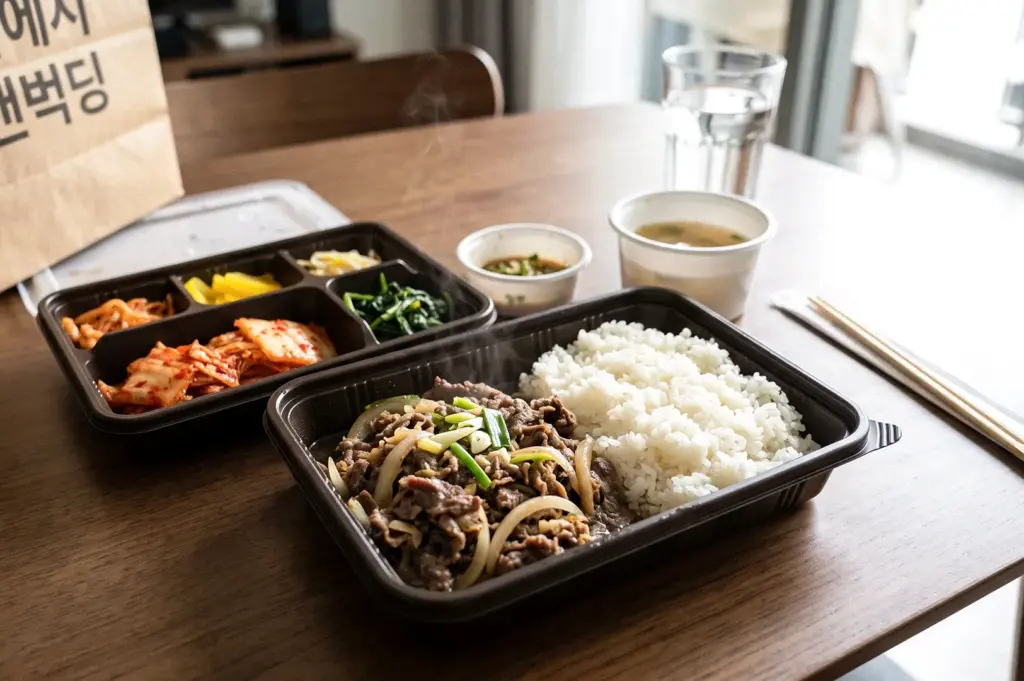
Bulgogi with rice | Generally reliable | Keep fresh sides separate |
Bibimbap | Sauce soaks into rice | Mix just before eating |
Kimchi jjigae | Well if sealed properly | Check the lid on arrival |
Korean fried chicken | Varies | Open the box immediately |
Tteokbokki | Rice cakes firm up when cool | Eat it first |
Seafood pancake | Crisp edges soften | Choose shorter delivery distances |
Kimchi pancake | Prepared fresh, softens slightly | Enjoy soon after delivery |
None of this is a guarantee. Packaging, prep time, and the length of the ride all play a role.
Korean Fried Chicken: The Crispiness Question
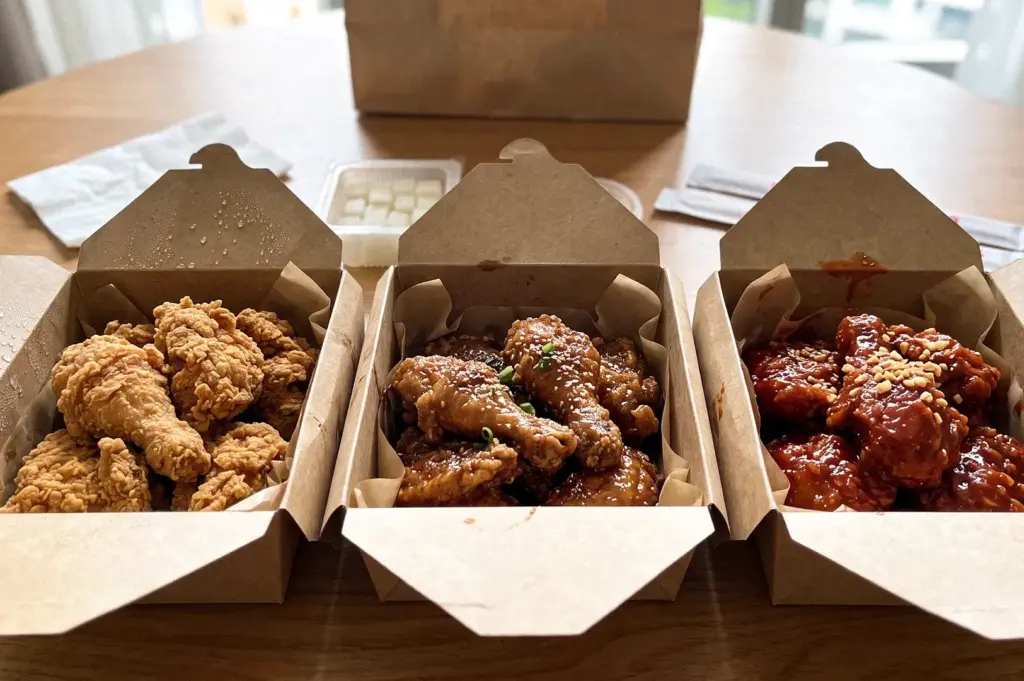
Korean fried chicken is famous for its crunch, and much of that comes from double-frying. Korean cooking educator Maangchi explains that the first fry cooks the meat, and the second fry, at a higher temperature, finishes the crust.
Double-frying creates crispness in the kitchen. It doesn't preserve it during transit. Your flavor choice affects how the chicken holds up:
Original or plain: No sauce, so crispness is the whole point. Most affected by steam.
Soy garlic: A savory-sweet glaze that coats the skin throughout the ride.
Yangnyeom: Sweet, spicy, and tangy, often gochujang-based.
If a restaurant lets you order sauce on the side, take it. Toss it at home and you control the timing. Seoul Yummy's chicken menu lists Soy Garlic, Sweet and Spicy, Honey Garlic, and Supa Hot as options. Open the box as soon as it arrives. Letting that steam escape is free, and it helps.
Hearty Korean Stews for a Meal at Home
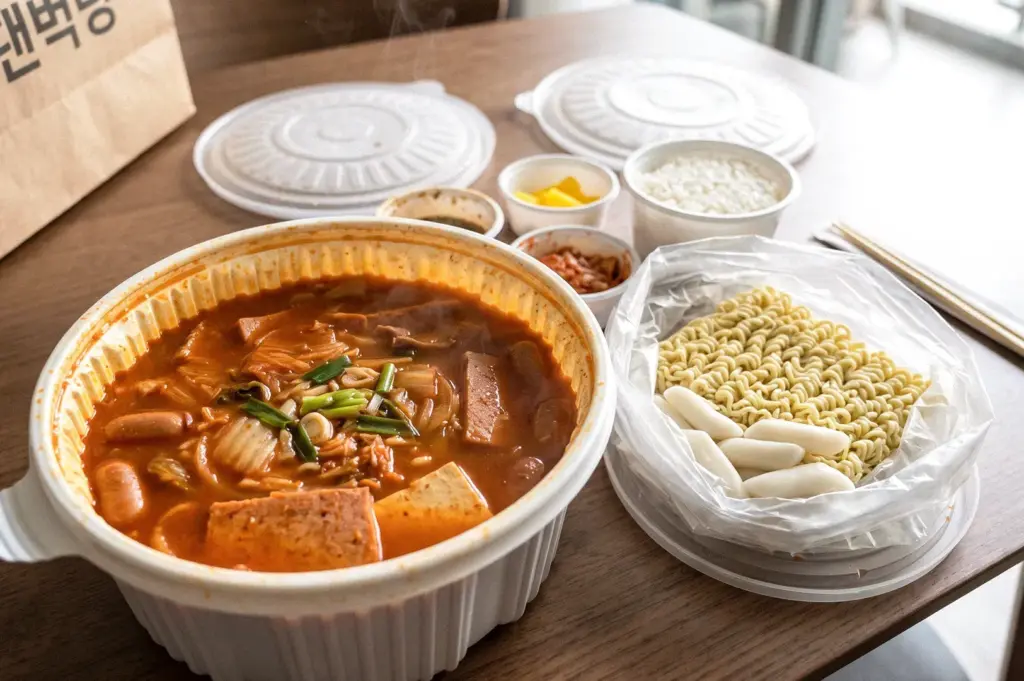
If fried chicken worries about every minute, stew is the dish that copes. A good jjigae gets its depth from long cooking and fermented ingredients, not from arriving piping hot.
Kimchi jjigae. Built on kimchi, usually with pork and tofu. The Korea Tourism Organization notes that aged, sour kimchi is key because fermentation develops the stew's backbone flavor.
Sundubu jjigae (spicy tofu stew). Soft tofu stew in seafood or meat versions. The tofu may break up during the trip, but the taste holds.
Doenjang jjigae. A savory soybean paste stew, often with tofu and seasoned vegetables. A good pick if you want depth without chili heat.
Budae jjigae (army stew). Sausages, kimchi, noodles, and various add-ins. Because noodles and rice cakes absorb broth quickly, ask whether they can be packed separately for bigger orders.
Seoul Yummy's menu illustrates how much one dish can vary: a Spicy Seafood Army Stew uses clams, octopus, and prawns, while a Jja Jang Pork Army Stew uses a non-spicy jjajang base. Always read the description, not just the name. And always check whether rice is included. A stew without rice is an incomplete meal.
Korean BBQ Delivery: What to Expect
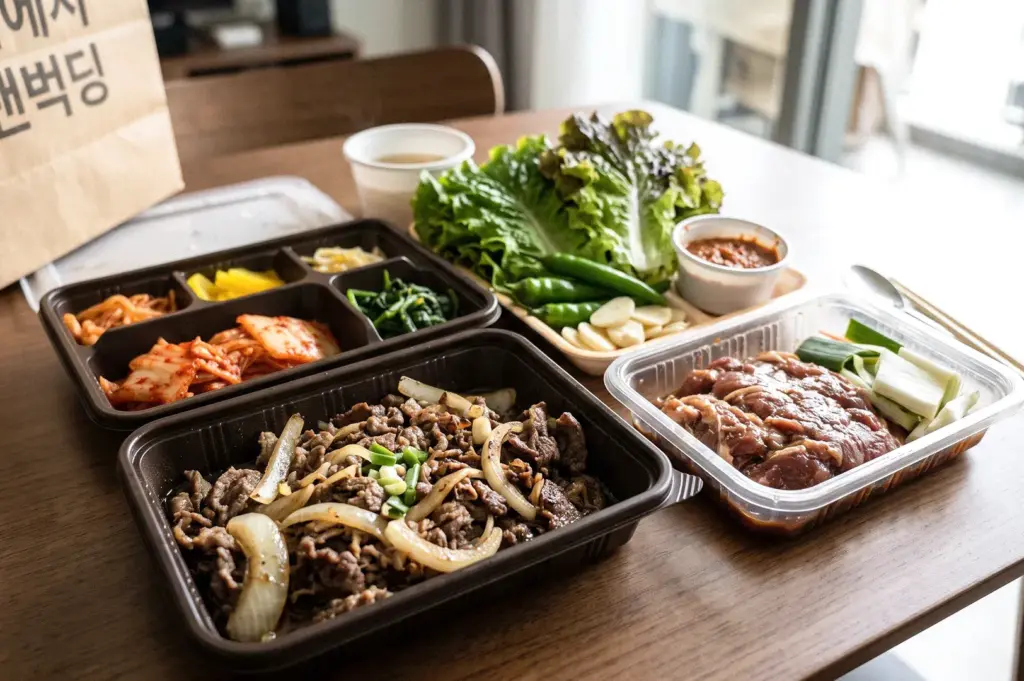
"Korean BBQ delivery" can mean two different things.
Ready-to-eat: Meat is already cooked and arrives with rice and sides. Easy for solo meals. The char and grilled texture will change a little on the way over.
Cook-at-home: Raw or marinated meat, with vegetables and sauces. You need a grill or pan, but you get to eat it straight off the heat.
Neither option recreates the restaurant table. That's fine, as long as you know what you're ordering.
Terms worth knowing: samgyeopsal is pork belly, grilled plain. Bulgogi is thinly sliced marinated beef strips, seasoned with soy sauce, garlic, sesame oil, sugar, and sometimes pear. Galbi refers to rib cuts like beef short ribs. Ajumma's Signature Beef Kalbi is one Singapore example.
For cook-at-home sets, keep raw meat away from ready-to-eat food, use separate utensils, and cook it through. Check whether lettuce wraps (ssam), fresh vegetables, and ssamjang dipping paste are included. Without them, the meal feels incomplete.
Putting Together a Korean Meal at Home
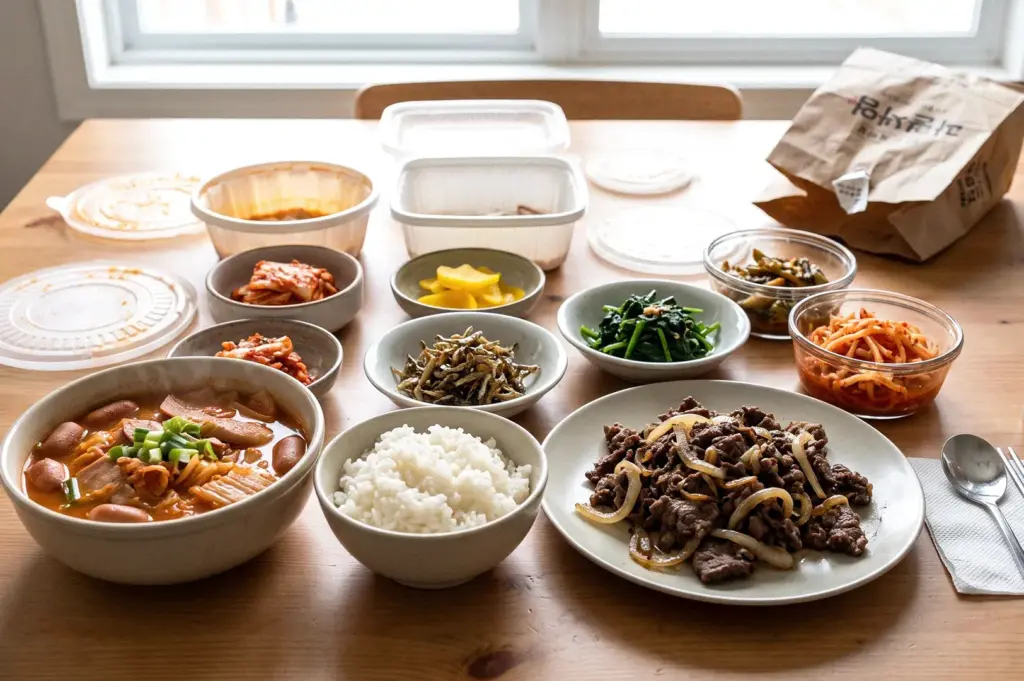
A Korean meal is built on balance: rice, a stew or soup, and a few side dishes. Ordering three kinds of meat misses the point.
About banchan: these small side dishes are central to Korean dining, but they don't automatically come with delivery. Some sets include a fixed selection, some charge extra, and some skip them entirely. Read the meal description before you assume.
Some practical combinations to consider:
Solo lunch: Bibimbap or a bulgogi rice bowl, which pair well with seaweed snacks for added texture and nutrition.
Two people: Fried chicken, one jjigae, two rice portions, and a kimchi pancake as a nutritious side to complement the meal.
Family dinner: One mild dish like bulgogi, one spicy dish, rice, and sides including prepared banchan such as seaweed salad.
Group gathering: A chicken party set with additional mains and rice. JINJJA Chicken offers party sets for this.
Pick contrasting dishes rather than similar ones. A steamed egg (gyeranjjim) is a nice, soft companion to something spicy.
What to Check Before You Order
Run through this before checkout:
Is rice included with stews and meats?
Is banchan in the set, or is it extra?
Is this a single serving or a sharing portion?
Is the Korea BBQ cooked or raw?
Are sauces and broth packed separately?
Any allergens like pork, seafood, egg, or dairy?
What are the delivery fees and minimum spend?
On halal and dietary needs: Korean food can include pork, seafood-based seasonings, and cooking alcohol. JINJJA Chicken states its outlets are halal-certified, but verify the specific branch through the MUIS directory. Removing pork from a dish doesn't make it halal. House made kimchi often contains fish sauce or fermented seafood, so vegetarians should check carefully.
On food safety: The Singapore Food Agency identifies 5°C to 60°C as the temperature danger zone. Eat hot meals promptly, refrigerate leftovers quickly, and reheat only once. A meal that feels slightly warm is not necessarily safe.
Delivering Answers to Your Korean Food Questions
What Korean food is best for delivery in Singapore?
Cooked marinated meats with rice, bibimbap, and well-sealed stews tend to travel well. Fried chicken, pancakes, and kimchi pancake are more time-sensitive.Does Korean fried chicken stay crispy during delivery?
Not always. Get sauce on the side if you can, and open the box the moment it arrives.Can you order Korean BBQ ready to eat?
Yes. Many menus offer cooked bulgogi or galbi with rice. Some sellers offer raw sets for home grilling. Check which one you're buying.Does Korean food delivery come with banchan?
It depends on the restaurant and the set. Always check the meal description.What if I don't like spicy food?
Bulgogi, doenjang jjigae, soy garlic chicken, and jjajang-based army stew are good starting points.
A Bite of Authentic Korean Food and a Sip of Hearty Stews
Good Korean food delivery comes down to knowing which dishes travel well and what to check before you order. Start with the crispy stuff and don't let it sit. For more guides on Korean dishes, ingredients, and dining culture, browse Best Korean Food.
Enjoy your meal with a traditional Korean drink, perhaps makgeolli, and share the experience with friends. Whether you're dining at home or picking up takeaway from Clarke Quay, the quality and range of Korean cuisine delivered to your door can bring the perfect spread of flavors and textures to your table.