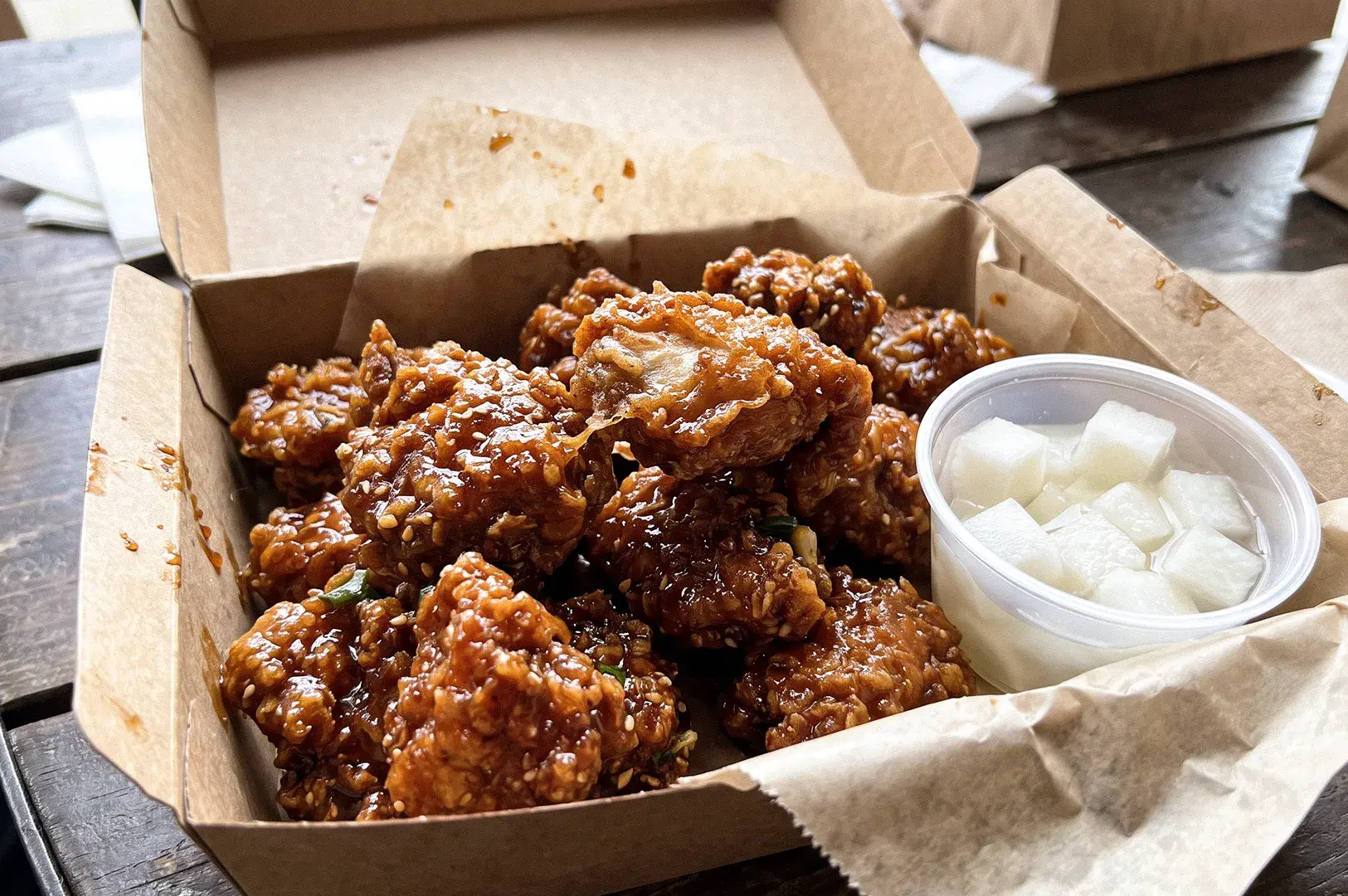
The box opens and the first thing you notice is the sound. A piece of chicken taps against another, and the coating sounds almost like glass. There is a small dish of cubed white radish tucked in the corner, cold and sharp against all that heat.
Many people assume Korean fried chicken is simply regular fried chicken with a Korean sauce poured over it. That isn't quite right. Its character comes from several things working together: the coating, the way it is fried, the sauces, and the way people eat it.
In this guide, we look at each of those pieces. By the end, you'll know why two plates of Korean fried chicken can taste completely different, and how to order with more confidence in Singapore. Whether you are dining with a friend or enjoying a solo treat, this knowledge will help.
What Makes Korean Fried Chicken Different?
No single ingredient makes chicken "Korean." Instead, there is a recognizable combination of habits:
Frying: Double-frying is common, though not universal.
Coating: Recipes often use potato starch, corn starch, flour, or a mix of these, ensuring the chicken is evenly coated for that perfect crunch.
Texture: Many versions aim for a thin, brittle crust rather than a thick, rugged one, resulting in tender meat inside.
Seasoning: Chicken may be plain, glazed, spicy, savory-sweet, or dusted with powder.
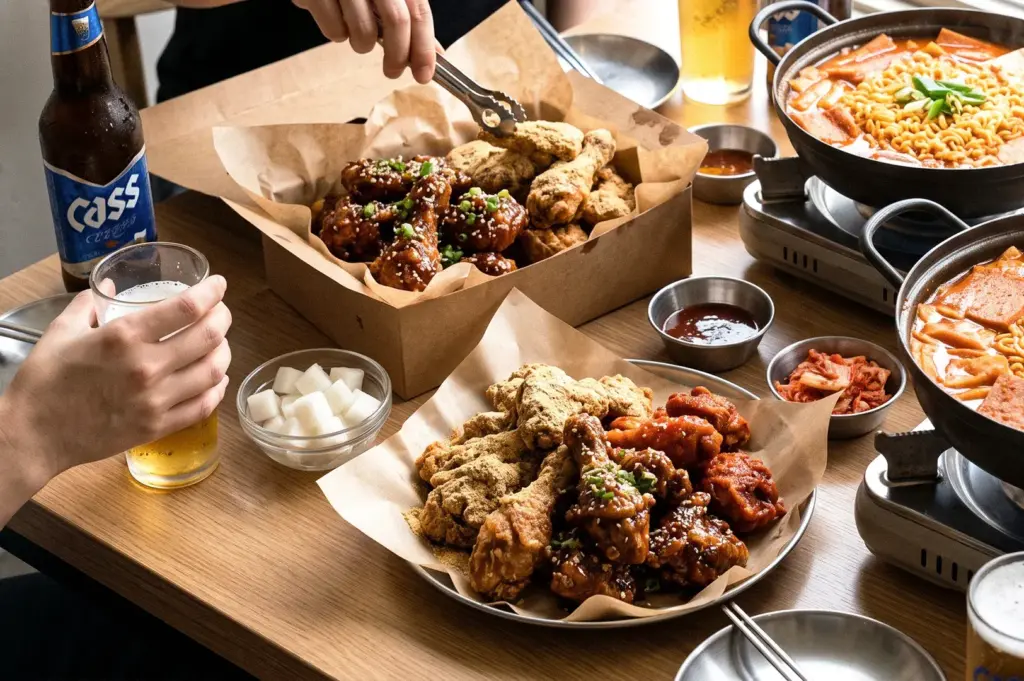
Accompaniments: Pickled radish, called chicken-mu, and sometimes kimchi, are familiar companions. Some restaurants also serve army stew as a hearty side dish to complement the fried chicken experience.
Dining context: It is closely tied to takeaway, group snacking, and chimaek (chicken and beer).
Double-frying and starch coatings are not exclusive to Korea, and not every Korean restaurant uses both. What makes the difference is how these elements come together.
Why Korean Fried Chicken Is Often Double-Fried
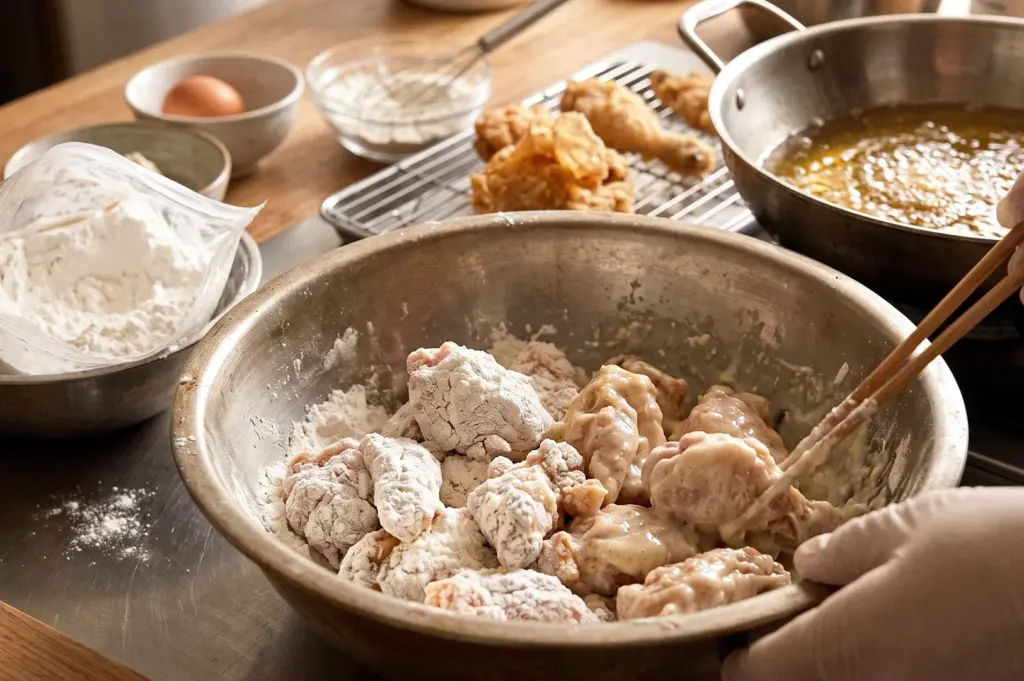
Double-frying usually means cooking the chicken in hot oil, taking it out to drain and rest briefly, and then returning it to the oil. The process can help drive moisture away from the coating, deepen the browning, and produce a crisper exterior.
Korean cooking educator Maangchi uses two rounds of frying, with a draining stage in between, in her yangnyeom chicken, dakgangjeong, and market-style chicken recipes.
People often say the first fry cooks the meat and the second fry creates the crust. In reality, cooking, browning, and moisture loss happen across both stages. Double-frying also doesn't make chicken low-fat. Oil temperature, frying time, coating, and draining all affect how much oil ends up in each bite.
How Starch Gives Korean Fried Chicken Its Crunch
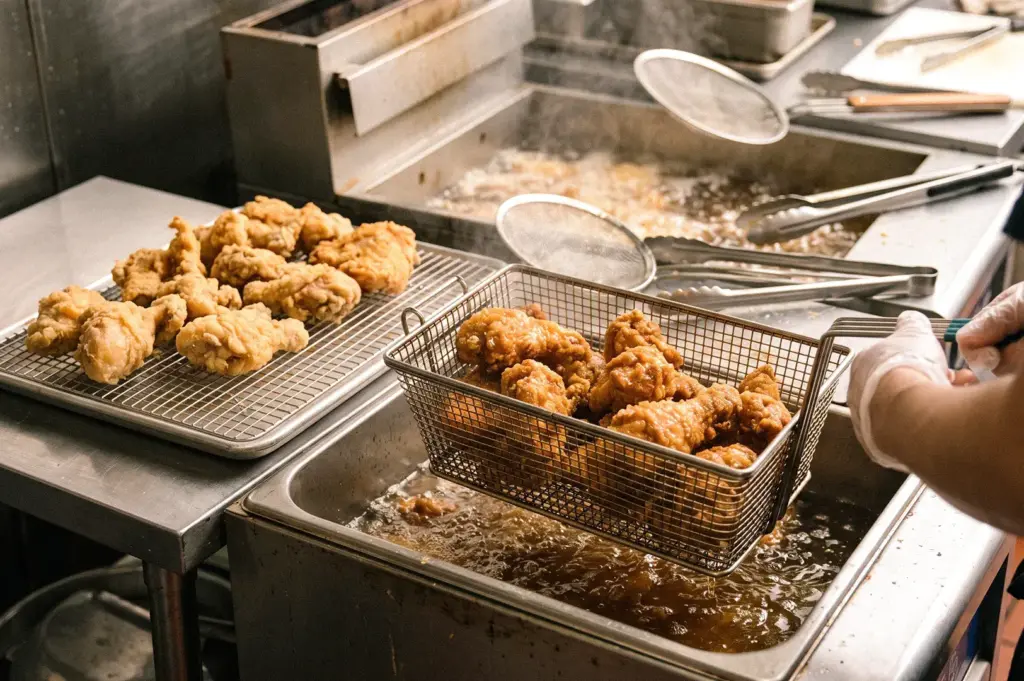
Potato starch appears in several established Korean fried chicken recipes. Under the right frying conditions, a coating that leans on starch can form a brittle shell, unlike the heavier crust of a well-seasoned flour dredge.
Even crunchy recipes vary. Maangchi's yangnyeom-tongdak combines potato starch with flour, eggs, and a leavening ingredient. Her simplified dakgangjeong uses a potato starch coating with no separate wet batter.
Other factors matter as much as the recipe:
The ratio of starch to flour
Whether the coating is wet or dry
How thick each piece of chicken is
Whether the pot is overcrowded, causing the oil temperature to drop
How well the chicken drains
When the sauce goes on
Whether steam gets trapped after cooking
That last point matters at home. If your chicken spends time in a closed box, our guide to food delivery for Korean food explains what steam does to a crisp coating.
From Soy Sauce to Yangnyeom: Korean Fried Chicken Flavors
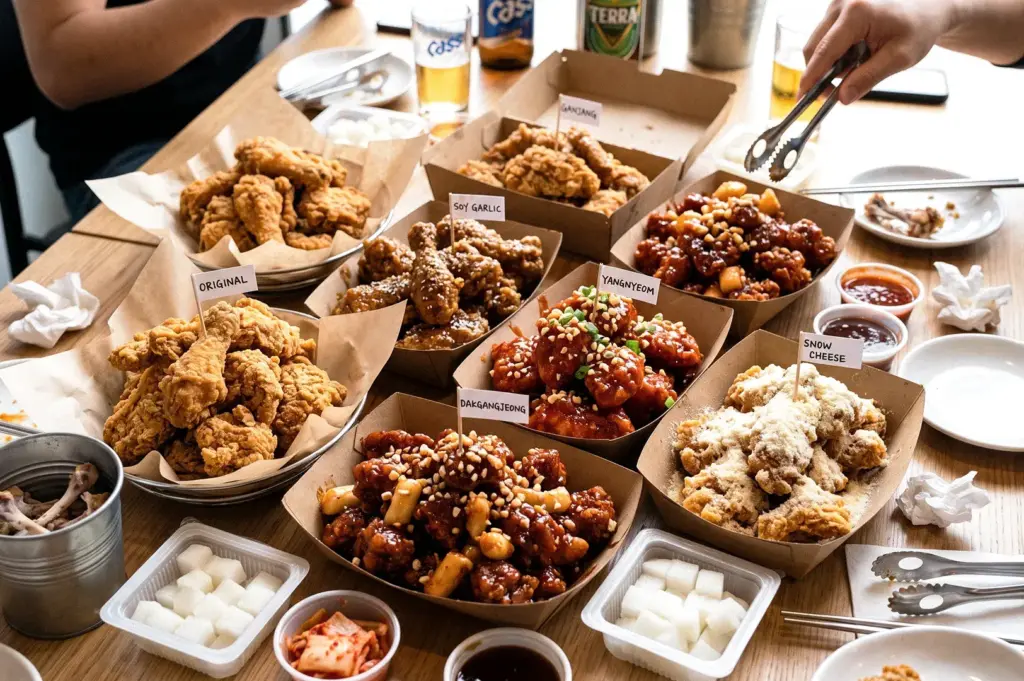
Original or plain
The focus here is the coating and the chicken itself. Start with original if you want to understand the texture before comparing sauces.
Soy garlic and ganjang chicken
Ganjang means soy sauce. In a glaze, soy sauce brings saltiness, savoriness, and a fermented soybean depth. Sugar, honey, or syrup usually balances it, and garlic adds aromatic sharpness. The Korea Tourism Organization describes soy-seasoned chicken as savory and sweet, not simply salty.
"Soy garlic" on a menu is a restaurant flavor, not a fixed recipe. It may contain other ingredients, and you shouldn't assume it is always mild or always made with honey.
Yangnyeom chicken
Yangnyeom means seasoned. This style is usually associated with a red, sweet-spicy glaze that may combine gochujang, garlic, sweeteners, and vinegar. Heat, sugar, acidity, and crunch all share the same bite.
Dakgangjeong
These crispy pieces are coated in a sticky, concentrated glaze. Maangchi's versions use ingredients such as soy sauce, syrup, ginger, and vinegar, sometimes with nuts. Dakgangjeong overlaps with yangnyeom chicken, but it is especially known for its sticky, sweet coating. Recipes can resemble each other, so the line between the two is not rigid.
Cheese and powdered seasonings
Newer versions swap the wet glaze for a dry dusting of cheese-flavored or other seasoning powder. A modern flavor is not "less Korean" because it uses cheese or honey. Korean food keeps evolving, and franchise innovation is part of that story.
A Short History of Korean Fried Chicken
Korean fried chicken is a fairly modern food. The Korea Tourism Organization traces its development to changes in Korean food culture, including exposure to Western-style cooking, wider access to cooking oil, and shifts in poultry production.
The 1970s and 1980s brought two important milestones. In 1977, Lim's Chicken helped popularize fried chicken sold in individual pieces rather than only whole birds. In 1981, Pelicana introduced and popularized seasoned chicken, which shaped what many people now picture when they think of Korean fried chicken.
The Korea Tourism Organization also connects Daegu and the surrounding Gyeongsangbuk-do region to the growth of several chicken brands. The city now hosts the Daegu Chimac Festival, a great place loved by many for its intense flavors and variety of wings.
Chimaek combines chikin (chicken) and maekju (beer). It became tied to sports and social gatherings, especially around the 2002 FIFA World Cup. It is a familiar custom, not a rule. Soft drinks and a bowl of rice work just as well at the table.
Ordering Korean Fried Chicken in Singapore
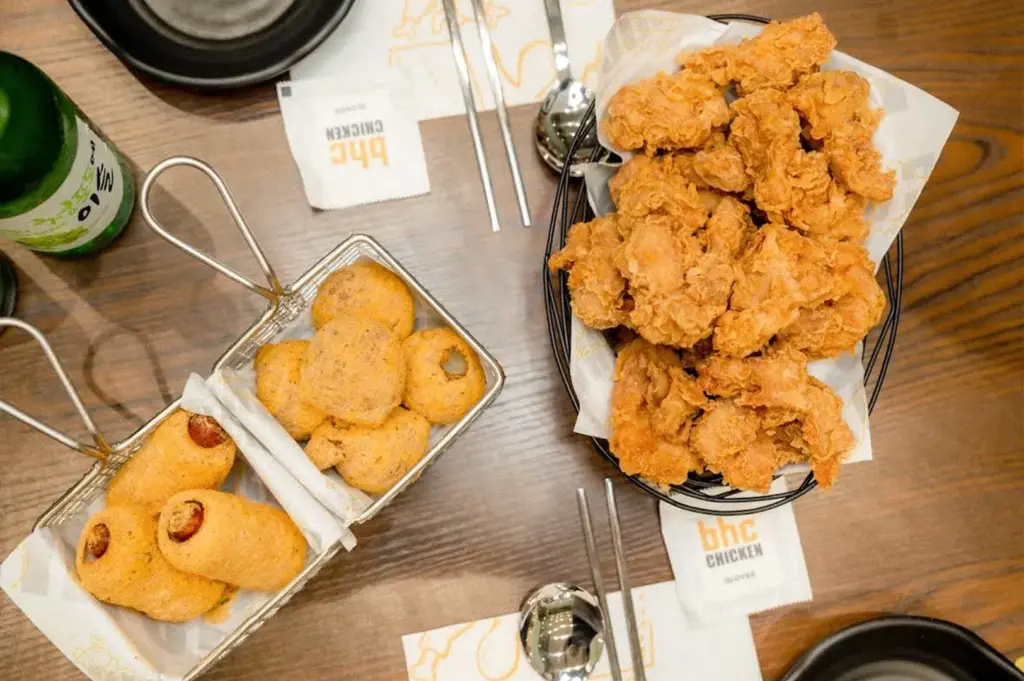
Korean fried chicken in Singapore appears in several formats, from fast-casual meals to chicken specialists. Two examples show the range.
JINJJA Chicken, Bugis+ (201 Victoria Street, #01-11)
The brand states that it double-fries its chicken and prepares its Soy Garlic and YangNyeom sauces in-house. Ordering both side by side is a simple way to taste savory-sweet against sweet-spicy.BHC Chicken, Marina Square (6 Raffles Boulevard, #02-332A/332F)
BHC's Bburinkle features crispy chicken with cheese and vegetable-flavored seasoning, served with a dipping sauce. Its Macho King is coated in a soy sauce and honey-based sauce. Together, they show the difference between a dry powder and a wet glaze.
These are examples of different styles, not rankings. Current prices weren't verified, so check the live menu before ordering.
A few practical pointers:
First time? Half original, half soy garlic shows you the crust and a glaze together.
Avoiding chili? Start with original, and read sauce descriptions instead of assuming.
Eating alone? Boneless pieces or a chicken rice set are easier to portion.
"Boneless" doesn't always mean breast. It may be thigh, tenderloin, or a mix.
"Half-half" usually splits one serving between two flavors. It isn't two full portions.
Comparing prices? Look at piece count, bone-in or boneless, included sides, and charges.
Whether you are unsure about which flavor to pick or want to enjoy a great meal with a friend, keep these tips in mind. Many have bought their favorites after trying a few options and loved the experience. We recommend trying a variety of flavors to find your perfect match.
Getting Ready for Your Next Bite
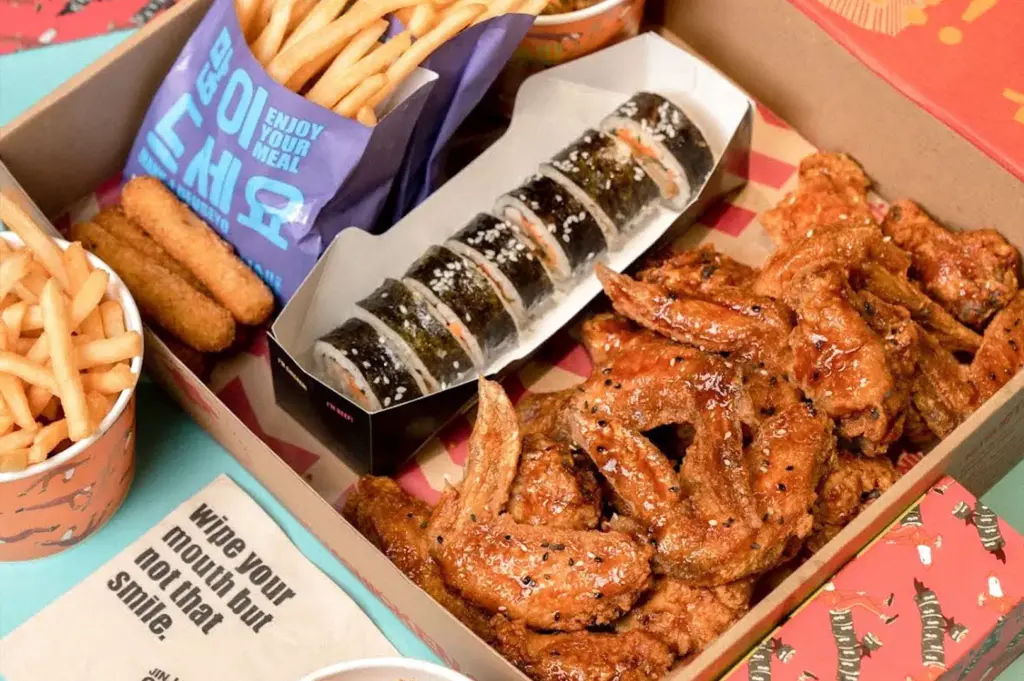
Many Korean fried chicken places hand-brush their sauces onto the chicken pieces, adding a personal touch and ensuring even flavor coverage. For the full dining experience, some restaurants also offer army stew alongside their fried chicken, which we highly recommend trying for a hearty and satisfying meal.
The fried chicken Korean kitchens are known for isn't one recipe. It is a set of choices: starch over a heavy dredge, a second dip in the oil, a glaze brushed on just before serving, and a dish of radish waiting on the side.
Next time you order, try one plain piece first. Listen to the crust. Then move to the sauce, and notice what changes. Don't forget to take photos to share your delicious experience. If you keep an open mind, you might find yourself loving the intense flavors and tender meat of Korean fried chicken. Whether you are located in Singapore or visiting, this dish is a great friend to many food lovers.