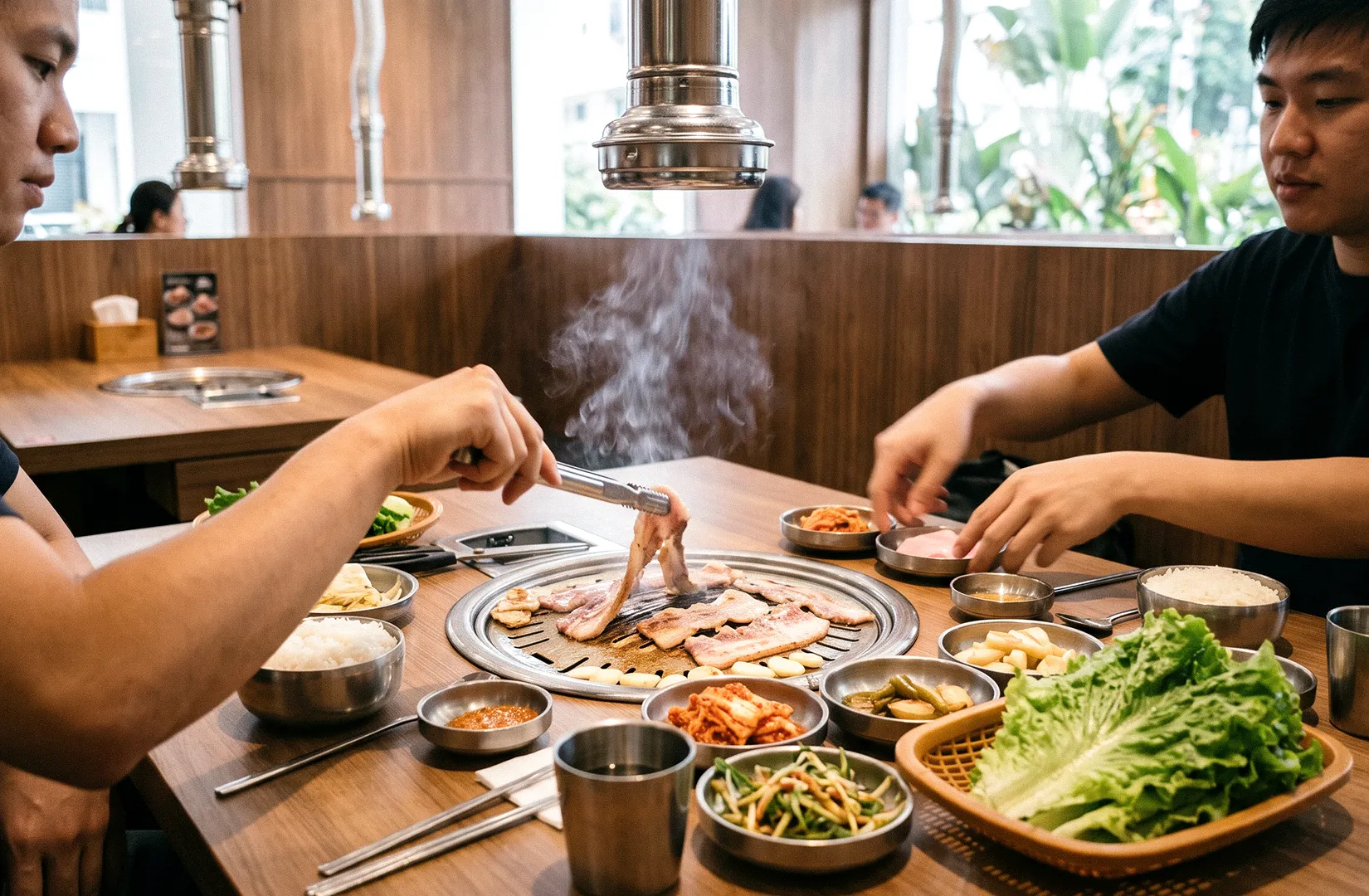
The first piece of pork belly hits the grill with a sharp sizzle. One person reaches for the tongs while the other rearranges the small plates of banchan to make room for the lettuce, sauces, and bowls of rice.
There's a brief discussion about whether the meat is ready to flip. Someone insists it needs another minute. The other person is already eyeing the edges, where the fat has started to turn golden.
It's an ordinary scene at a Korean BBQ restaurant in Singapore. But there's something particularly appealing about sharing a grill with just one other person.
Korean BBQ is usually associated with large gatherings, yet a table for two can offer an entirely different kind of dining experience. One where the meal unfolds at its own pace, with fewer distractions and nowhere particularly urgent to be.
When Dinner Becomes Something You Do Together
Most restaurant meals follow a familiar routine. You order, wait for the food, eat, and eventually ask for the bill. Korean BBQ interrupts that rhythm.
The food arrives uncooked, and suddenly both diners have something to do. Someone watches the meat while the other prepares lettuce wraps or reaches for the kimchi. There's a small amount of teamwork involved, even if one person inevitably becomes the unofficial grill manager.
That responsibility can be amusing, especially when both diners have different opinions about how well the meat should be cooked.
But it also creates a different atmosphere.
Instead of waiting for conversation to fill every quiet moment, there's always something happening between you. A piece of meat needs turning. Another serving of mushrooms goes onto the grill. Someone offers the other person the better-looking slice.
The meal gives two people a reason to pay attention to the same thing without constantly needing to talk.
The Appeal of Taking Your Time
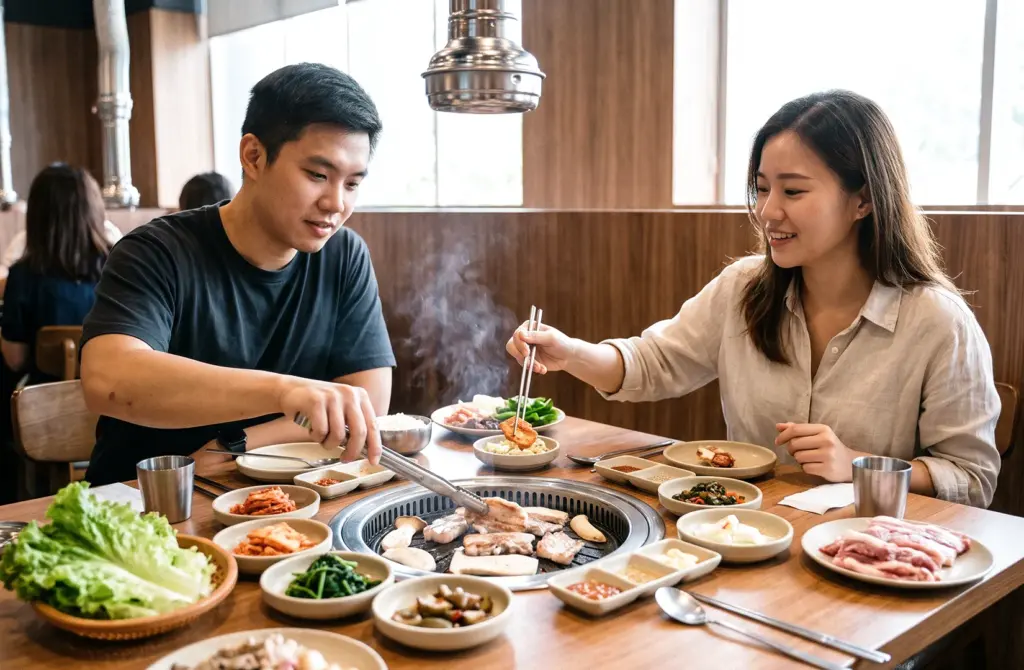
Singapore's dining culture can sometimes feel hurried.
Lunch breaks have their limits, popular restaurants have queues, and weekend dinners often come with reservations or another activity planned afterwards. Korean BBQ offers a pleasant contrast, at least when the restaurant isn't rushing diners through a fixed seating period.
You can't cook everything at once without overcrowding the grill. The meat needs time to brown, and each batch arrives at the table in its own small sequence.
There's something satisfying about that pace.
A piece of samgyeopsal wrapped in lettuce with ssamjang and garlic tastes especially good when it's eaten straight from the grill. Then comes another bite, perhaps with kimchi or a spoonful of rice.
Nothing particularly dramatic happens. And perhaps that's the appeal.
A Smaller Table Changes the Experience
At a large Korean BBQ gathering, the grill often becomes the centre of a lively negotiation. People have different preferences, dishes are passed around, and someone is usually asking whether another portion should be ordered.
With two diners, those decisions become simpler.
There's room to notice what the other person enjoys. Maybe they prefer their pork belly slightly crispier. Perhaps they always reach for the pickled radish between bites. These are small observations, but they can make an ordinary dinner feel surprisingly personal.
Of course, Korean BBQ for two isn't always the most economical option. Some restaurants have minimum meat orders, while others offer portions better suited to larger groups.
Still, when the portions and setting work, a smaller table has its own advantages.
Sometimes the Grill Is Enough
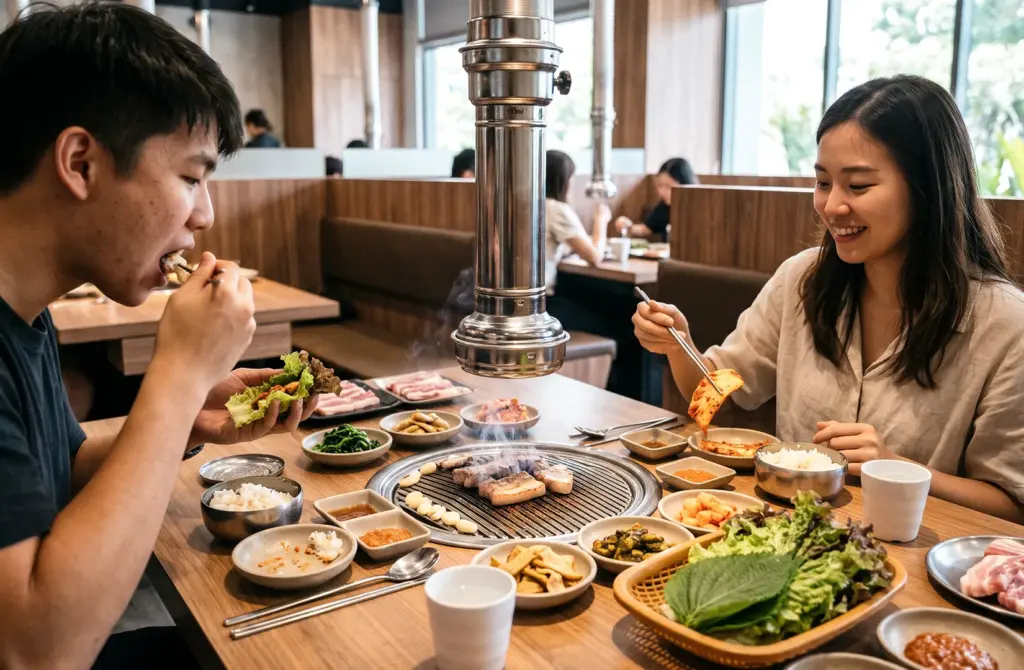
Not every memorable dinner needs an elaborate menu or a special occasion.
Sometimes, it's simply two people sitting across from each other, deciding whether the next piece of meat is ready.
The grill keeps sizzling. The banchan gradually disappears. Someone reaches for the tongs again, even though the other person was supposed to be in charge this time. Perhaps that's what makes Korean BBQ for two worth appreciating.
The food gives the evening its structure, but the small decisions, shared responsibilities, and comfortable pauses are what make the experience distinctive.
And when the final piece of meat comes off the grill, there's one last decision to make.
Who gets it?