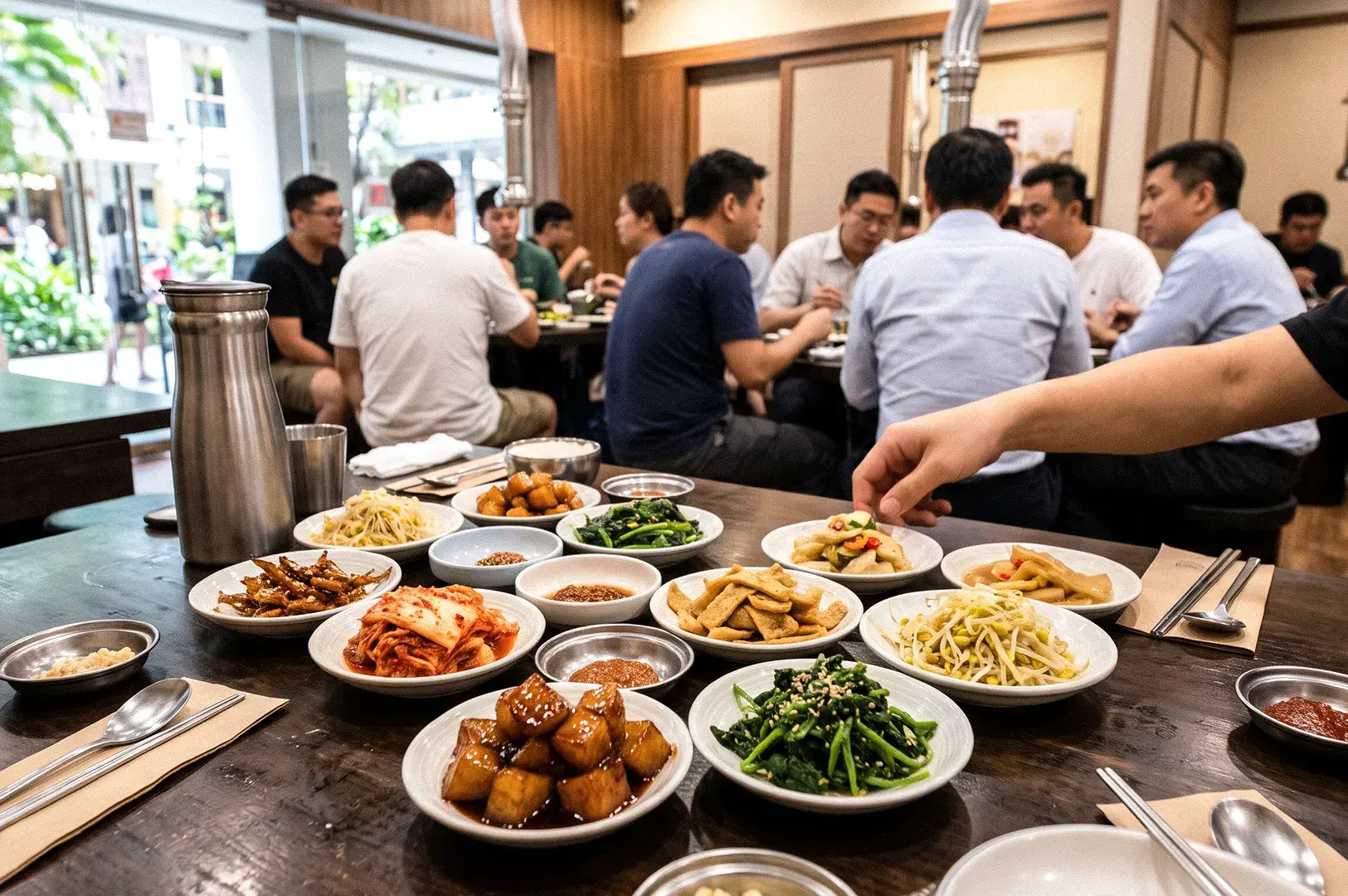
The small dishes usually arrive before anything else. A plate of kimchi. Some spinach glistening with oil. A few cubes of potato, dark and glossy. Then more, until the table is crowded with things you didn't order.
For many first-time diners in Singapore, this moment brings a quiet uncertainty. Are these starters? Are they free? Should you finish them before the main dish comes?
What draws me to banchan is that these small plates carry an idea. They show how a Korean meal is built, and how Korean cuisine thinks about balance. This guide explains what banchan are, introduces 15 Korean side dishes worth recognizing, and covers what to expect when you eat them, order them, or try making a few at home.
What Is Banchan? More Than Kimchi
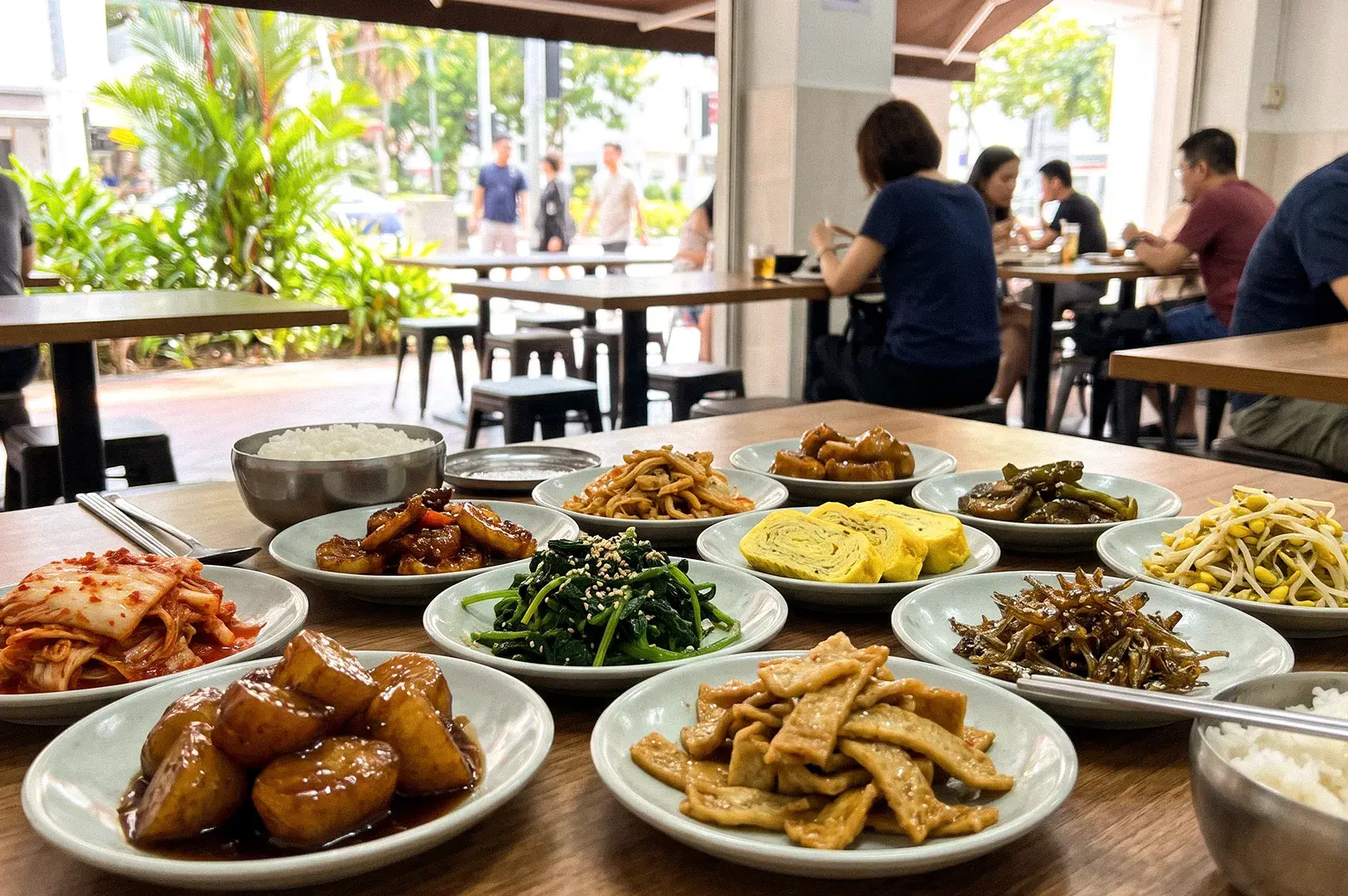
Banchan (반찬) are the dishes served alongside rice as part of a meal. They can be fermented vegetables, seasoned greens, braised potatoes, eggs, tofu, seafood, and sometimes meat, usually served in small portions and shared.
The Korea Tourism Organization describes banchan as part of a table setting called han sang, where rice sits at the center and the surrounding dishes offer different flavors, textures, and cooking styles. That is the key. Banchan are not appetizers. They are meant to stay with you through the meal, alongside the main course.
Kimchi is the one most people know, so it is easy to assume the two words mean the same thing. They don't. Kimchi is one kind of banchan. Banchan is the whole family.
It also isn't only a Korean BBQ thing. Banchan appear beside soups, stews, grilled fish, rice dishes, and ordinary home meals. Barbecue is simply where many of us first meet them.
How Korean Side Dishes Are Made: Eight Korean Food Cooking Styles
Once you learn a few cooking terms, Korean menus start to make more sense. The name of a dish often tells you how it was cooked.
Kimchi (김치): Vegetables salted, seasoned, and often fermented
Namul (나물): Vegetables blanched, steamed, or sautéed, then seasoned
Muchim (무침): Ingredients tossed with seasoning
Jorim (조림): Ingredients simmered in a seasoned liquid
Bokkeum (볶음): Ingredients stir-fried with seasoning
Jeon (전): Ingredients pan-fried, sometimes coated in flour and egg
Jangajji (장아찌): Vegetables preserved in seasoned brine
Jjim (찜): Ingredients steamed or gently cooked
These categories overlap in daily use. Seasoned soybean sprouts, for example, can be called namul or muchim.
I find the potato a good teacher here. Braised, it becomes gamja-jorim. Shredded and stir-fried, it becomes gamjachae-bokkeum. Grated and pan-fried, it becomes gamja-jeon. One ingredient, three different dishes, depending on the method. That kind of flexibility is a perfect example of how Korean-style cooking turns simple ingredients into something genuinely delicious.
15 Korean Side Dishes You Should Know
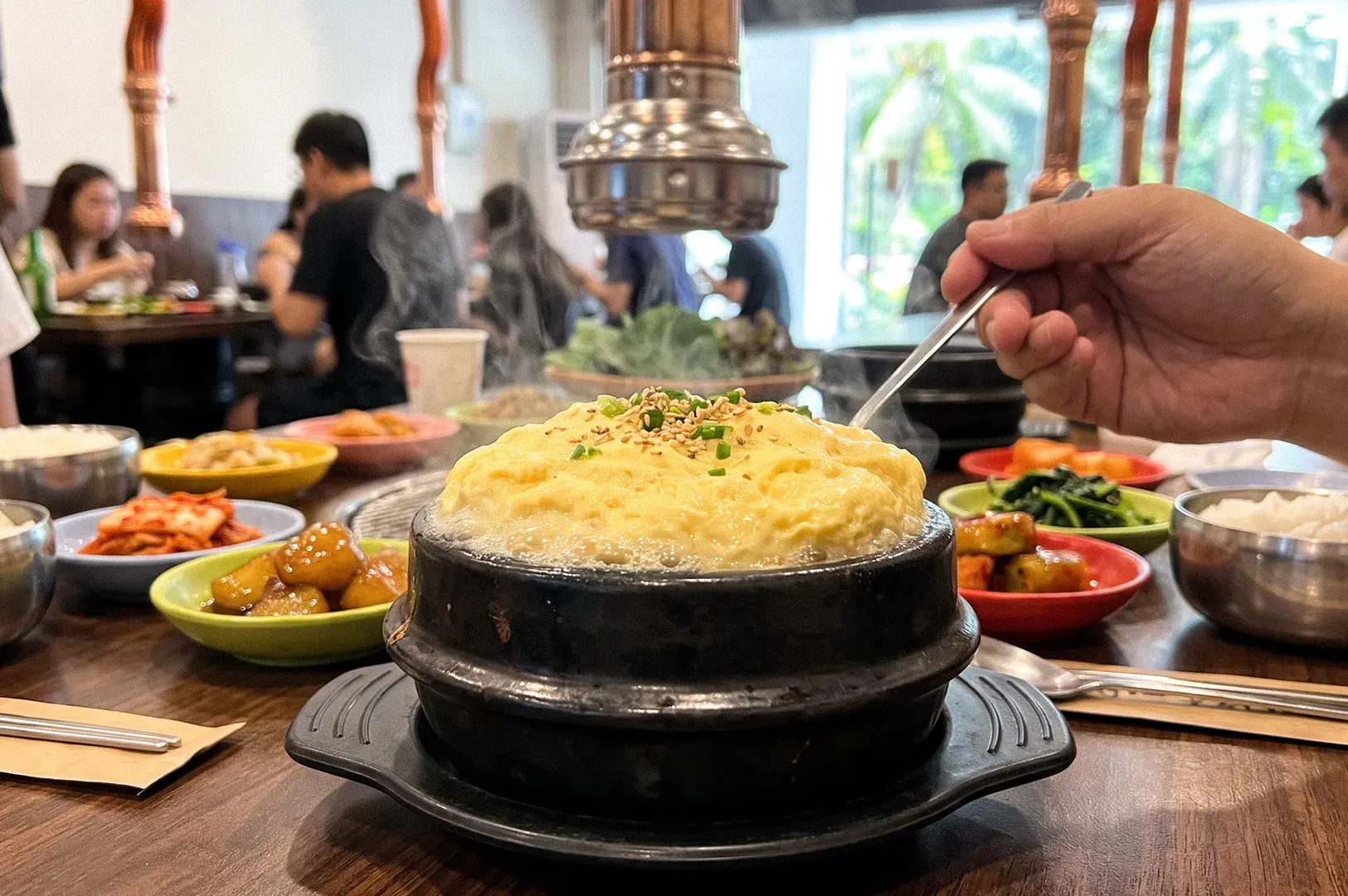
These aren't a ranking. They are a spread of familiar and less familiar banchan dishes, chosen to show how wide the category really is. Many of these banchan recipes are straightforward enough to try at home, even as a beginner.
Kimchi and Korean Radish
1. Baechu-kimchi. Napa cabbage seasoned with chili and minced garlic, then fermented. It is tangy, savory, and often spicy.
2. Kkakdugi. Cubes of Korean radish in chili seasoning. Expect crunch first, then tang and heat. Korean radish can be found at specialty grocers, and while it resembles the white radish sold in Singapore, the texture and taste can differ.
Fresh Vegetable Dishes: Namul and Muchim
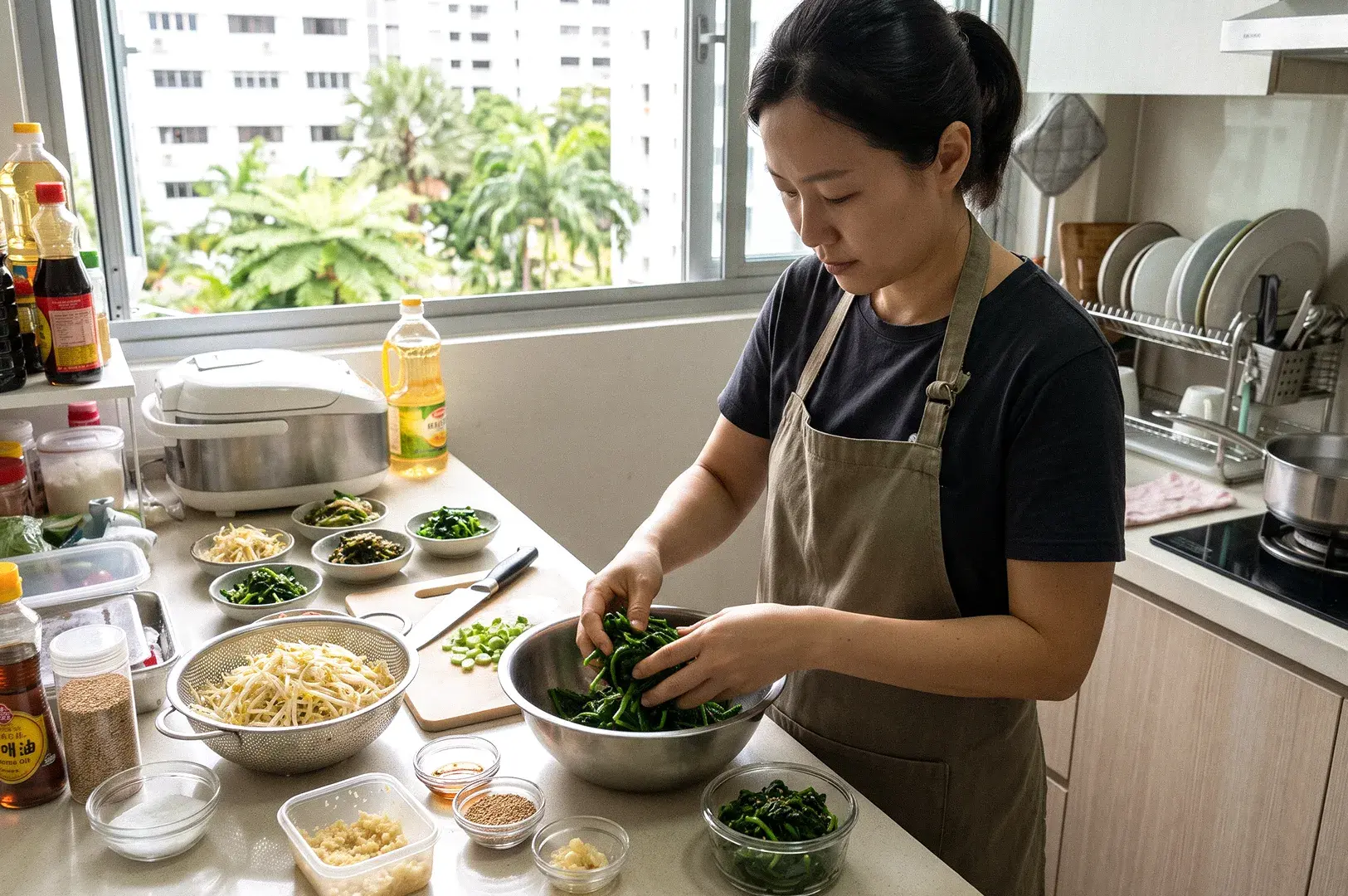
3. Sigeumchi-namul. Blanched spinach seasoned with garlic, soy sauce or salt, sesame oil, and sesame seeds. Mild and nutty. Korean cooking educator Maangchi blanches the spinach for about 30 to 60 seconds, then squeezes out the water so the flavorful dressing doesn't turn thin. Think of it as a Korean-style seasoned spinach with a creamy sesame dressing quality, depending on how generously you add the oil.
4. Kongnamul-muchim. Cooked soybean sprouts seasoned with minced garlic, sesame oil, sesame seeds, and sometimes chili flakes. Soybean sprouts have larger yellow heads than the mung bean sprouts common in local cooking, and they aren't the same thing. Mung bean sprouts work as a substitute, but the taste and texture will differ.
5. Oi-muchim. Cucumber mixed with Korean chili flakes, garlic, green onion, and sesame oil. It is fresh and crisp, not a long-fermented pickle. Maangchi notes that households across South Korea make their own versions according to personal preference.
Braised and Stir-Fried Korean Style Banchan
6. Gamja-jorim. Potatoes simmered in soy sauce with something sweet until tender and glazed. Savory and slightly sweet. A baby-potato version, algamja-jorim, is described by Maangchi as glossy outside and tender inside.
7. Eomuk-bokkeum. Sliced fish cakes stir-fried with onion, soy sauce, garlic, and sweetener. Some versions add gochujang or a spicy sauce made with chili flakes. It is a delicious example of how a simple stir-fry can punch well above its ingredients.
8. Myeolchi-bokkeum. Small dried anchovies in a sweet-savory seasoning, chewy or crisp depending on the cook. It is usually served in small amounts because the flavor is concentrated.
9. Dubu-jorim. Tofu braised with soy sauce, minced garlic, and sometimes chili. Savory, occasionally spicy.
10. Mechurial-jorim. Quail eggs braised in a soy-based liquid. Salty, slightly sweet, easy to keep reaching for at family gatherings.
11. Ojingeochae-muchim. Dried shredded squid tossed in chili seasoning. Chewy, sweet, and spicy, and a reminder that banchan don't always come from the garden. Other vegetables and proteins have always had a place at this table.
Egg Dishes
12. Gyeran-mari. A rolled omelette, sometimes folded around other vegetables. Mild and savory, often a comfort for anyone wary of spice.
13. Gyeran-jjim. Eggs steamed with water or stock until soft and delicate. Some restaurants serve it as a side, others list it as a separate shared dish.
Korean Pancakes: Kkaennip Jeon, Gamja Jeon, and Green Onion Pajeon
These savory pancakes are a beloved part of Korean food culture, and each one has its own character.
14. Kkaennip jeon. Perilla leaves filled with a seasoned mixture, often ground meat or tofu, then coated in flour and egg and pan-fried. Aromatic and savory.
15. Gamja jeon. A potato pancake made from grated potatoes, sometimes with added mung bean starch to help bind the batter. The result is crispy at the edges and tender inside. It is a straightforward recipe worth trying at home.
Pajeon, the savory green onion pancake, belongs to the same family and often comes with a soy-based dipping sauce. Korean pancakes can act as banchan, but they are just as likely to be ordered on their own as a shared dish or snack. Don't assume they arrive free.
How Banchan Are Served and Eaten
There is no fixed order. You might take some rice, then spinach, then a piece of grilled meat, then kimchi. The Korea Tourism Organization describes Korean dining as letting each person combine foods according to personal preference.
Most banchan sit in the center of the table for sharing, which makes them well suited to family gatherings and group meals. Some places give individual portions. How many appear depends entirely on the meal. An everyday table might hold only a few. A more elaborate hanjeongsik meal can bring a large assortment.
You don't have to finish every plate. Still, it feels right to eat with some care, especially if you've asked for more.
Are Banchan Free, and Can You Ask for More?
Often, but not always. Many Korean restaurants include banchan with the meal, and free refills are familiar. Others offer fewer dishes, charge for extra portions, or sell side dishes separately. In Singapore, where Korean dining runs from quick-service counters to full barbecue restaurants, it is worth checking the menu or simply asking.
If you're in Korea, a polite request is:
반찬 좀 더 주세요. Banchan jom deo juseyo. "Could I have some more side dishes, please?"
Swap banchan for kimchi if that's the one you want. In Singapore, English works fine. Ask for what your table will actually eat.
Banchan and Korean BBQ: Where the Dipping Sauce Fits
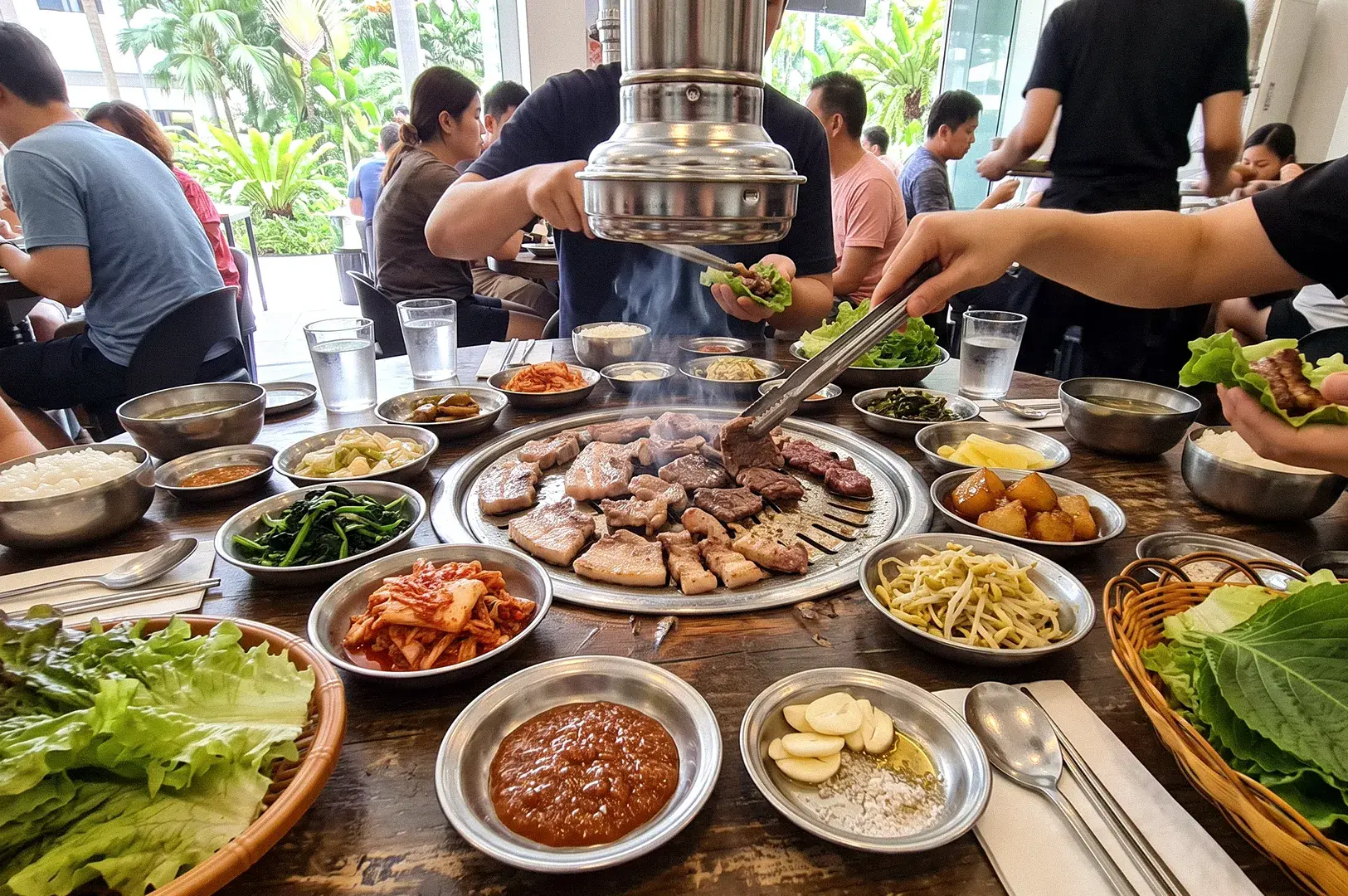
At a Korean BBQ feast, banchan do quiet work. Grilled meats are rich, and the side dishes give the meal its balance.
Kimchi brings acidity and chili to grilled pork belly. Seasoned spinach offers something mild and nutty beside beef. Pickled radish adds crispness. Soybean sprouts add texture between bites of meat and rice. None of these pairings are rules, just ways the table tends to balance itself.
Two things on that table aren't really banchan. Ssamjang, the dipping sauce made with fermented soybean paste and chili pepper paste, is a condiment. The lettuce and perilla leaves used for wrapping belong to ssam culture. They sit beside the banchan but play a different role.
Starting Small: Banchan at Home
You don't need to cook ten dishes. Three are enough to learn a lot:
Sigeumchi-namul, for blanching and seasoning
Oi-muchim, for fresh mixing
Gamja-jorim, for braising
Each recipe teaches a different technique and brings a different flavor profile to the table. A saucepan, frying pan, knife, board, mixing bowl, and a few containers will cover most simple ingredients and steps. Happy cooking, as they say.
A few things to watch for:
Drain your vegetables well. Excess water dilutes the seasoning.
Don't overcook greens. They turn limp quickly.
Go easy on sesame oil. Too much covers delicate vegetable flavors.
Not everything needs gochujang. Many banchan use soy sauce, salt, sesame oil, or vinegar instead.
Store dishes differently. Fresh cucumber salad, cooked spinach, and fermented kimchi don't keep the same way. Refrigerate promptly, use clean utensils, and follow package instructions for anything store-bought.
Sesame oil and perilla oil are also not interchangeable. One comes from sesame seeds, the other from perilla seeds, and their aromas differ.
Finding Korean Food Side Dishes in Singapore
Korean Barbecue Sets and Takeaway Tubs
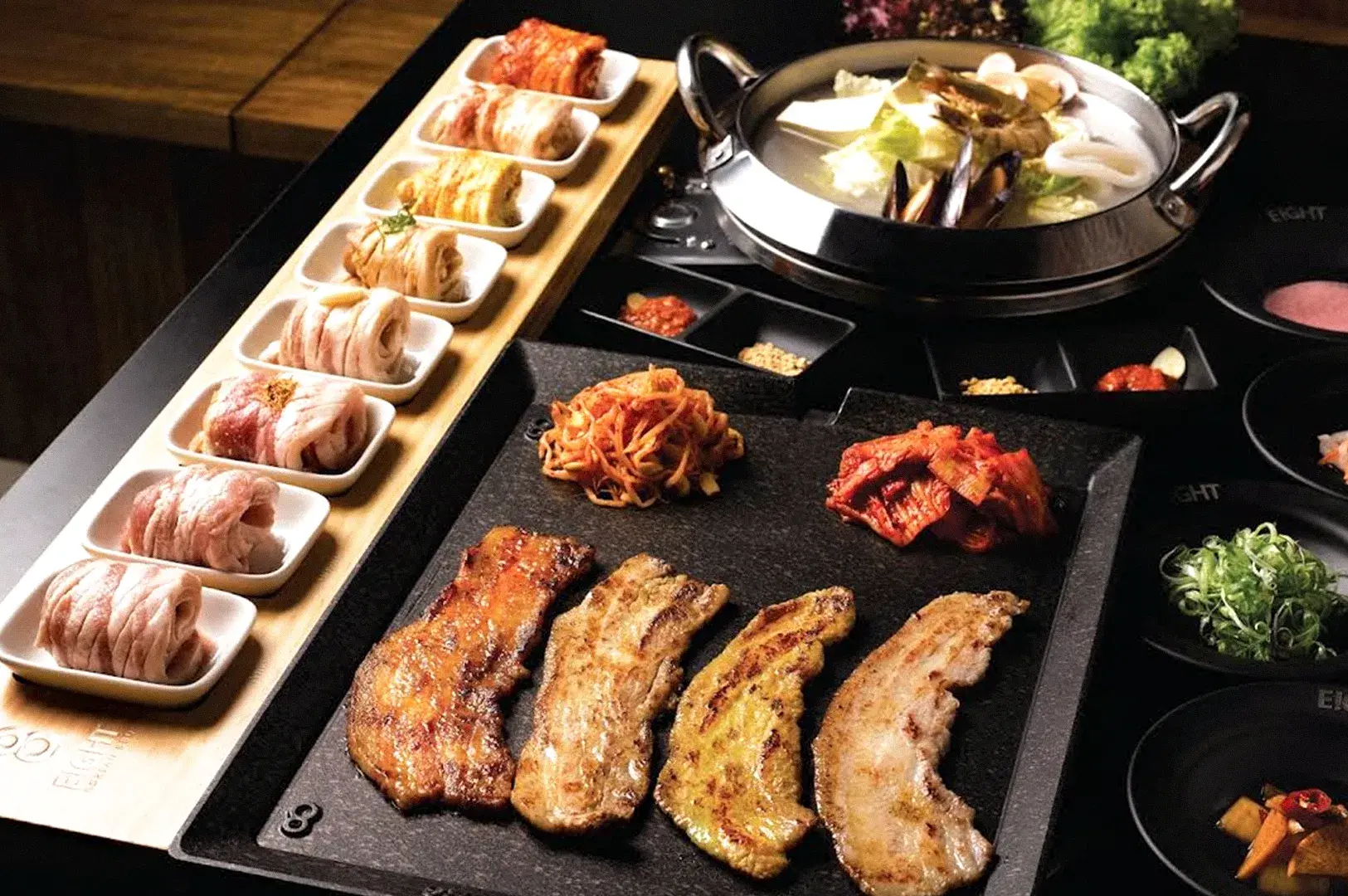
8 Korean BBQ shows two sides of banchan in one place. Its official website says its 4/8 Color Set includes refillable banchan, vegetable wraps, dipping sauces, and a choice of stew. It also sells banchan separately for takeaway, with kimchi listed at S$14, and bean sprouts and cucumber banchan at S$12 each. You'll find it at Clarke Quay Central (6 Eu Tong Sen Street, #02-79/90) and Shaw Centre (1 Scotts Road, #04-20/21). Prices can change, so check before you go.
For home meals, Worth Your Salt is a Singapore online retailer selling prepared banchan for delivery. Its catalogue has listed marinated quail eggs at S$10.90, spicy and non-spicy fish cakes at S$12 for 270 g, and vegetarian and non-spicy options. A practical middle path for beginners is to make two vegetable dishes and buy the kimchi.
If you're curious about which Korean dishes hold up best in a box, our guide to Korean food for delivery in Singapore and what travels well is a useful next read.
Halal and Vegetarian Notes
Banchan aren't automatically halal. Even vegetable dishes can contain fish sauce or fermented seafood. 8 Korean BBQ's Shaw Centre page states that it is not halal-certified and serves pork and alcohol. If certification matters to you, check MUIS resources and individual product labels.
Vegetarians face the same question. Kimchi may contain fermented seafood. Some vegetable dishes use anchovy stock. Maangchi's kongnamul-muchim lists fish sauce as one seasoning option, with soup soy sauce or salt as alternatives. A dish that looks green isn't always plant-based, so ask.
The Table, Read Slowly
Next time the small dishes arrive, try not to rush past them. Notice which one is crispy, which is soft, which is sour, which is sweet. Take a bite of rice, then something different.
That is the whole point of banchan. The meal is not one flavor. It is many, held together by a bowl of rice and the people around the table.