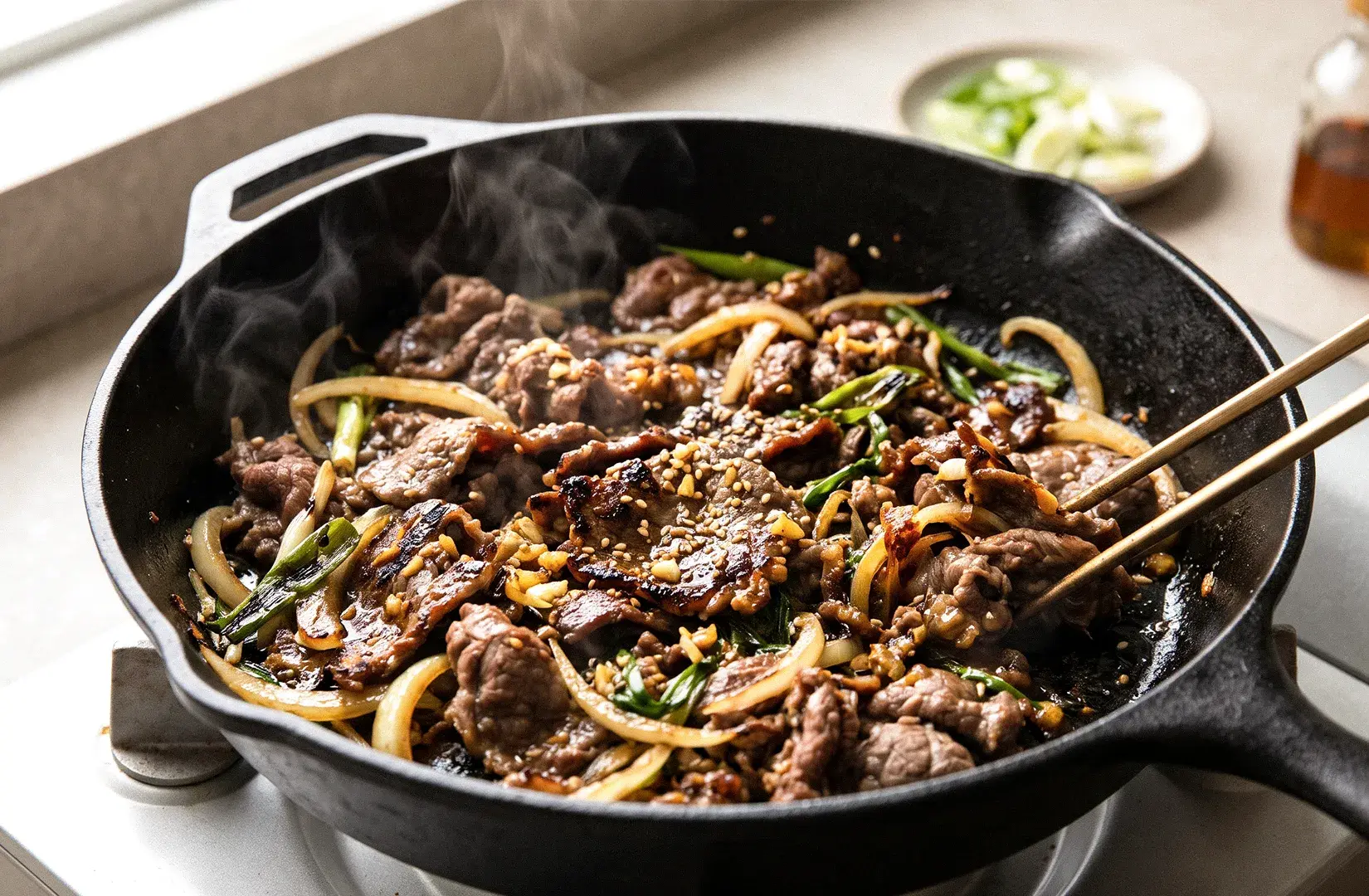
There's something satisfying about watching thin slices of beef sizzle in a hot pan, especially when they're coated in a sweet, savoury marinade that smells of garlic and sesame oil.
That's beef bulgogi, one of Korea's most recognisable meat dishes and a favourite in Korean food restaurants around the world.
You might know it from Korean BBQ restaurants in Singapore, where marinated beef arrives ready for the grill. But here's the good news: you don't need a Korean BBQ grill to make it at home. A frying pan works perfectly well.
The trick is choosing the right beef, balancing the marinade, and knowing when to stop cooking. Get those three things right, and you're already most of the way there. This Korean beef bulgogi recipe covers each step, from preparing the bulgogi sauce to cooking tender beef without turning your pan into a swimming pool.
What Is Korean Beef Bulgogi?
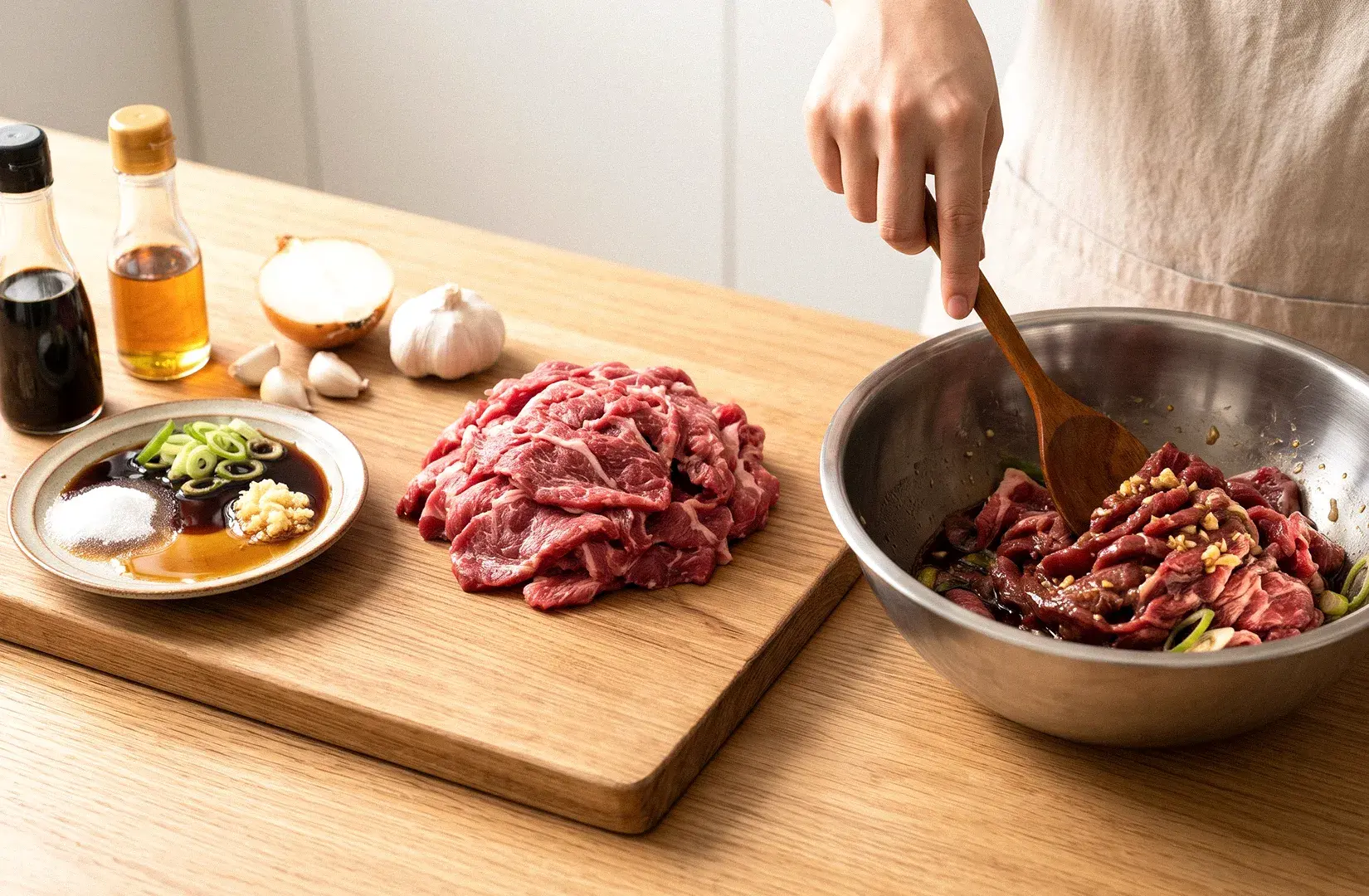
Bulgogi (불고기) literally translates to "fire meat" in Korean. The name comes from bul (불), meaning fire, and gogi (고기), meaning meat.
The familiar Korean beef bulgogi consists of thinly sliced beef marinated in soy sauce, sugar, garlic, sesame oil, and other seasonings before being grilled or stir fried in a pan. The result is tender, slightly sweet, savoury beef with a distinctive sesame aroma. And no, beef bulgogi isn't normally spicy.
Unlike some Korean dishes that rely heavily on gochujang or Korean red pepper flakes, the classic soy-marinated version gets its flavour from a sweet and savory sauce. You can certainly make spicy variations, but chilli isn't required.
Is Bulgogi the Same as Korean BBQ?
Not quite.
Korean BBQ describes a broader dining style involving different grilled meats, including beef, pork, and various marinated or unseasoned cuts. Bulgogi is a particular meat preparation that can be part of that experience.
There's also no rule saying bulgogi meat must touch charcoal. Korean home cooking includes both grilled and pan-cooked versions. For anyone cooking in a Singapore flat, that's excellent news.
Korean Beef Bulgogi Recipe: Ingredients You'll Need
This easy bulgogi recipe uses ingredients you can generally find in Singapore supermarkets.
Recipe overview
Servings: Approximately 3–4
Preparation time: 15–20 minutes
Marinating time: 30–60 minutes
Estimated cooking time: 8–12 minutes, depending on pan size
Equipment: Large skillet, mixing bowl, knife, and grater
These quantities and timings are a research-based recipe framework, not independently kitchen-tested results.
Ingredients for the Beef
Ingredient | Quantity |
|---|---|
Thinly sliced ribeye or sirloin | 500 g |
Medium onion, thinly sliced | ½ |
Green onions, chopped | 2 stalks |
Toasted sesame seeds | 1 tsp |
Neutral cooking oil | 1–2 tsp, as needed |
Ingredients for the Bulgogi Marinade
Ingredient | Quantity |
|---|---|
Regular soy sauce | 3 tbsp |
Brown sugar | 1½ tbsp |
Grated Asian pear | 3 tbsp |
Grated onion | 2 tbsp |
Minced garlic | 1 tbsp |
Toasted sesame oil | 1 tbsp |
Black pepper | ¼ tsp |
Grated apple can stand in for Asian pear if that's what you have. Optional additions include grated ginger, sliced mushrooms, and carrots. Start with the basics before experimenting.
Best Bulgogi: Choosing Beef and Asian Pear
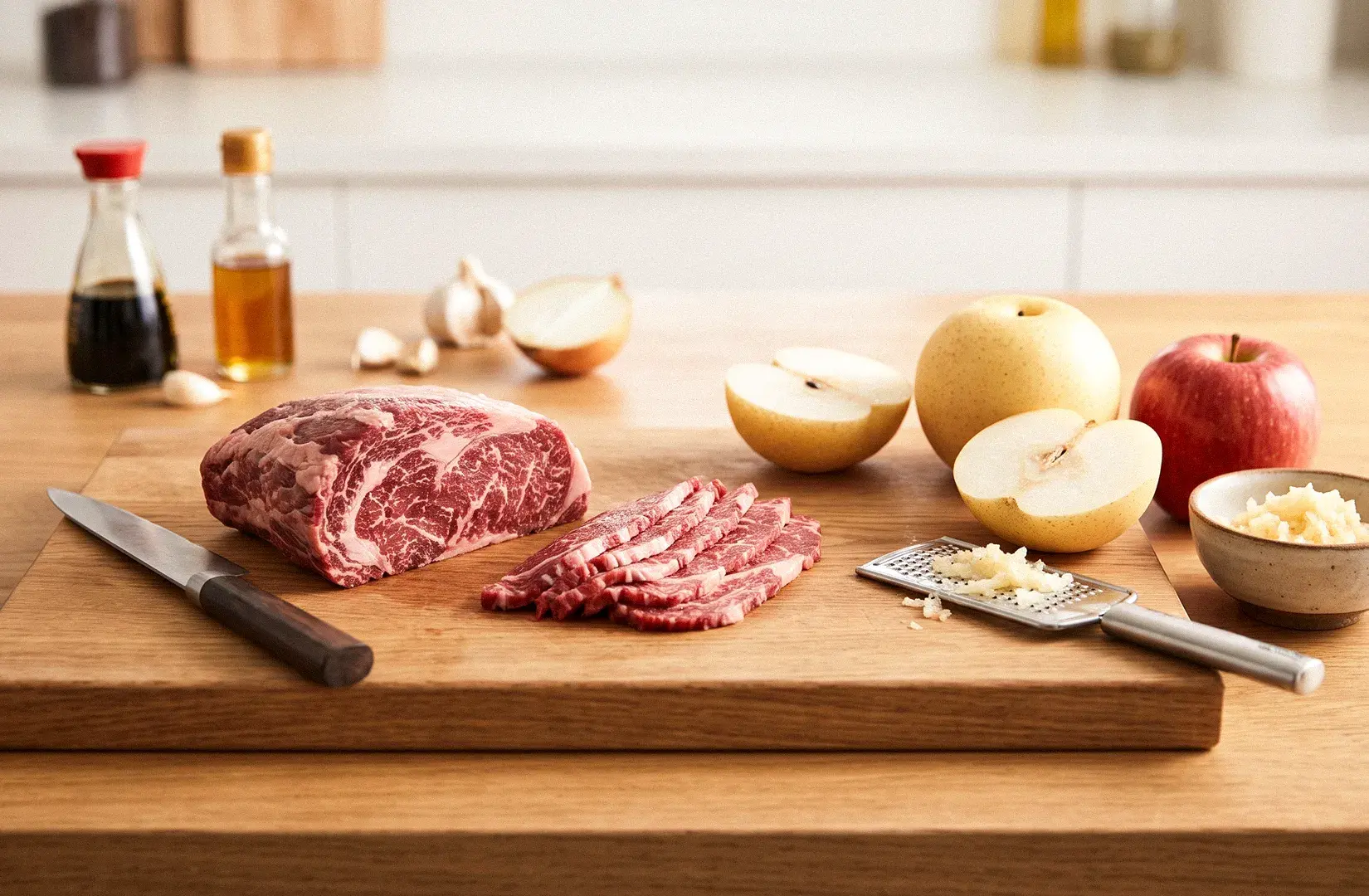
If there's one ingredient worth paying attention to, it's the beef.
Ribeye is an excellent starting point because its marbling helps the meat remain tender during quick cooking. Sirloin is another practical choice. You'll also see ribeye sold as scotch fillet in some markets. However, buying an expensive steak isn't automatically necessary. What matters is having reasonably tender beef sliced thinly enough to cook quickly. Aim for slices approximately 2–3 mm thick, preferably cut across the grain.
If you're slicing beef yourself, chill it until firm enough to cut more easily.
Asian pear contributes natural sweetness and can help tenderise the meat. Grated apple is a useful alternative. Either fruit adds sweetness alongside the brown sugar without changing the basic character of the marinade.
How to Make Bulgogi Sauce and Marinade
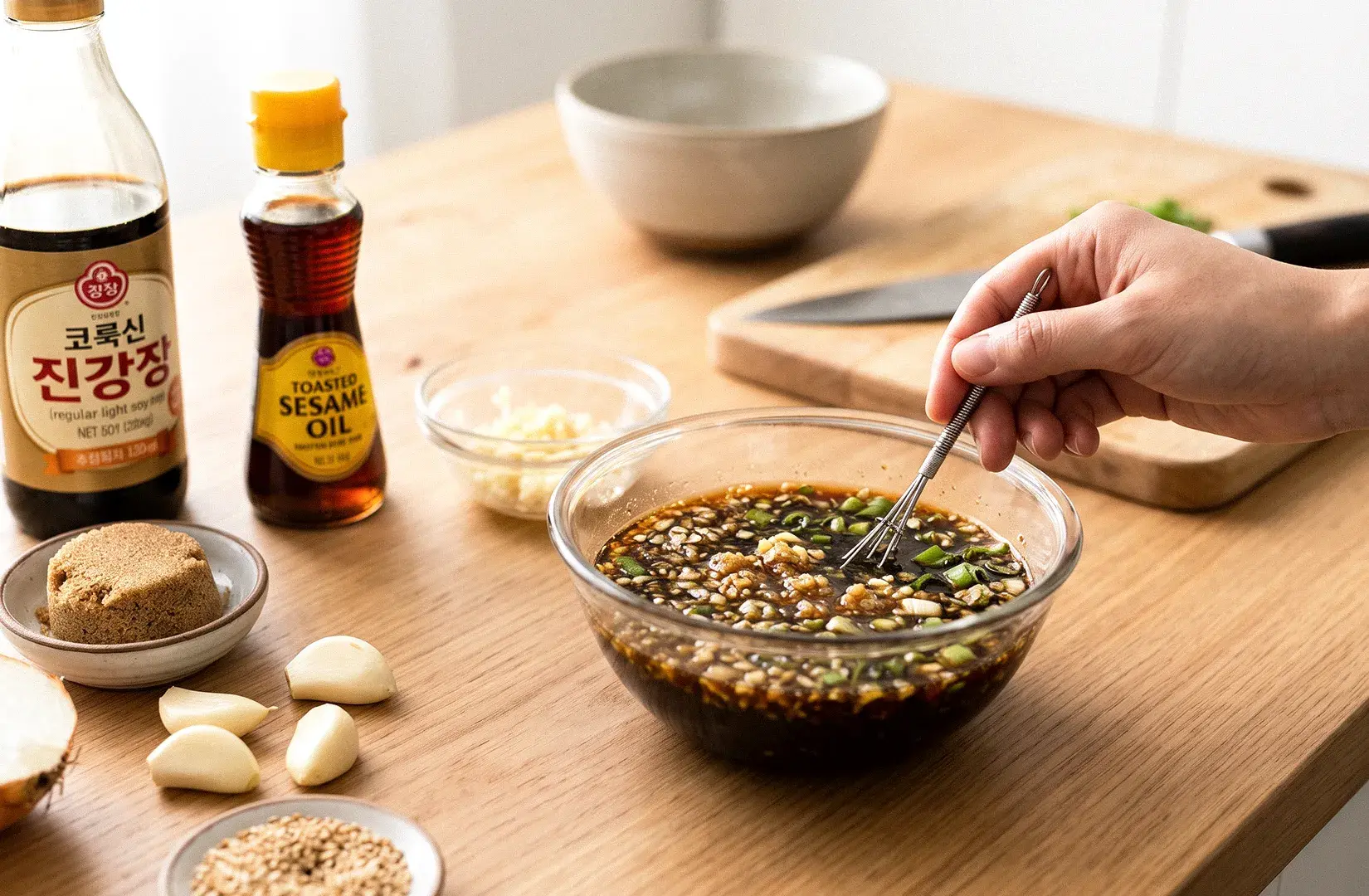
The bulgogi marinade is where most of the flavour comes from. Fortunately, making it isn't complicated.
The marinade brings together four elements: soy sauce, sweetness, aromatics and sesame oil. Each ingredient has a job. Soy sauce provides savouriness. Brown sugar balances the saltiness and contributes to browning. Garlic and onion add aroma, while toasted sesame oil gives Korean BBQ beef its familiar nutty fragrance. Mix the ingredients in a small bowl if preparing the sauce separately.
Choosing the Right Soy Sauce
This matters in Singapore, where several types of soy sauce are common.
Use regular light or all-purpose soy sauce, or Korean jin ganjang. Avoid replacing it directly with thick, sweet dark soy sauce. You'll change both the sweetness and colour of the marinade. Korean soup soy sauce is also not a straightforward substitute because its seasoning characteristics differ.
How to Cook Bulgogi Korean Beef: Step-by-Step
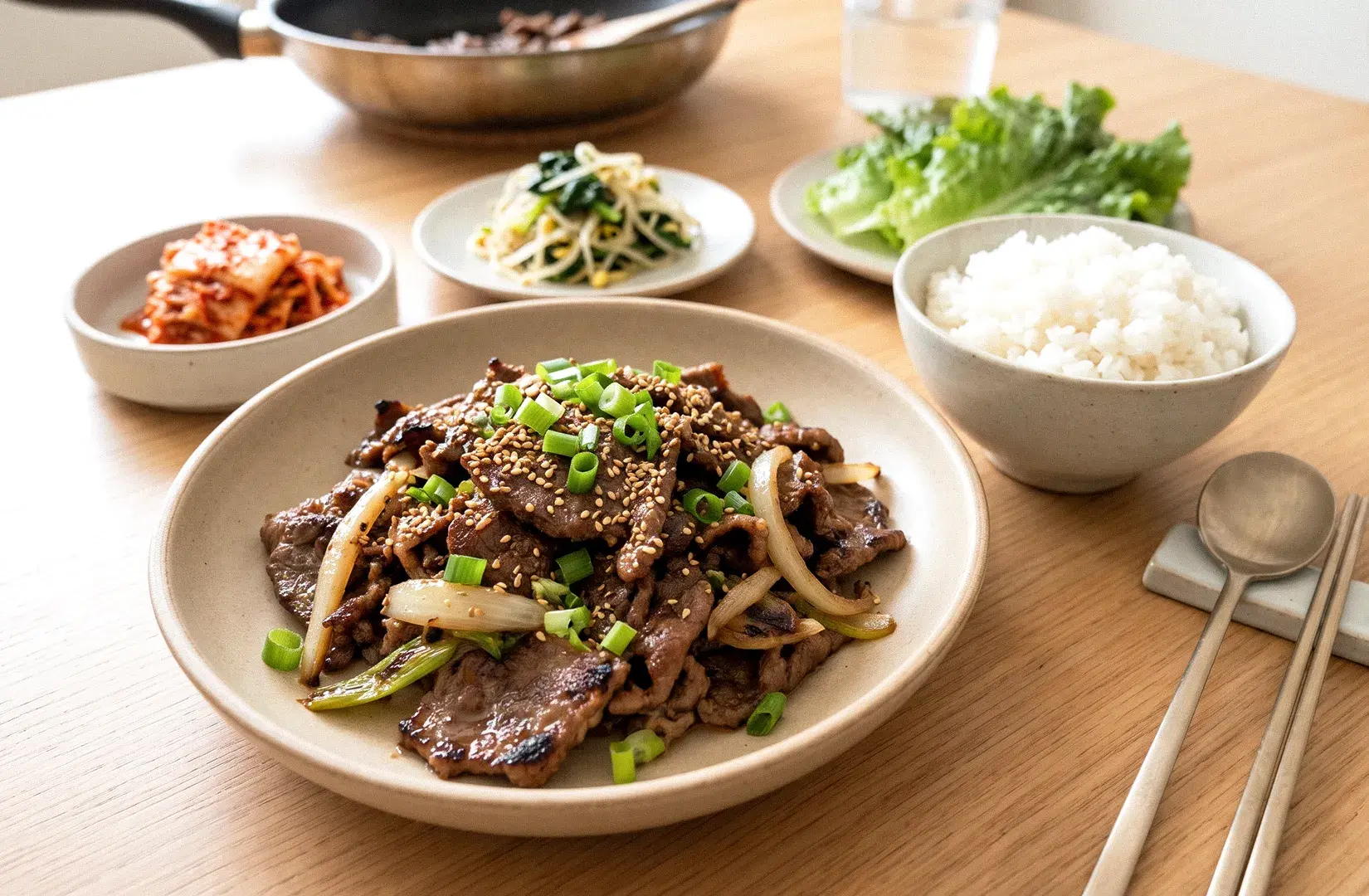
Now for the actual cooking. The following method aims for lightly browned beef rather than the brothier style of bulgogi.
Step 1: Prepare the Beef
Separate your thinly sliced beef so the pieces aren't stuck together. If you're working with a whole cut, slice it across the grain into thin, even pieces. This helps the marinade coat the meat and reduces the cooking time.
Step 2: Mix the Bulgogi Marinade
In a mixing bowl, combine the soy sauce, brown sugar, grated Asian pear and onion, garlic, sesame oil, and black pepper. Stir unitl the sugar has mostly dissolved. The marinade should smell savory, garlicky, and slightly sweet.
Step 3: Marinate the Beef
Add the beef to the bowl and gently mix until every slice is coated. Cover the bowl with cling wrap or transfer everything to a covered container.
Refrigerate for 30–60 minutes. Because the beef is thinly sliced, it doesn't necessarily need an overnight marinade.
Step 4: Prepare the Vegetables
While the beef marinates, slice your onion and chop the green onions. If you're adding mushrooms or carrots, prepare them now. Keep everything ready beside the stove. Thin beef cooks quickly, so you won't want to start chopping halfway through.
Step 5: Heat Your Pan
Place a large skillet over medium-high heat. Add a small amount of neutral cooking oil if needed. The pan should be hot enough to encourage browning without immediately burning the sugar and garlic in the marinade.
Step 6: Cook the Bulgogi Beef in Batches
Add a portion of marinated beef, spreading the slices into a relatively thin layer. Avoid pouring all the excess marinade into the pan at once. Let the beef cook briefly before turning and stirring.
Add the sliced onions during cooking, allowing them to soften alongside the meat. Continue until the beef is thoroughly cooked, adjusting the heat if the marinade begins burning.
Repeat with the remaining beef. Don't overcrowd the pan. This is one of the easiest ways to lose those lightly browned edges.
Step 7: Finish and Serve Immediately
Add the green onions towards the end of cooking. Sprinkle toasted sesame seeds over the cooked meat. Serve immediately with steamed rice, lettuce leaves, or your preferred Korean side dishes.
That's your homemade beef bulgogi. No charcoal, no specialised equipment, and definitely no need to turn your kitchen into a Korean barbecue restaurant.
What to Serve With Korean BBQ Beef
Beef bulgogi works particularly well with rice because the sweet and savoury juices season every mouthful.
For a simple Korean-style meal, serve it with:
Steamed rice: A natural partner for the marinated beef.
Kimchi: Adds acidity and a contrasting flavour.
Seasoned bean sprouts: Provide freshness and crunch.
Lettuce wraps: Let you combine beef with fresh vegetables.
Ssamjang: A seasoned Korean dipping paste often enjoyed with meat wraps.
For lettuce wraps, place a little beef on a lettuce leaf, add your preferred accompaniments, and fold everything together. You can also use leftover bulgogi in a rice bowl with vegetables.
If that sounds appealing, our guide to how to make bibimbap explains another practical way to enjoy Korean beef, rice, and vegetables together.
Easy Bulgogi Variations Worth Knowing
There isn't one original recipe followed by every Korean household. Different preparations change the meat, marinade, and cooking method.
Can You Make Bulgogi With Ground Beef?
Yes, although the texture will be different. Ground beef cooked with bulgogi-style seasonings makes a convenient rice bowl topping. Just don't expect it to resemble traditional thinly sliced beef bulgogi. Cook minced beef thoroughly, following the Singapore Food Agency's guidance of at least 72°C.
What About Regional Korean Bulgogi?
Korea has several distinctive bulgogi traditions.
Seoul-style bulgogi can be cooked with vegetables and broth, sometimes using a specialised domed pan.
Eonyang bulgogi, associated with Ulsan, uses finely chopped or minced seasoned beef formed into a flat shape and grilled over charcoal.
Gwangyang bulgogi is known for thinly prepared beef grilled over charcoal.
These variations show why describing one cooking method as the only authentic recipe misses part of the picture.
How to Store and Reheat Beef Bulgogi
If you're preparing bulgogi ahead of time, food safety matters.
Always marinate raw beef in the refrigerator, ideally at 4°C or below. Keep raw meat separate from ready-to-eat ingredients. Never use marinade that has touched raw beef as an uncooked dipping sauce. Reserve a clean portion beforehand if you want extra sauce.
For leftovers, transfer cooked bulgogi into a shallow, airtight container and refrigerate promptly. Reheat thoroughly before eating, avoiding repeated cooling and reheating. You can also freeze properly handled marinated beef before cooking.
In Singapore's warm climate, leaving marinated meat sitting on the kitchen counter is particularly unwise.
Nutritional Facts and Recipe Notes
Nutrition facts vary according to the beef cut, serving size, and amount of marinade consumed. Ribeye generally contains more fat than leaned sirloin, including saturated fat; the balance of monounsaturated fat, polyunsaturated fat, and trans fat varies by cut and product.
The pear, onion, and serving vegetables contributes small amounts of vitamin C and vitamin A. For precise figues, calculate nutrition using the exact ingredients and portions you use rather than relying on generic or required recipe ratings.
Making Korean Beef Bulgogi at Home
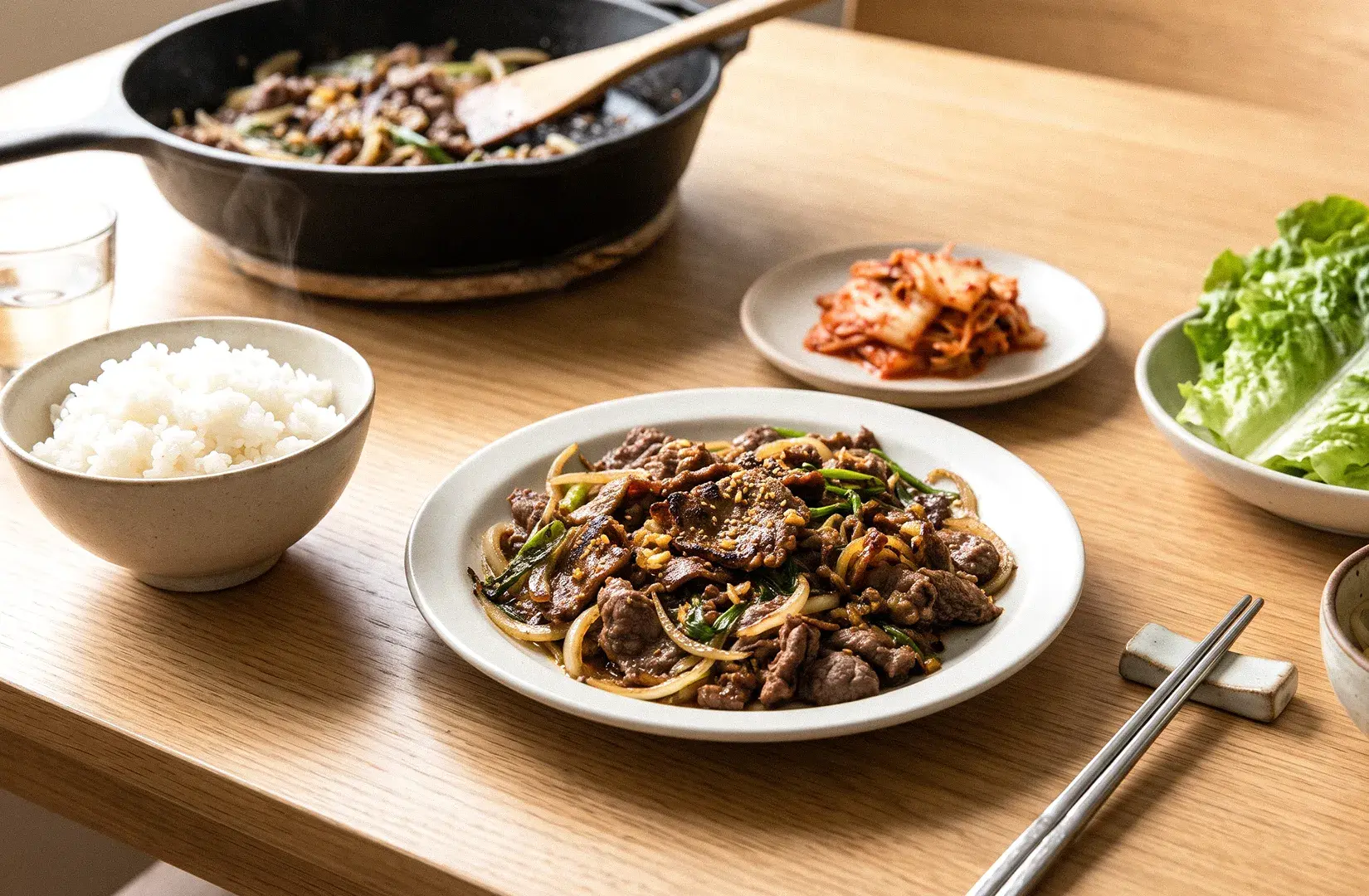
The appeal of beef bulgogi is that it doesn't demand complicated techniques or hard-to-find ingredients. You need suitable beef, a balanced marinade, and enough patience not to crowd the pan.
Start with the soy-based version before experimenting with additional vegetables, different beef cuts, or spicier seasonings. And remember, browned beef and saucier bulgogi are both recognised approaches in Korean cooking.
Once you understand how the marinade and cooking method work together, making Korean beef bulgogi becomes much less intimidating.
The next time you're craving that familiar sweet and savoury Korean BBQ beef, your frying pan might be all you need.