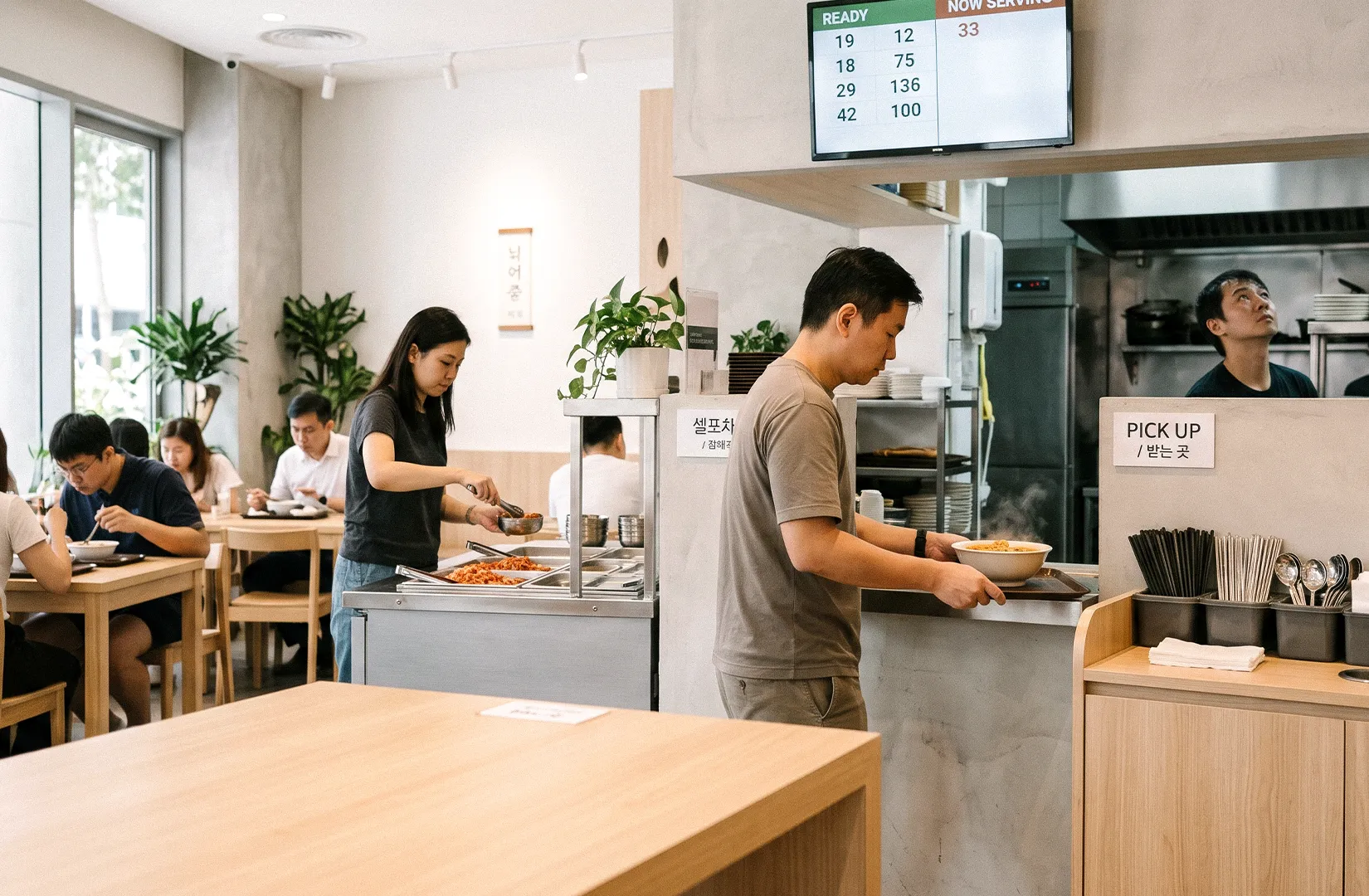
The ramyeon is ready, but nobody is bringing it to the table.
Instead, a diner collects the steaming bowl from a counter, picks up a pair of chopsticks, and finds an empty seat. Nearby, someone is helping themselves to kimchi while another customer waits for their order number to appear on a screen.
It's a different picture from the Korean restaurant experience many Singapore diners associate with attentive servers, generous spreads of banchan, and staff occasionally stepping in to manage the BBQ grill.
Yet self-service feels increasingly at home in casual dining.
The question is whether self-service Korean restaurants represent a meaningful change in how we enjoy Korean food, or simply another way for restaurants to operate with fewer staff.
Perhaps it's a little of both.
When Convenience Becomes Part of the Experience
Singapore diners are hardly strangers to self-service.
Food courts, hawker centres, and casual eateries have long familiarised customers with collecting meals, finding seats, and returning trays.
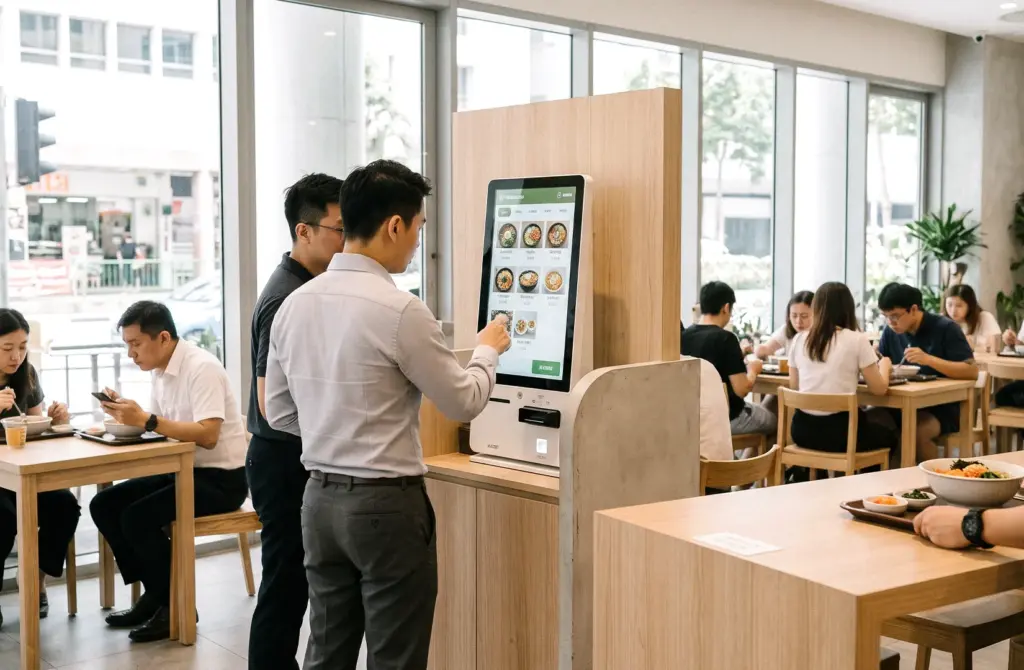
So when a Korean eatery introduces counter ordering, digital kiosks, or self-service stations, the concept doesn't feel particularly unfamiliar. In fact, it can make Korean food more approachable.
Someone craving bibimbap during a lunch break may prefer ordering through a kiosk rather than waiting for table service. A quick bowl of ramyeon doesn't necessarily require the attention associated with a full restaurant meal.
There's also something appealing about controlling your own pace. You order, collect your food, and eat without much ceremony.
For diners who simply want a satisfying Korean meal between errands or after work, that convenience can be enough.
But Are We Losing Something Along the Way?
Not every aspect of Korean dining translates neatly into a self-service format.
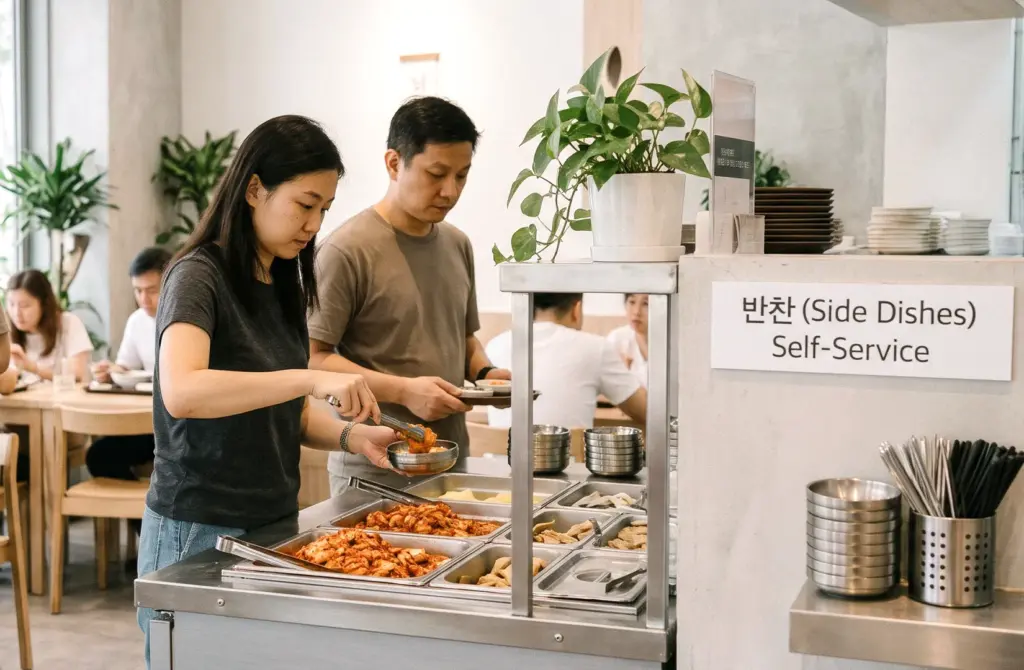
Consider the familiar experience of sitting down at a Korean restaurant and watching several small plates of banchan arrive before the main dish. There's a sense of hospitality in that arrangement, even when the side dishes are included as a standard part of the meal.
At a self-service restaurant, those same dishes might be placed at a communal station, where diners collect their preferred portions.
The food hasn't necessarily changed, but the interaction has. Neither approach is automatically better.
Self-service banchan stations can allow diners to choose what they enjoy and avoid taking dishes they won't finish. However, poorly maintained stations or limited selections can make the experience feel less thoughtful.
Convenience becomes less appealing when customers feel they're doing more work without receiving anything meaningful in return.
And that raises another consideration: price.
If diners are ordering, collecting, and clearing their own meals, it's reasonable for them to expect the overall experience to reflect that arrangement.
Korean Dining Doesn't Have Just One Format
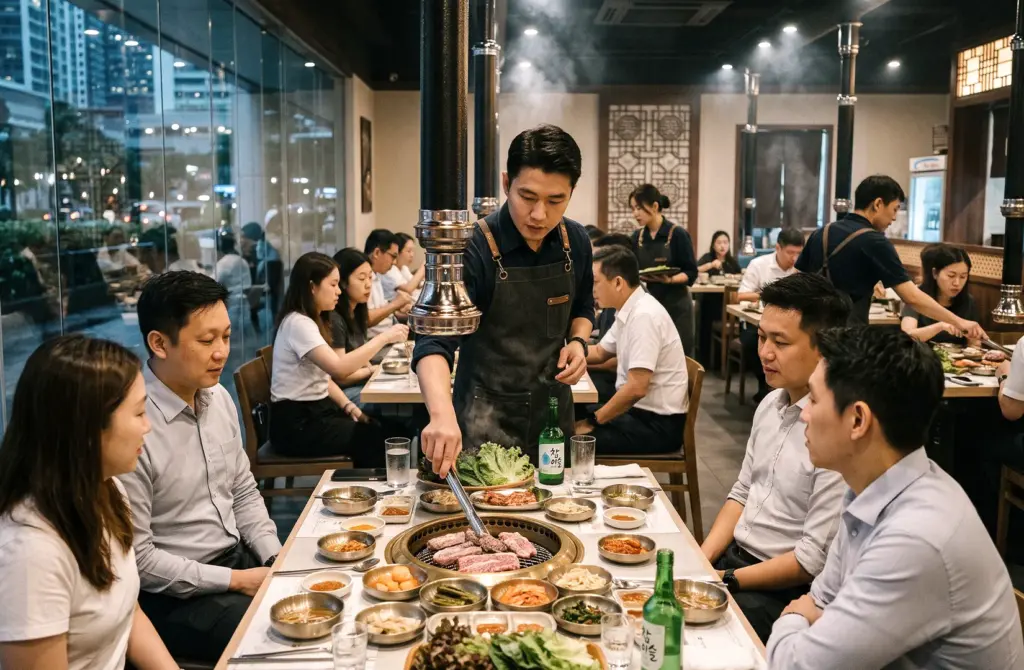
It's worth remembering that Korean food has never depended entirely on full-service restaurants.
In South Korea, casual eateries, convenience stores, and quick-service establishments offer different ways to enjoy familiar dishes. A simple bowl of noodles serves a different purpose from a leisurely Korean BBQ dinner.
Singapore's Korean dining scene can accommodate both.
Self-service formats may suit everyday dishes such as ramyeon, kimbap, and rice bowls, where speed and affordability are often important. But a restaurant specialising in premium grilled meats or elaborate shared meals offers something different.
The appeal there may involve attentive service, recommendations, and the pleasure of letting someone else handle the cooking. Trying to make every Korean dining experience equally efficient would overlook why people choose different restaurants in the first place.
The Future Might Depend on What We're Eating
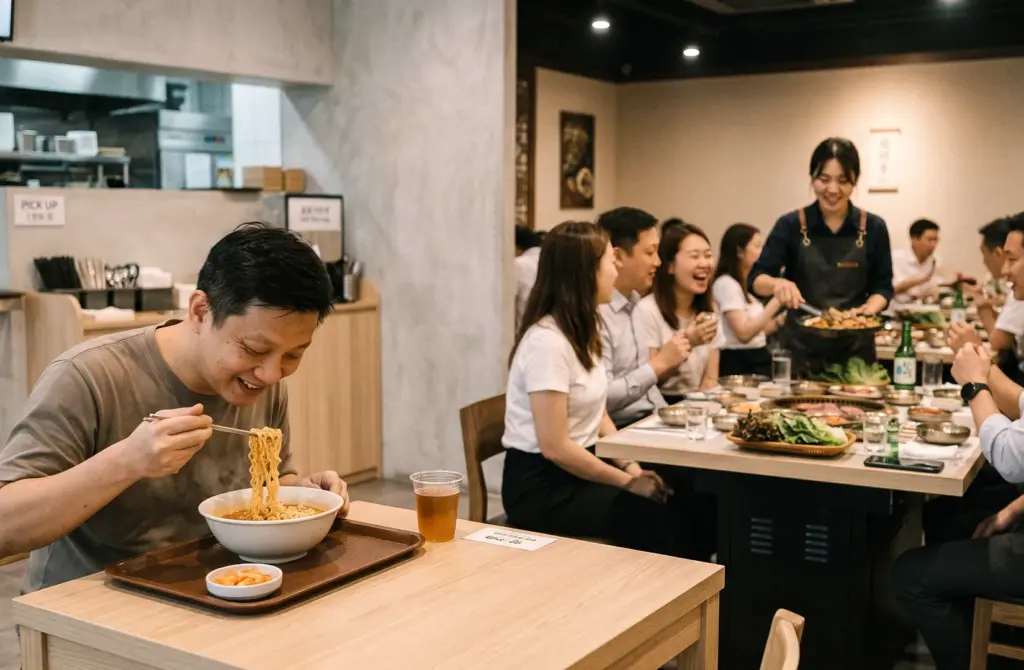
Perhaps self-service isn't replacing traditional Korean dining as much as creating another option.
For a quick weekday lunch, collecting a bowl of bibimbap from the counter might feel perfectly reasonable. For a birthday dinner or a long-awaited gathering with friends, the same arrangement might feel less satisfying.
What matters is whether the service style suits the food, the price, and the occasion.
The next time a Korean restaurant asks you to collect your own meal, it might be worth noticing whether the arrangement genuinely improves your experience. Because sometimes, good service means someone bringing everything to your table.
And sometimes, it means getting your ramyeon while it's still hot.