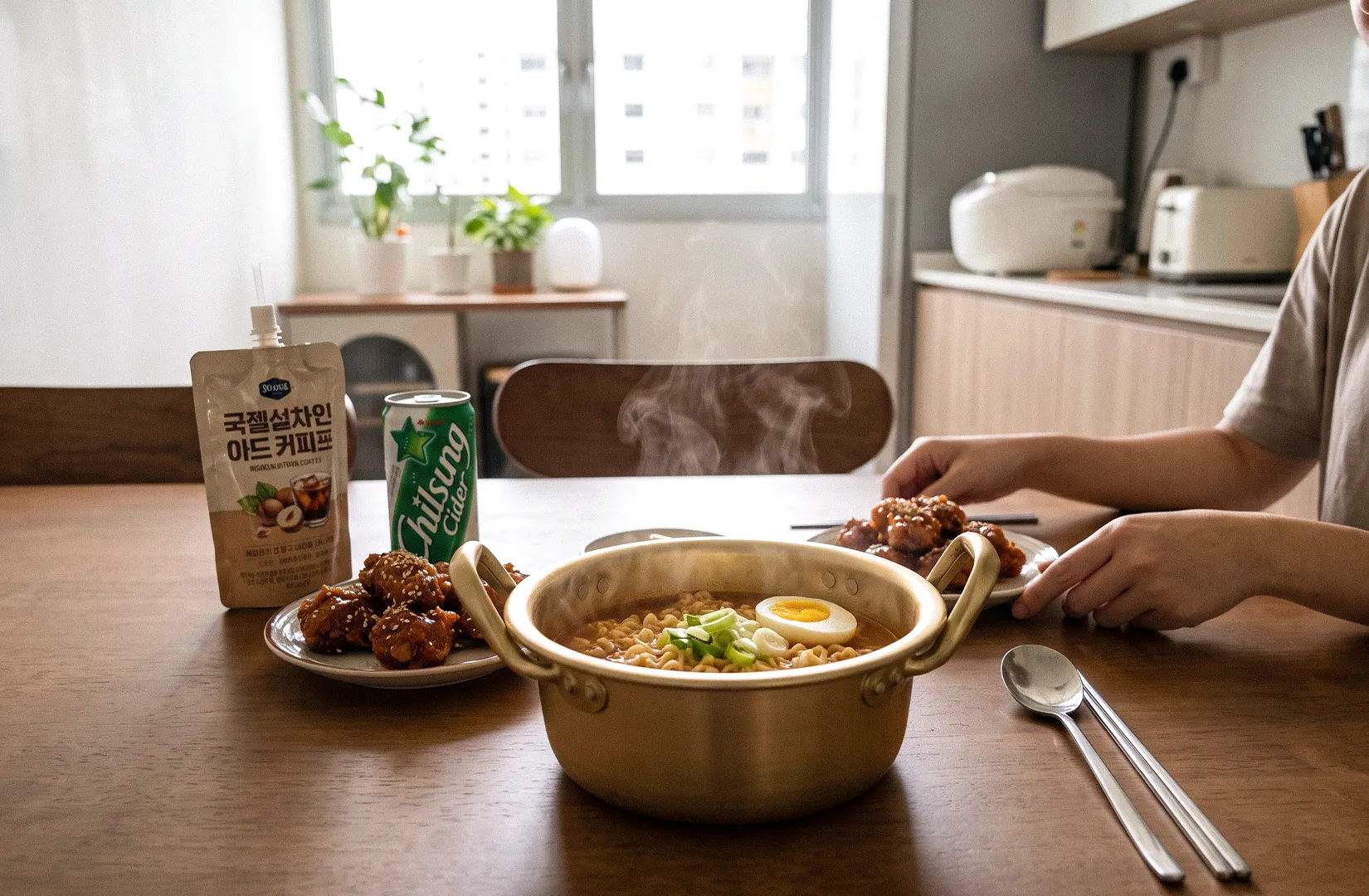
A bowl of ramyeon sits on the table, its noodles still steaming. Beside it are a few pieces of Korean fried chicken and a drink in packaging that looks like something from a Korean convenience store.
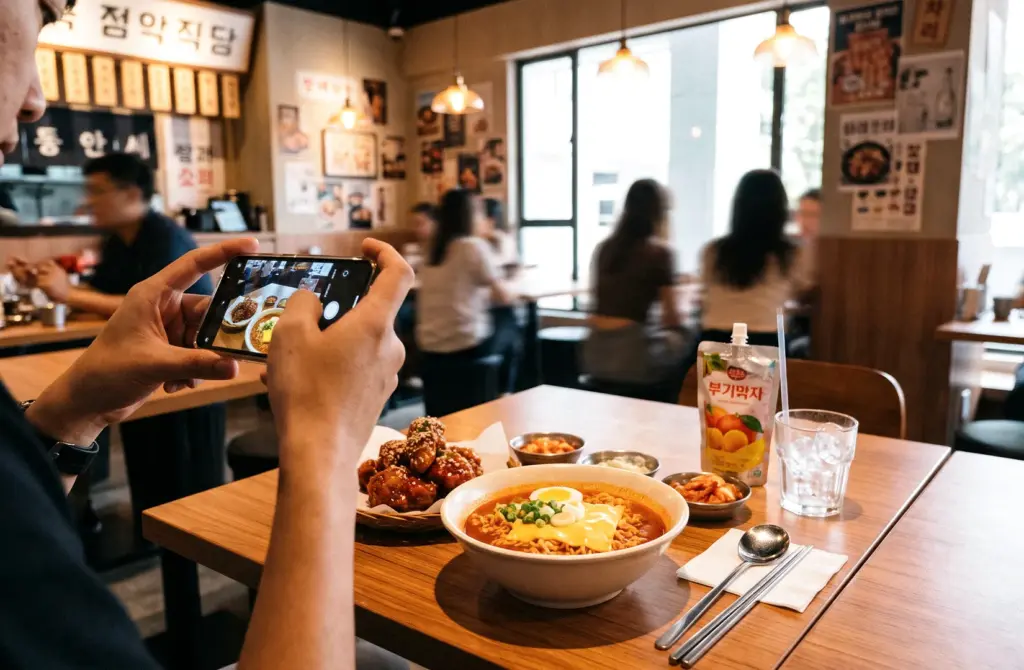
Before anyone reaches for their chopsticks, someone takes a photograph.
It's a familiar enough scene in Singapore, where Korean restaurants and cafés sometimes offer an experience that feels remarkably close to what we see in Korean dramas, variety shows, and social media.
The food matters, of course. But so does the setting, the presentation, and sometimes even the feeling of participating in a lifestyle we've come to recognise through a screen.
It raises an interesting question: Are we choosing Korean food because we enjoy eating it, or because we want a small piece of the Korean lifestyle that comes with it?
Perhaps the answer isn't as straightforward as it seems.
When the Experience Becomes Part of the Order
Korean popular culture has changed how many people encounter Korean food.
A character eating ramyeon late at night can make a simple bowl of instant noodles look unusually comforting. A group of friends sharing fried chicken and beer can make an ordinary dinner seem like an occasion worth recreating.
These moments create expectations before we even enter a restaurant.
In Singapore, Korean-themed cafés, casual eateries, and restaurants can appeal to diners who want something beyond the dishes themselves. The interiors, music, tableware, and menu presentation may all contribute to that experience.
There's nothing particularly wrong with this.
After all, people have always chosen restaurants for reasons beyond taste. Atmosphere, company, and the pleasure of trying something fashionable are legitimate parts of dining. But it becomes interesting when the experience starts receiving more attention than the food.
The Difference Between Looking Korean and Tasting Good
A restaurant can recreate the appearance of a Korean dining experience quite convincingly.
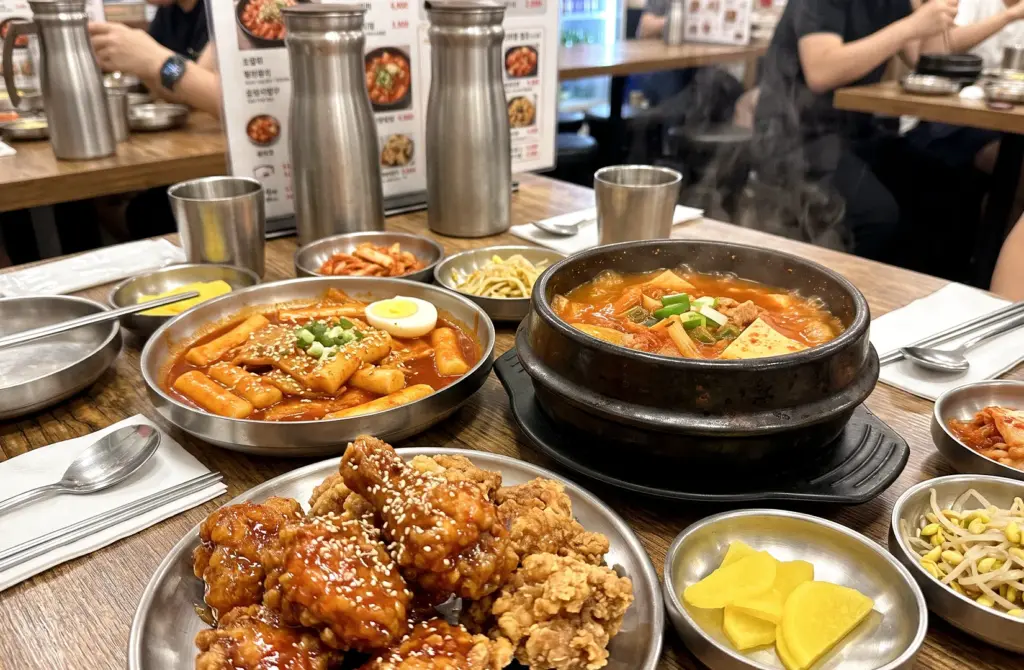
There might be stainless steel chopsticks, metal bowls, Korean signage, and familiar dishes arranged for photographs. Yet none of those details guarantees a satisfying meal.
A bowl of tteokbokki still needs rice cakes with a pleasant chew and a sauce worth finishing. Korean fried chicken should offer more than an attractive glaze. And a comforting kimchi jjigae depends on the balance of its broth, not whether the restaurant resembles a television set.
The appearance of Korean dining can attract curiosity, but the food itself has to justify the experience.
This distinction matters in Singapore, where diners have plenty of choices and restaurant visits can become expensive. Paying for the atmosphere is understandable. Paying for the atmosphere while overlooking disappointing food is another matter.
Korean Food Doesn't Have to Feel Like a Korean Drama
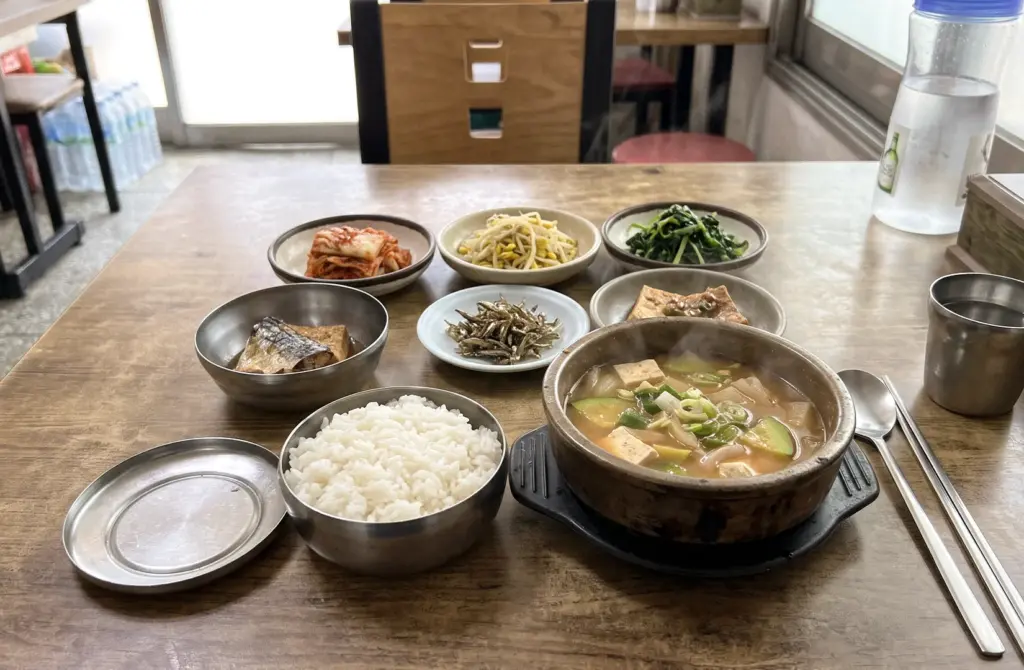
One overlooked aspect of Korean cuisine is how ordinary much of it is.
Not every Korean meal involves elaborate BBQ spreads, colourful street food, or beautifully arranged café desserts. Sometimes it's simply rice, soup, and a few Korean side dishes.
A bowl of doenjang jjigae with steamed rice may not attract the same attention as a towering plate of fried chicken. Neither will a modest serving of seasoned vegetables. But these quieter dishes reflect an important part of Korean eating habits.
They remind us that Korean food exists beyond the polished images that travel through entertainment and social media. And perhaps becoming more familiar with Korean cuisine means developing an appreciation for those less fashionable meals.
Maybe the Lifestyle Is Just the Beginning
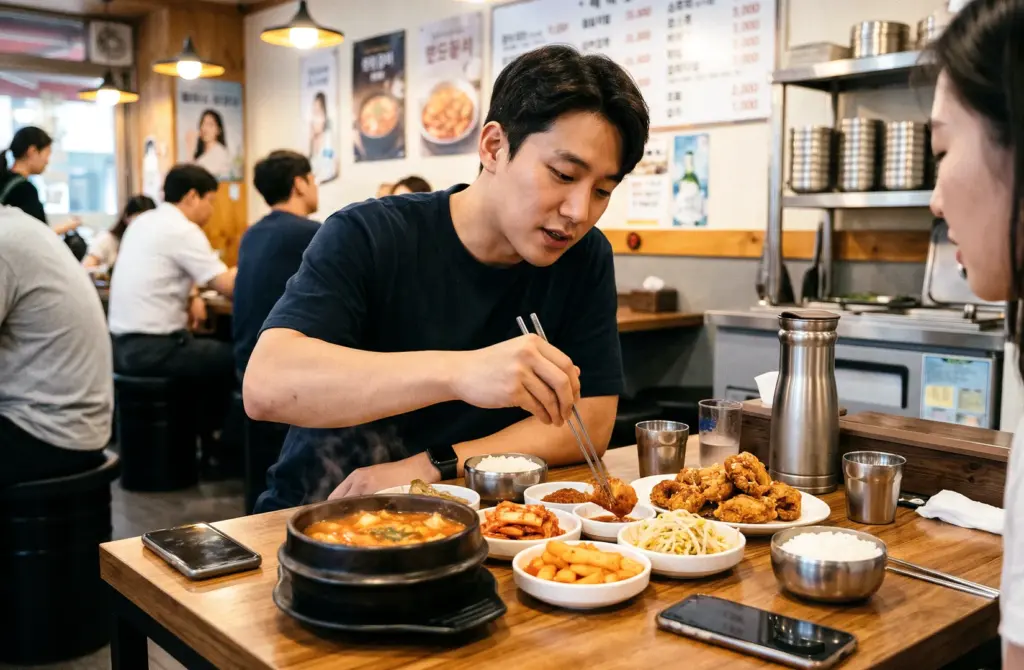
It's easy to dismiss food trends as superficial, particularly when restaurants become popular because of their interiors or online visibility.
But curiosity has to begin somewhere.
Someone might order tteokbokki because they saw it in a drama, then discover that they genuinely enjoy its chewy texture and spicy sauce. Another diner might visit a Korean café for the photographs but eventually develop an interest in traditional Korean desserts.
The initial motivation doesn't necessarily determine the value of the experience. What matters is whether that curiosity grows beyond the image.
Perhaps the real change happens when someone stops asking which Korean restaurant looks most like Seoul and starts wondering where they can find a genuinely satisfying bowl of soup.
At that point, Korean food becomes something they appreciate on their own terms. And the next meal no longer needs to resemble a scene from a drama to be worth remembering.