While reading through Korean cooking class listings in Singapore, one word stopped me.
Demonstration.
It sat quietly in a community club listing for a kimchi session. It's easy to miss, and it changes everything about the afternoon you're signing up for. You might stand at a station with your sleeves rolled up. Or you might sit and watch someone else's hands move through the cabbage.
That small word says something about Korean cooking classes here. They are not one thing. Some teach you to cook from scratch. Some show you how it's done. Some come to your home. Some run for 18 hours and end with an assessment.
This guide looks at what you can learn, how the formats differ, where verified classes are offered in Singapore, and what to ask before you pay. It's designed for anyone who has eaten a bowl of bibimbap and wondered what went into each small pile of vegetables and who wants to start exploring the art behind the food, not just the dish itself.
What You Can Learn at a Korean Cooking Class in Singapore
The menus are wider than you might expect. Korean BBQ comes up less than everyday food: rice bowls, noodles, stews, pancakes, and kimchi.
Across the verified Singapore providers, dishes taught include:
- Bibimbap (비빔밥): Seasoning vegetables one by one, cooking the rice, then assembling the bowl
- Japchae (잡채): Sweet potato noodles stir-fried with vegetables and balanced seasoning
- Kimchi (김치): Salting, making a seasoning paste, and understanding fermentation
- Tteokbokki (떡볶이): Korean rice cakes in a seasoned sauce
- Kimchi-jjigae and sundubu-jjigae: Kimchi stew and soft tofu stew
- Dak-galbi (닭갈비): Marinated, stir-fried chicken
- Gimbap (김밥): Preparing fillings and rolling rice in seaweed
- Samgyetang (삼계탕): Ginseng chicken soup
- Pancakes: Vegetable or prawn kimchi pancakes
What interests me is how these dishes teach more than themselves. Bibimbap, for example, isn't just vegetables arranged over rice. Each topping is prepared separately according to its texture, then seasoned with things like sesame oil, garlic, and soy sauce. Dishes with meat follow a similar logic—the marinade, the cut, the heat all matter. Learn that once and you've learned the base of several other dishes too. And if you're curious about the side dishes that surround it at the table, our guide on explaining banchan is a good place to explore next.
These are examples from specific providers, though. Not every class teaches every dish, so read the menu closely.
Hands On, Demonstration, or Private: Types of Cooking Classes
This is the part I'd slow down for. The format shapes the experience more than the menu does.
- Hands-on workshops have you washing, cutting, measuring, seasoning, and cooking yourself. These suit anyone who wants to build real skills and recreate the dishes at home with confidence.
- Cooking demonstrations have an instructor cook while you watch. You still learn methods and discover dishes, but your own hands stay mostly clean. The People's Association's December 2026 Korean cooking session at Fuchun Community Club is officially listed as a demonstration.
- Private lessons give you personal instruction, sometimes with a menu shaped around what you want to learn. They can be wonderfully approachable, especially for beginners who feel a bit uncertain in a group setting.
- Structured courses run across longer hours or several days and cover multiple techniques. Some are funded under SkillsFuture and designed for those who want to go deeper.
Neither watching nor doing is the wrong choice. They're just different afternoons. A demonstration can open your eyes to a dish. A hands-on class lets your fingers remember it and leave you with a bit more confidence in the kitchen.
Where to Learn Korean Cooking in Singapore
Korean cooking classes here aren't clustered around the Korean restaurant districts. They're in community clubs, culinary studios, a lifelong learning institute, and sometimes your own kitchen.
Korean Cooking SG
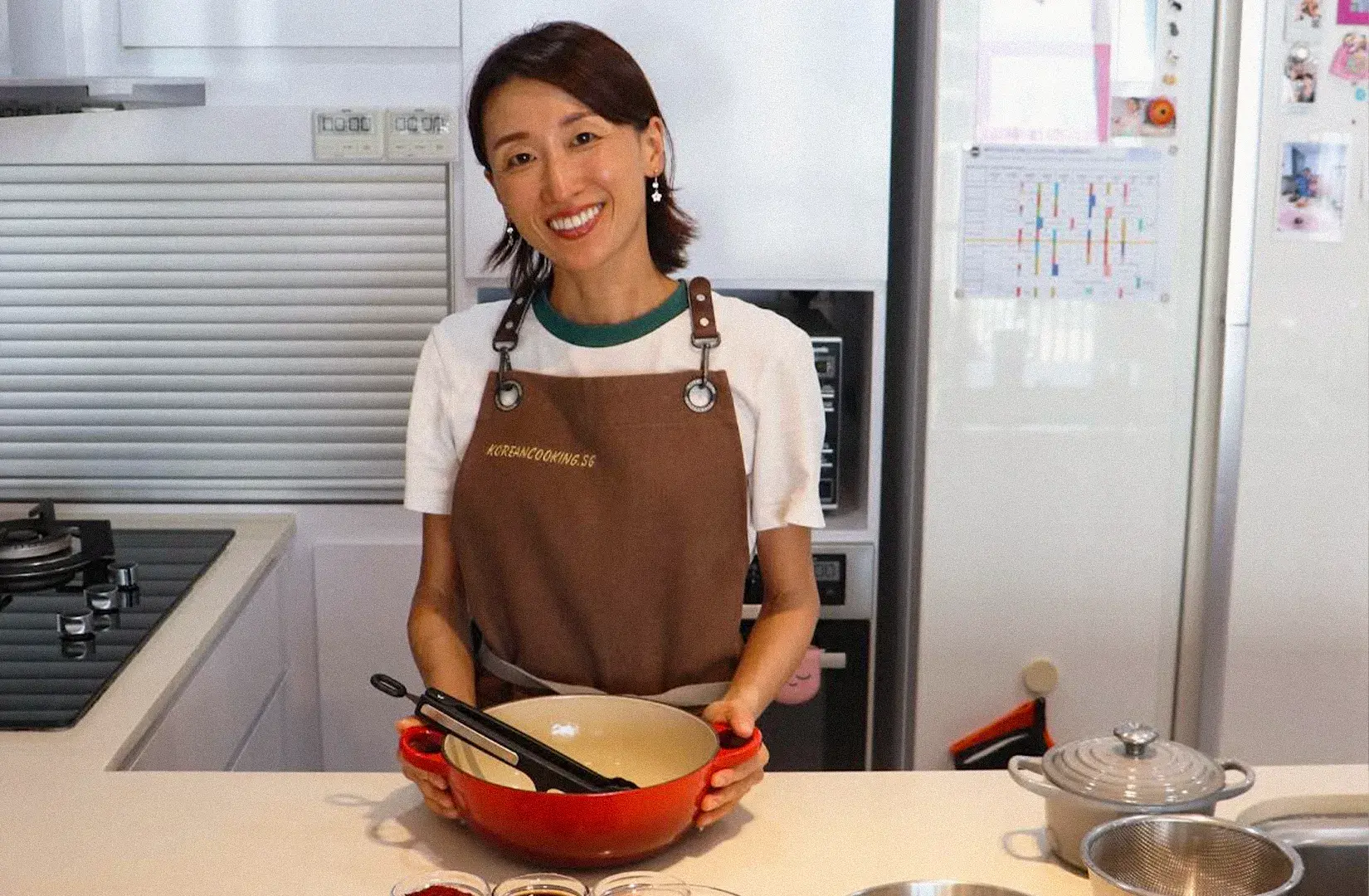
Run by founder and instructor Heryong Kwon, this provider offers private, hands-on lessons from S$180 per person. According to her own website, she's a passionate educator who studied at a traditional cooking academy in Seoul and has professional experience in Japan, Australia, and Singapore. She lists English, Japanese, Korean, and some Mandarin among her languages. These details come from her website rather than independent verification.
Published lessons include fresh napa kimchi with boiled pork, dolsot bibimbap with seaweed soup (beef or tofu), japchae, gimbap, samgyetang with sliced radish kimchi, and prawn kimchi pancake with cucumber kimchi. Recipes and ingredients are included. You're asked to bring an apron and share any allergies or dietary needs in advance. The exact teaching address isn't listed publicly, so you'll need to enquire.
People's Association: Yio Chu Kang CC and Fuchun CC
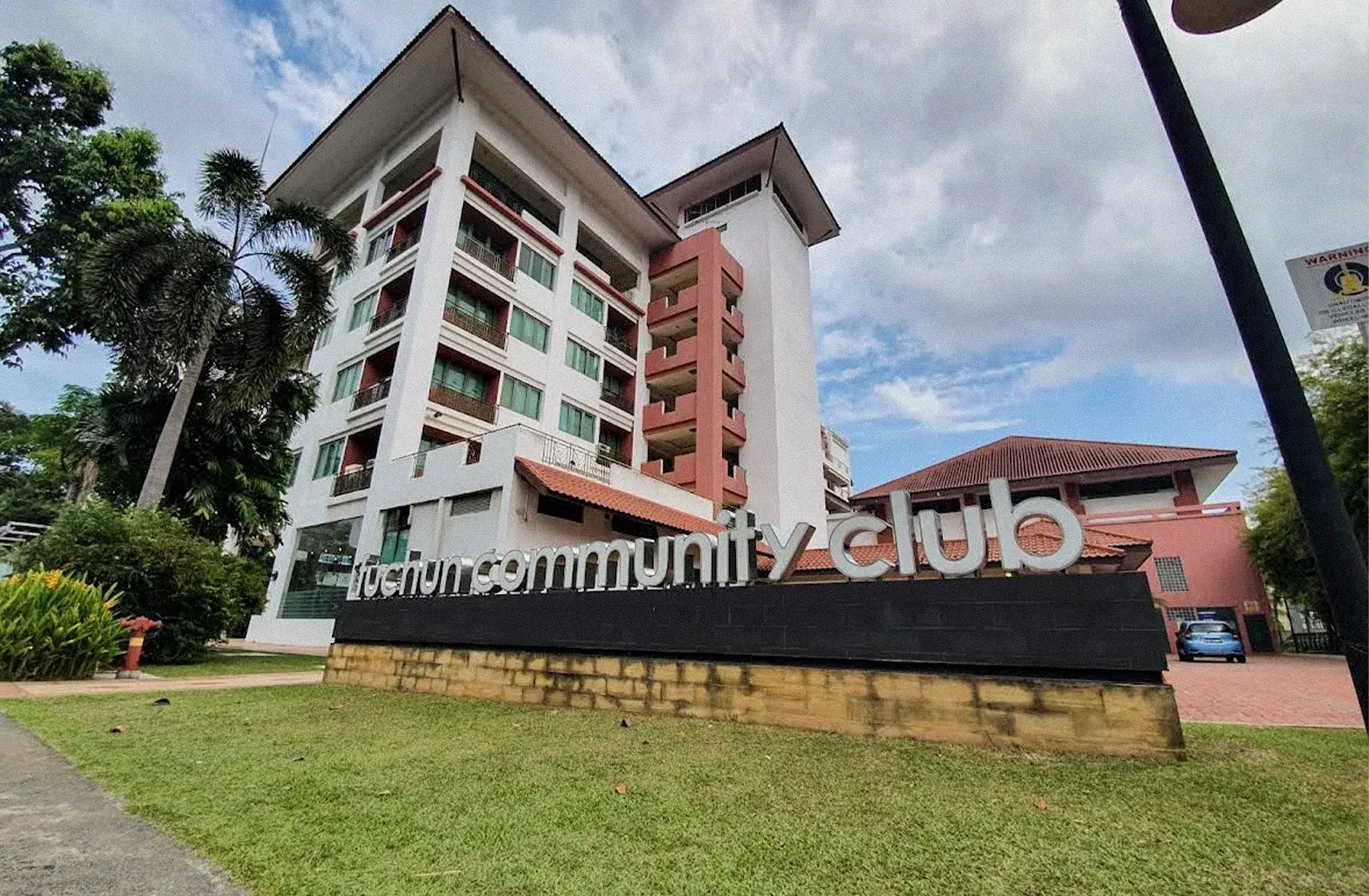
These community club sessions are the most accessible in price, and both are taught by instructor Cho Young Mi.
At Yio Chu Kang Community Club (50 Ang Mo Kio Street 61), a session on 14 November 2026, from 5:00 pm to 7:30 pm, covers jjajangmyeon, stir-fried anchovies, and braised soybeans. The fee is S$38 to S$48, plus a S$10 material fee. Bring an apron and a food container. The listing doesn't make clear how much each participant cooks personally.
The Fuchun CC session on 19 December 2026, from 2:00 pm to 5:00 pm, is a demonstration in English covering napa cabbage kimchi, kimchi stew, and kimchi fried rice. It costs S$50 to S$60, plus a S$10 material fee. I like how it follows one ingredient into three dishes, allowing you to see how kimchi moves through a whole meal. Fuchun CC is currently listed at a temporary location, so confirm where the culinary studio is before you go.
Both are single dated sessions, not ongoing weekly programs.
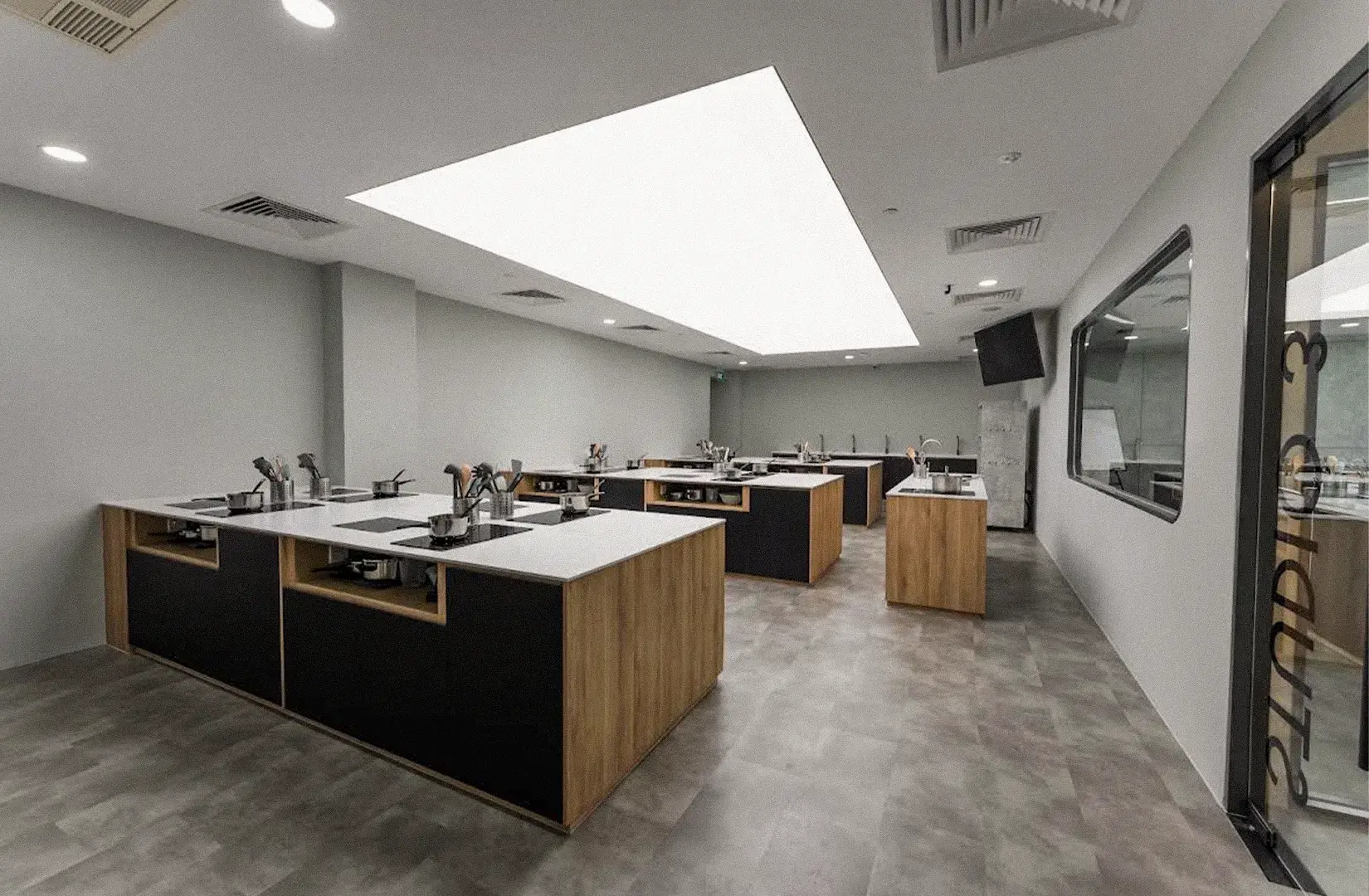
Pots & Pans Culinary Studio, Orchard
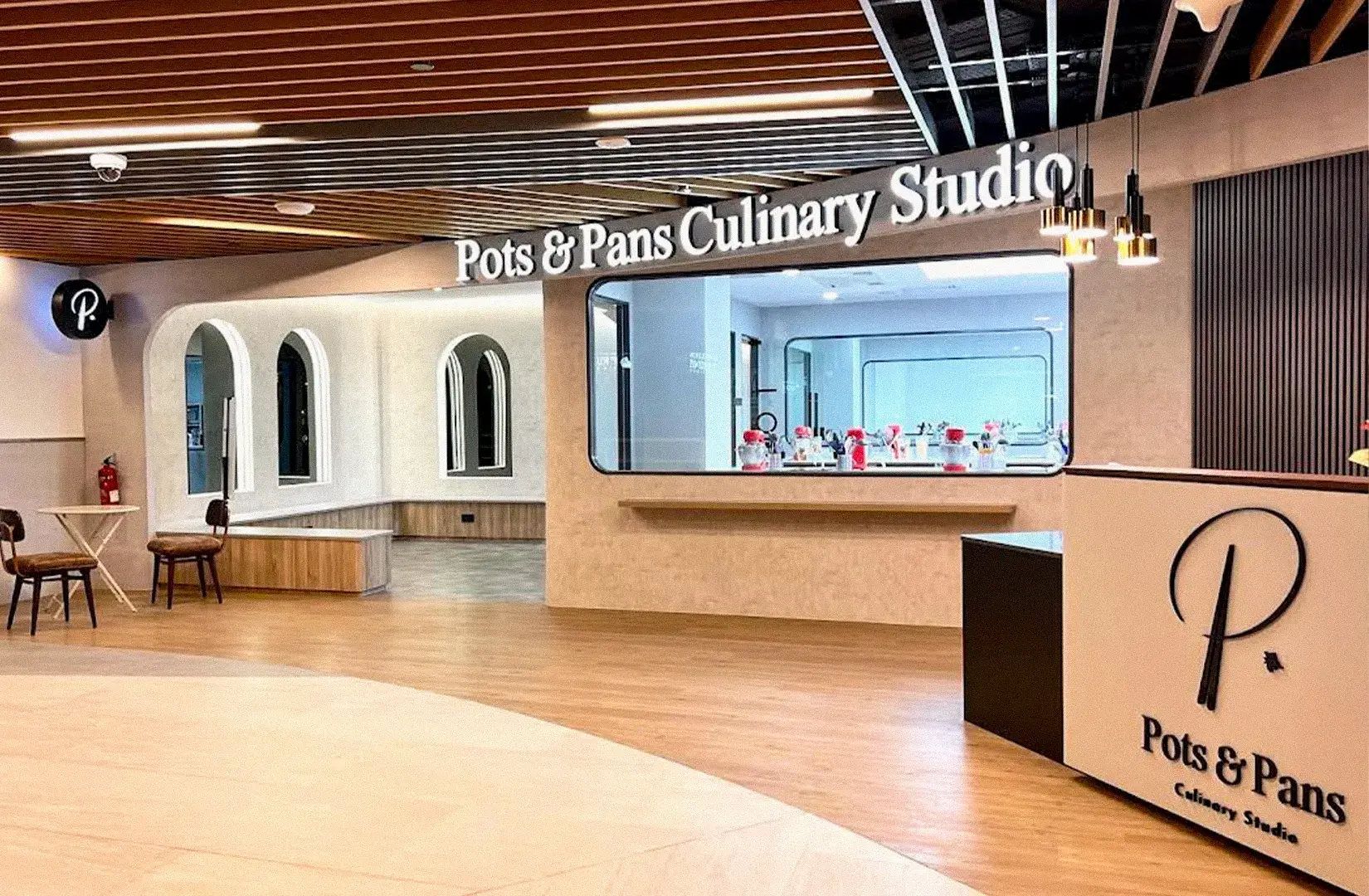
At The Centrepoint (176 Orchard Road, #B1-12), the Korean Cuisine course runs for 18 hours of hands-on training. The curriculum includes japchae, kimchi, kimchi-jjigae, tteokbokki, samgyetang, jajangmyeon, and vegetable pancakes. Two learners share each cooking station, with up to 24 per class.
The full fee is S$784.80. Eligible Singapore citizens below 40 and eligible PRs pay S$424.80, and eligible citizens aged 40 and above pay S$280.80. Ingredients and takeaway containers are provided. Wear long pants and covered shoes. The published September and October 2026 dates have passed, so check for the next intake.
Asian Culinary Institute, Paya Lebar
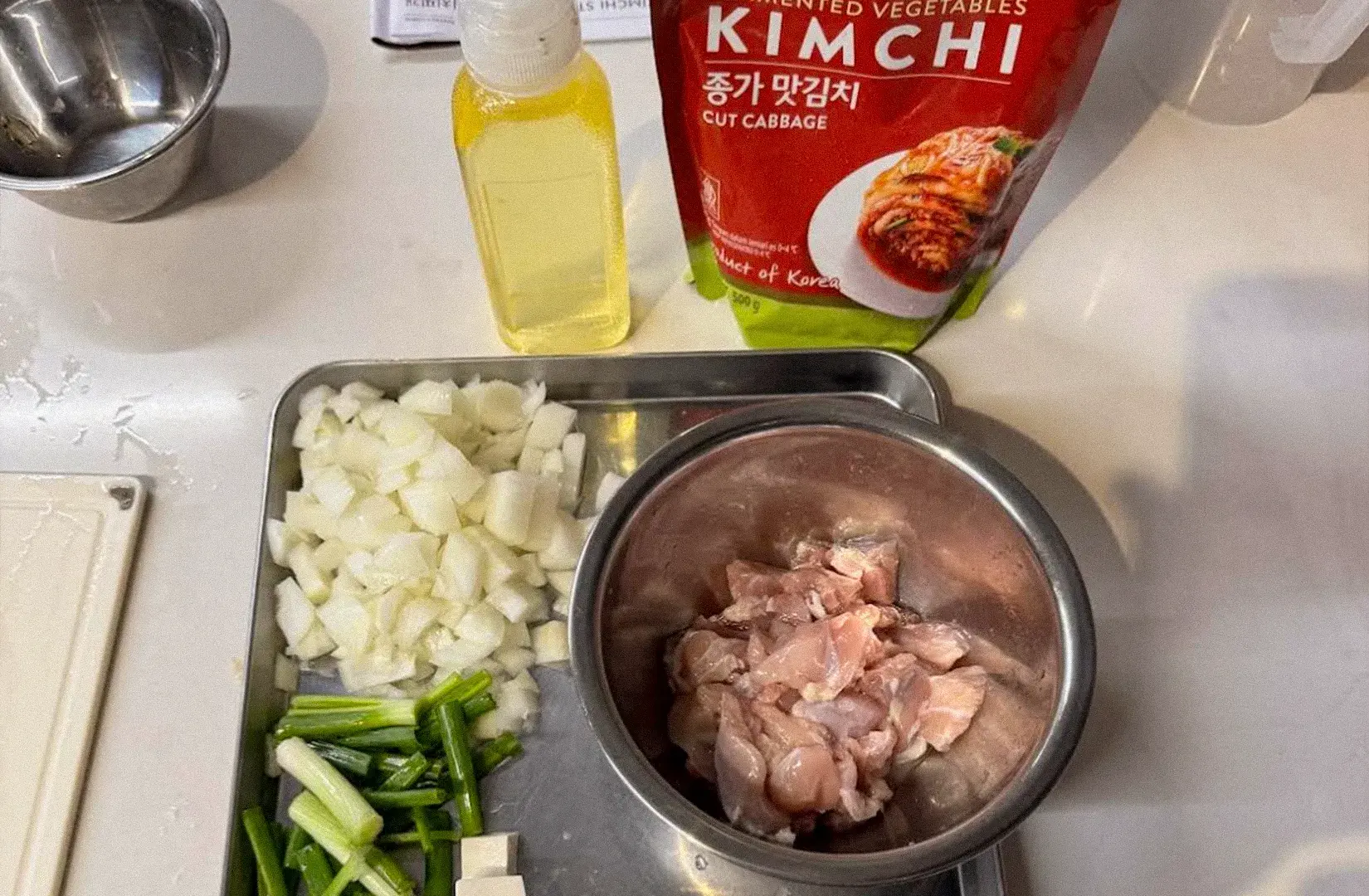
The two-day Savoury Korean Delights course, at the Lifelong Learning Institute (11 Eunos Road 8, #03-01), is a WSQ course covering dak-galbi, japchae, sundubu-jjigae, bibimbap, and cucumber kimchi. It also teaches Korean ingredients, moist and dry heat cooking, and plating.
The full fee is S$654, or S$354 and S$234 for eligible participants. Completion and funding depend on attendance and assessment. Right now, no intakes are listed, so this is one to watch rather than book.
Nicky's Kitchen
Nicky's Kitchen offers small-group classes of up to six and private two-hour lessons from S$300, covering up to two people. Private lessons can take place in your own home and be tailored to dishes you want to learn—a great option for a family who wants a fun afternoon creating Korean food together. Ingredients and recipes are supplied, and most dishes can be adapted for vegetarians. Kimchi lessons aren't included in the standard private price.
Let's Yori
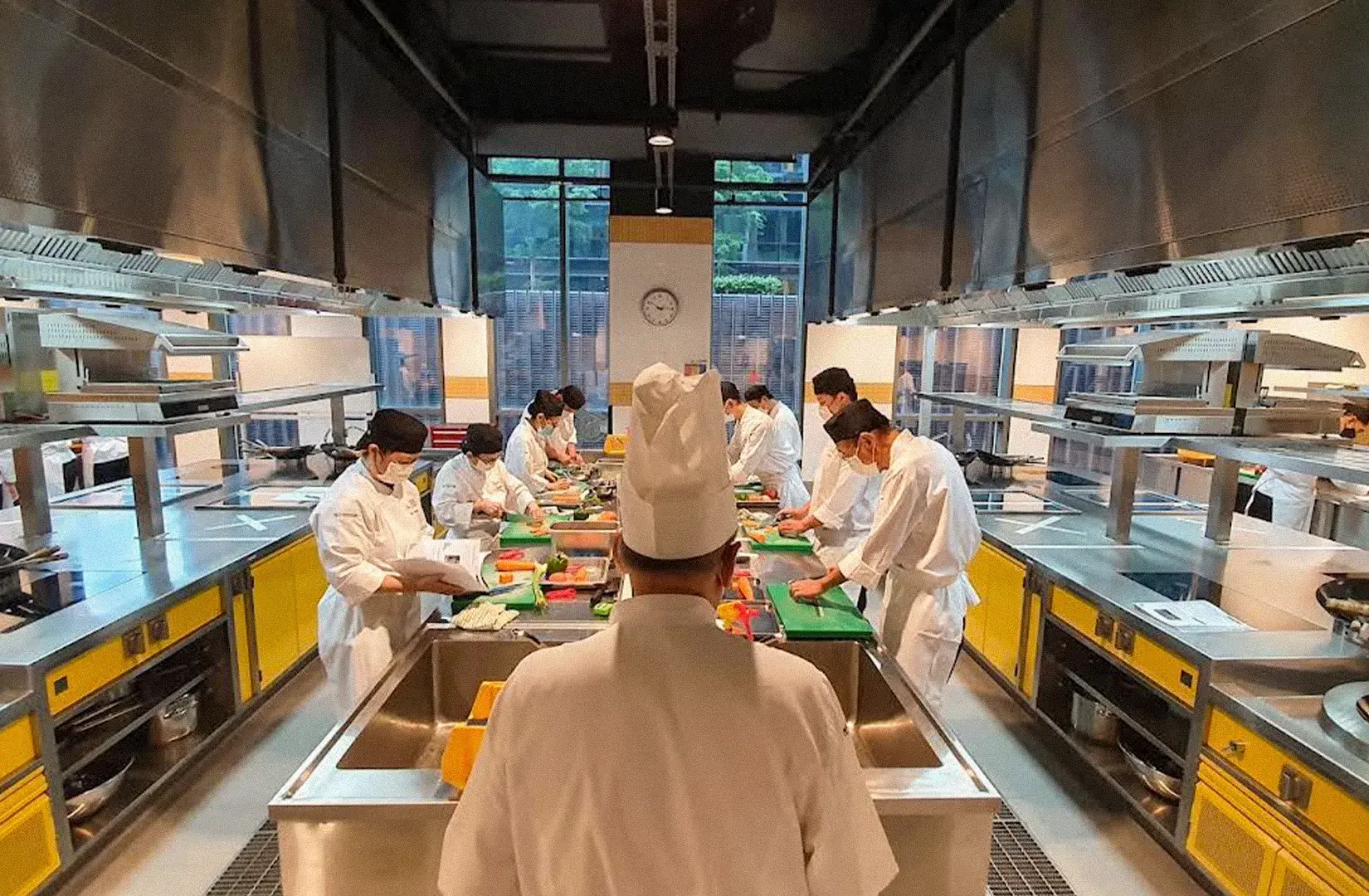
A Klook listing describes group, hands-on classes of about two hours at OUE Downtown Gallery (6A Shenton Way, #03-02), taught in English and Korean. Participants learn kimchi or two to three dishes, menus change regularly, and at least four people are needed for a class to run. The studio's current status and pricing weren't confirmed through an official source, so check directly before planning around it.
Korean Cuisine Ingredients and Skills Worth Learning
A good class explains why, not just how much. These are the small distinctions I'd hope any instructor slows down for, the kind of tips that help you recreate Korean flavors with real understanding, anywhere in the world.
- Namul (나물). Korean vegetable preparations, often blanched and seasoned. You might blanch spinach or cook soybean sprouts, squeeze out the water, then dress them with garlic, sesame oil, or soy sauce. This one skill feeds into bibimbap and many everyday side dishes.
- Gochujang versus gochugaru. Both bring chili, but they aren't interchangeable. Gochujang (고추장) is a fermented chili paste. Gochugaru (고춧가루) is dried chili flakes or powder. One adds depth and body, the other heat and color.
- Doenjang (된장). Korean fermented soybean paste. It's often compared to Japanese miso, and both are soybean-based, but their ingredients, methods, and flavors can differ.
- Sesame oil (참기름, chamgireum). Toasted sesame oil is used for seasoning and finishing. Swapping in a neutral cooking oil won't give you that nutty aroma.
- Soybean sprouts versus mung bean sprouts. Mung bean sprouts can substitute in some dishes, but the texture and taste differ.
Most of the fresh ingredients you'll need—like garlic, ginger, green onions, tofu, mushrooms, and napa cabbage—are easy to find in Singapore. The specialty items, like gochujang, doenjang, rice cakes, and sweet potato noodles, may take a trip to a Korean grocer. A class that tells you where to shop and what to substitute gives you a way back into Korean flavors long after the session ends, filters removed.
Good to Know: Kimchi classes should cover safe storage and temperature. Singapore's warmth speeds fermentation, so recipes written for cooler kitchens need care here.
Korean Cooking and the Traditions Behind It
There's a reason kimchi classes feel slightly different from the rest. They sit at the heart of something larger.
In Korea, kimjang is the communal making and sharing of kimchi. UNESCO recognizes it as intangible cultural heritage, not for the dish itself, but for the practice of people preparing food together and passing knowledge on. Families led the tradition across generations, and that spirit of sharing is woven into how kimchi is understood in the Korean world.
A workshop container of kimchi isn't kimjang. Still, standing over a bowl of salted cabbage, learning why each step matters, you get a small glimpse of it. That's where I think cooking classes do something restaurants can't. A restaurant shows you the finished dish. A class lets you see the reasons behind it.
It's worth remembering, too, that any instructor teaches their own version. Bibimbap toppings, japchae fillings, and stew seasonings all vary across regions and households. One class gives you one way, not the only way.
Before You Book That Korean Cooking Class
What you're really choosing is how you want to learn.
Some people want to watch, listen, and understand. Others want their hands in the seasoning paste, getting it slightly wrong, then right. Both are valid ways to explore Korean cooking and neither requires any prior experience to start.
Whichever you pick, look for the class that explains the small reasons. Why the spinach gets squeezed. Why the paste and the flakes aren't the same. Why the kimchi needs a cool place to rest.
Those reasons are what stay with you, long after the apron comes off.