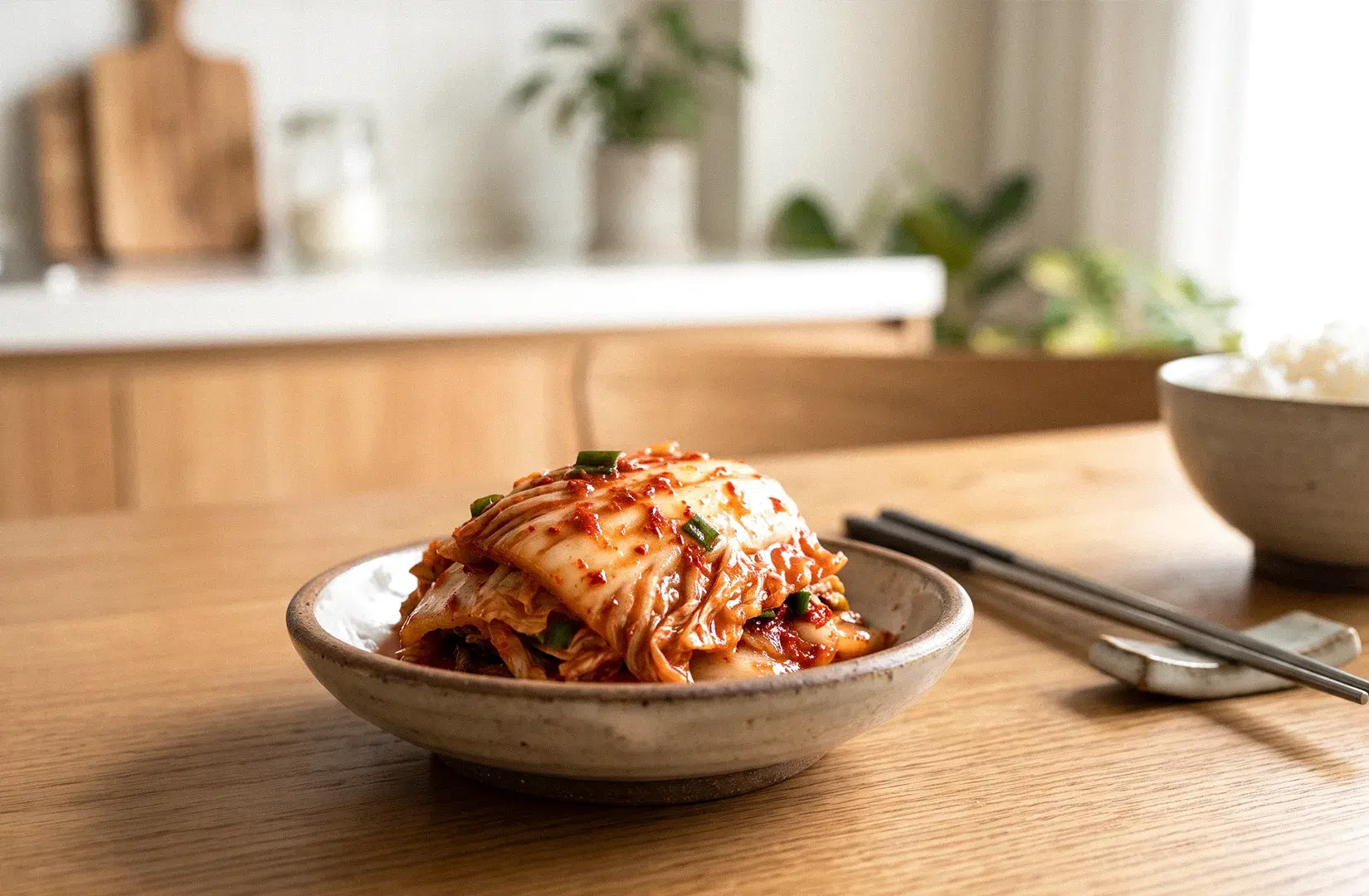
The small dish lands on the table before you've even picked up your chopsticks. It's red, a little glossy, and it smells faintly sour. You take a piece between bites of rice and move on to the main event.
That's how most of us meet kimchi in Singapore. It's familiar, but not many people stop to ask what it actually is. The short answer is that kimchi is a whole family of foods, and the red cabbage on your table is only its most famous member.
What Is Kimchi? A Family, Not a Single Recipe
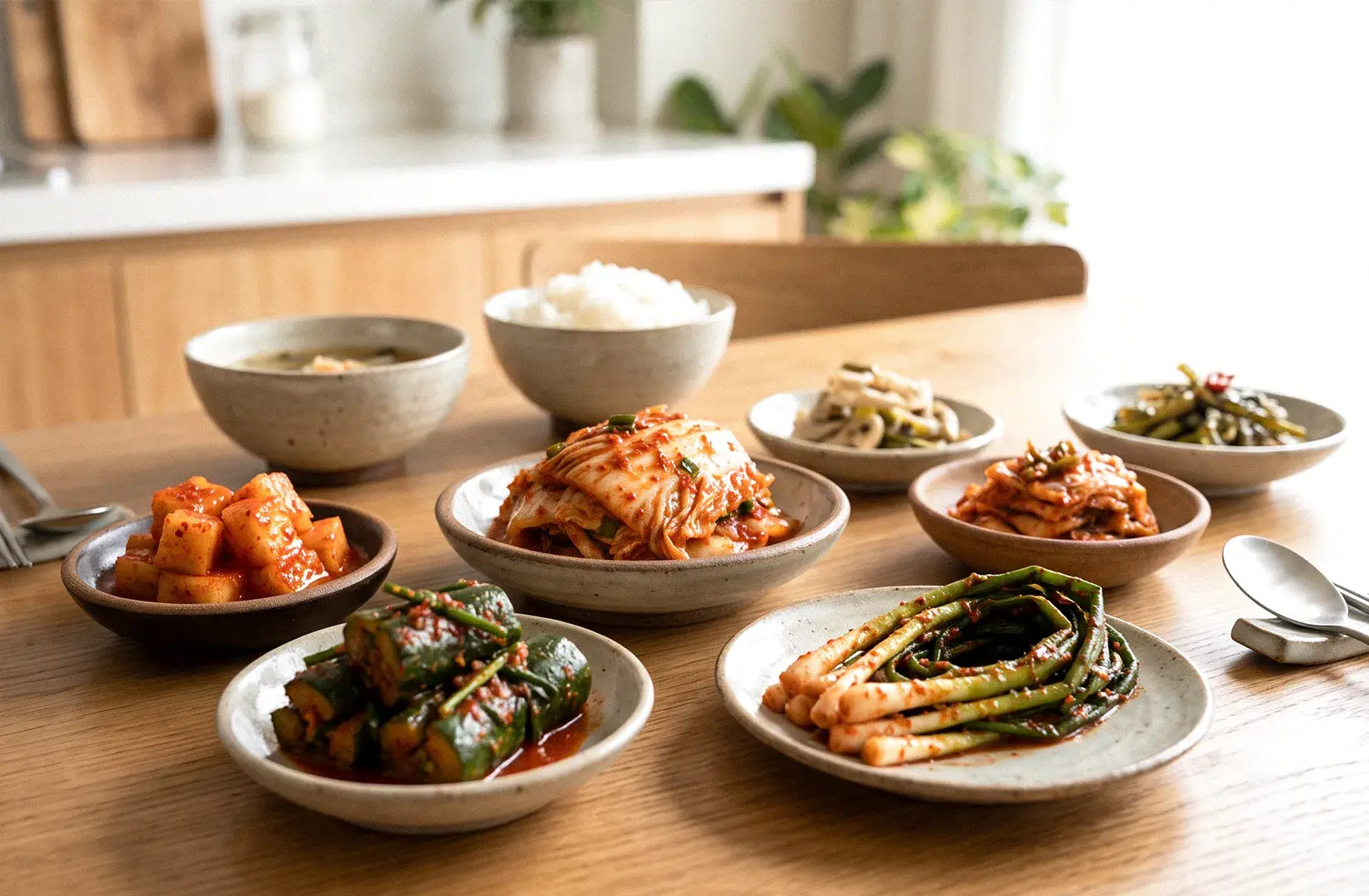
Kimchi (김치) is a Korean category of vegetables that are salted, seasoned, and often fermented. The best-known version is baechu-kimchi (배추김치), made with napa cabbage. Korean cooks also make kimchi with radish, cucumber, green onion, and other vegetables.
It usually appears as a side dish, or banchan, alongside rice. It also goes into cooked dishes like kimchi stew and kimchi fried rice. If you've ever wondered how kimchi fits among all those other small plates, our guide to banchan and the culture behind the Korean table covers the bigger picture.
One thing kimchi is not: plain pickled cabbage. Vinegar pickles get their sourness from vinegar added directly. Traditional kimchi develops its sourness on its own, through fermentation. Some modern recipes do use vinegar, but it isn't what defines the dish.
And please don't call it "Korean sauerkraut." Both are fermented cabbage, sure. But sauerkraut is mostly cabbage and salt, while kimchi brings garlic, ginger, chili, and often seafood into the mix. That's a different conversation entirely.
The Basic Ingredients Behind Baechu Kimchi
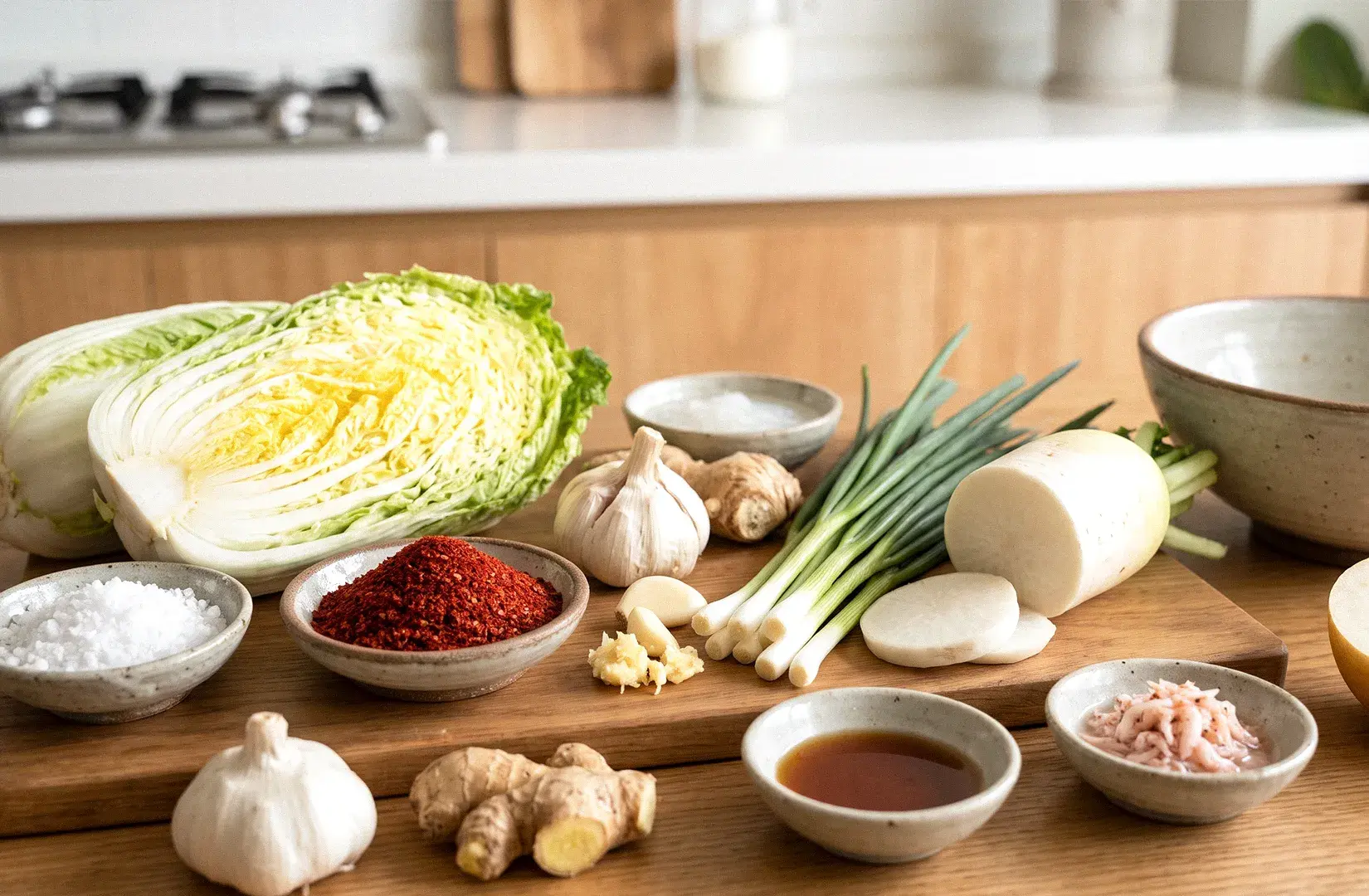
Recipes vary a lot, but a typical napa cabbage kimchi uses some combination of the following:
- Napa cabbage: The main vegetable, and the source of the natural sugars that fuel fermentation
- Salt: Draws out water, changes the texture, and shapes which microbes can grow
- Gochugaru: Korean chili flakes that bring heat and that signature red color
- Garlic and ginger: Pungency and warmth
- Green onions or scallions: Fresh, savory onion flavor
- Korean radish: Crunch and a little sweetness
- Fish sauce and fermented shrimp: Salty, savory depth from salted seafood, known as jeotgal
- Rice-flour paste, sugar, or fruit: Used in some recipes to help the seasoning paste cling and to round out the flavor
Not all of these are compulsory. White kimchi skips the chili. Vegan versions skip the seafood. You'll also see julienned carrots in some homemade kimchi recipes, but carrots aren't a defining part of the traditional version.
Good to Know: Gochugaru and gochujang are not the same thing. Gochugaru is dried chili flakes. Gochujang is a fermented chili paste with other ingredients in it. Red kimchi typically uses gochugaru, so don't swap in a spoonful of gochujang and expect the same result.
How the Fermentation Process Works
You don't need a lab coat to understand this part.
First, the vegetables are salted, which pulls out water and softens them. Next, they're coated in seasoning. Then lactic acid bacteria get to work. These friendly bacteria feed on the sugars in the vegetables and produce lactic acid, which makes the kimchi sour and builds a deeper, more complex flavor.
Refrigeration slows everything down, but it doesn't stop it. Kimchi continues to ferment quietly in your fridge, which is why the same jar tastes different over time.
How long does it take? There's no single answer. Temperature, salt levels, ingredients, and storage all matter. A recipe that calls for two days at room temperature is not the same as one that calls for two weeks in the fridge, and those numbers can't be swapped casually.
Kimchi Taste: Why Young and Old Kimchi Differ
A well-made napa cabbage kimchi can be sour, salty, spicy, garlicky, slightly sweet, and full of umami all at once. The crunch comes from the cabbage itself, especially when the kimchi is young.
As time passes, things shift:
- Younger kimchi tends to be crisper, fresher, and more vegetable-forward, with gentler sourness.
- More fermented kimchi tends to be softer and noticeably more sour and tangy.
Neither is better. Some people love kimchi barely a day old. Others wait for that sharp, sour edge. A sour jar isn't necessarily a spoiled one, and a mild jar isn't necessarily underdone. It depends on the type and what you plan to do with it.
Some kimchi is meant to be eaten fresh anyway. Geotjeori (겉절이) is a freshly seasoned cabbage kimchi eaten soon after it's made. So not all kimchi sits around fermenting for weeks.
Not Always Red, Not Always Cabbage
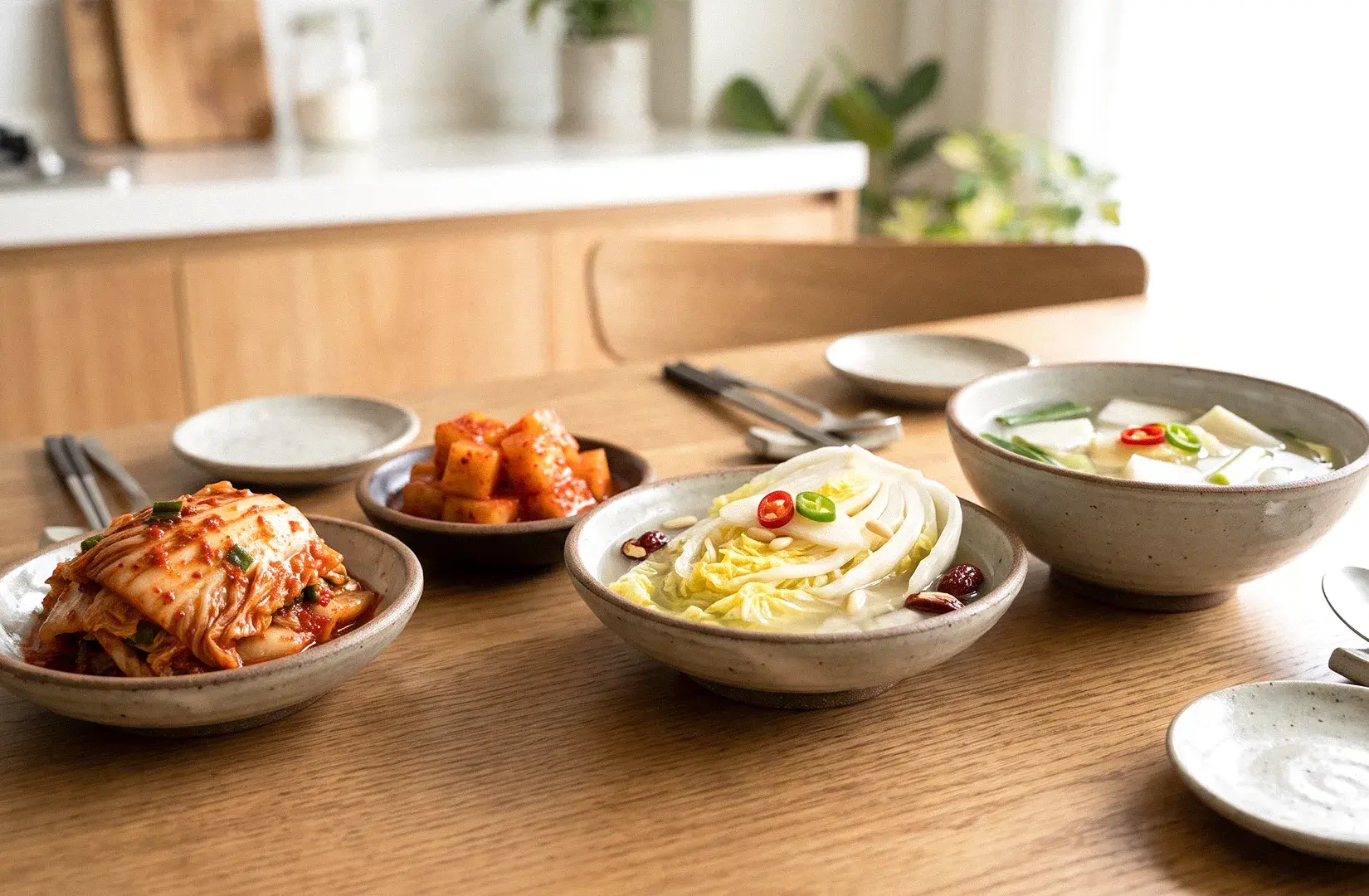
Here's where things get interesting. A few varieties worth knowing:
Baechu Kimchi
The classic. Napa cabbage, chili, garlic, ginger, and often fermented seafood. Crunchy, savory, tangy, and usually spicy. This is the one most people picture.
Kkakdugi
Cubes of Korean radish in chili seasoning. Firm, crunchy, and tangy. A good one if you like a bit of bite.
Baek Kimchi: White Kimchi
White kimchi, or baek-kimchi (백김치), skips the red chili. That doesn't make it a lesser version. It has its own approach, and some recipes include Korean pear, radish, garlic, ginger, and even chestnuts, jujubes, and pine nuts. Without the chili, those gentler flavors get room to speak. It's refreshing and generally non-spicy.
Dongchimi and Other Water Kimchi
Mul-kimchi (물김치) means water kimchi, a category served in plenty of seasoned liquid or brine. Dongchimi (동치미) is one specific kind, made with radish, and traditionally prepared around the start of winter using firm, sweet radishes. It's cool and mildly sour, almost like a broth. Note that water kimchi isn't automatically mild. Some versions contain chili, so check before you assume.
Oi-Sobagi
Stuffed cucumber kimchi. Crisp, fresh, and often spicy. Korean cooking educator Maangchi notes it can be eaten right after it's made, which is another reminder that kimchi doesn't always need a long wait. You'll also find pa-kimchi, made with green onions, which is pungent and punchy. Different vegetables, same idea.
How Kimchi Shows Up in Korean Cuisine
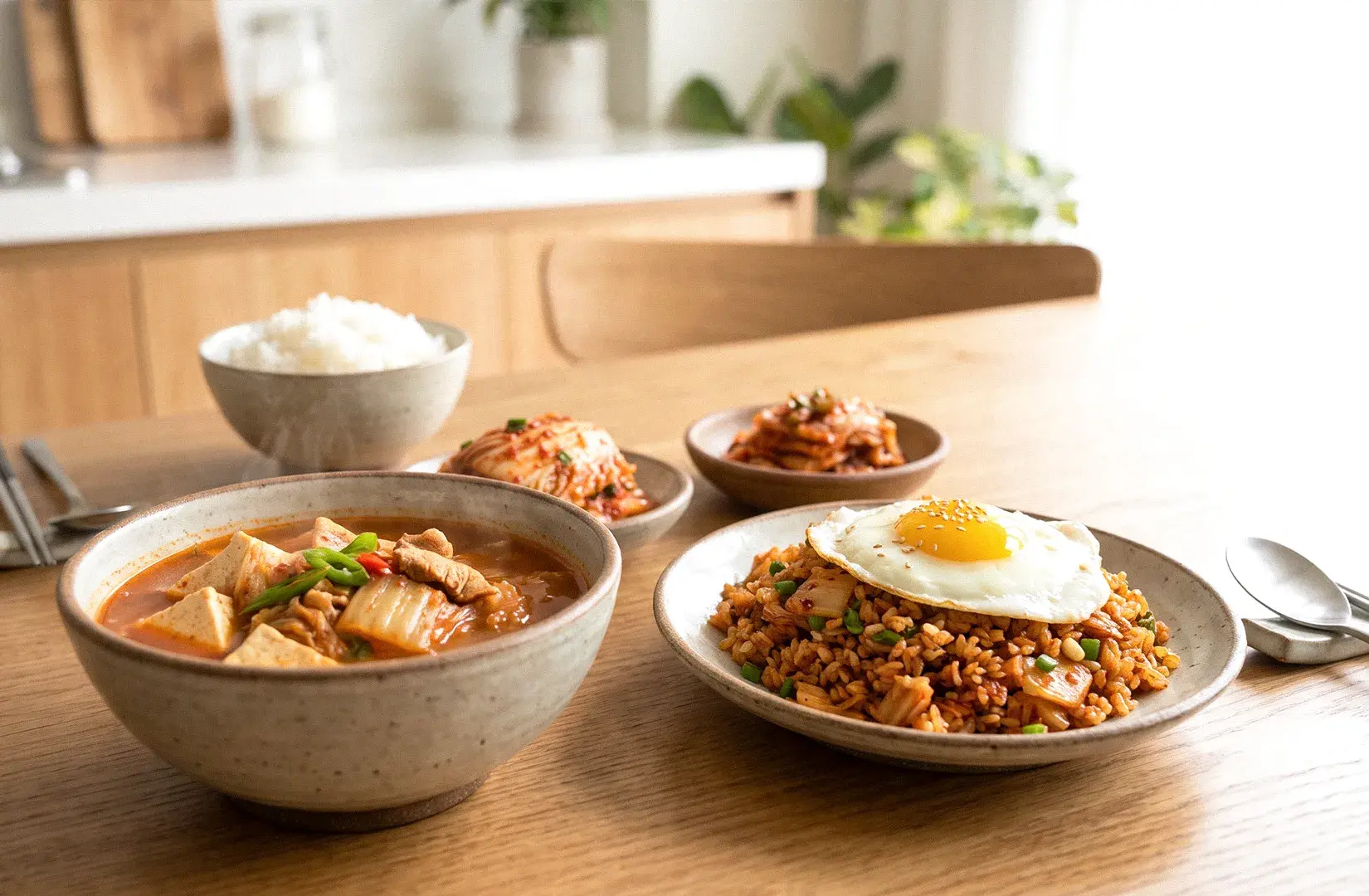
At a Korean restaurant, kimchi usually arrives with the other banchan. It's typically shared, though some places give individual portions. Free refills are common, but don't assume every restaurant offers them. Asking costs nothing.
Kimchi is also a cooking ingredient, and a hardworking one:
- Kimchi-jjigae (kimchi stew): Kimchi simmered in broth with ingredients like pork or tofu. Well-fermented kimchi is often preferred here because its sourness flavors the whole pot.
- Kimchi-bokkeumbap (kimchi fried rice): Chopped kimchi fried with cooked rice, often topped with a fried egg. Sourer kimchi gives a tangier result. Younger kimchi keeps it milder.
- Kimchi-jeon (kimchi pancake): Chopped kimchi in batter, pan-fried, and usually shared.
So that jar going sour at the back of your fridge? It may simply be waiting to become dinner.
Kimjang: Why Kimchi Matters in Korean Culture
There's a word for making kimchi together: kimjang (김장).
Traditionally, families, relatives, and neighbors gathered before the winter months to prepare large amounts of kimchi. It was practical, since preserved vegetables helped households get through the colder months. But it was also about people. Hands working side by side. Knowledge passed from older generations to younger ones. Kimchi shared between homes.
In 2013, UNESCO inscribed "Kimjang, making and sharing kimchi in the Republic of Korea" on its list of Intangible Cultural Heritage. That detail matters. UNESCO recognized the practice of making and sharing kimchi, not a single cabbage dish.
Not every household in South Korea holds a big kimjang today. Store-bought kimchi and smaller home batches are part of modern life too. And while it's tempting to say Koreans eat kimchi at nearly every meal, habits genuinely vary by household, age, and taste.
As for history, Korean vegetable preservation goes back a long way. But today's red, chili-seasoned cabbage kimchi isn't identical to every form that came before it. Kimchi has changed as ingredients and tastes have changed.
Nutritional Benefits: What You Can Honestly Say
Kimchi is mostly vegetables, so it can contribute fiber and some vitamins and minerals. Fermented kimchi can also contain live lactic acid bacteria.
But let's keep our feet on the ground. "Contains live cultures" is not the same as "probiotic," which refers to specific microbes with proven health benefits at the right amounts. Some store-bought kimchi is processed in ways that reduce live microbes, and cooking does the same. Kimchi is also salted, so the sodium can add up.
Eat it because you enjoy it. A small side dish is a nice addition to a meal, not a cure for anything.
Buying Kimchi in Singapore
You don't need a specialty shop to start exploring. FairPrice's online catalogue lists several brands and varieties, including:
- CJ Bibigo Korean Sliced Kimchi, 150 g: S$2.90
- CJ Bibigo Korean Sliced Kimchi, 500 g: S$8.10
- Jongga Kimchi Bottle (Cut Cabbage), 380 g: S$7.70
- Jin Kimchi Original, 400 g: S$8.60
- Jin Kimchi White, Radish, Cucumber, or Spring Onion, 345 g: S$8.90 each
Prices change with promotions and stock, so treat these as a guide.
An Advice: If you're new to kimchi, that 150 g pack is your friend. It's a low-stakes way to find out what you like before committing to a big jar. If you're avoiding chili, the white kimchi is a sensible place to start.
What to Look For: Kimchi is not automatically vegetarian, vegan, or halal. Fish sauce and fermented shrimp are common, even when you can't see them. FairPrice lists a vegan CJ Bibigo kimchi (500 g, S$8.00) with a halal attribute on its listing, but if you need halal-certified food, check the actual certification mark. MUIS provides resources for verifying this.
Thinking About Making Kimchi at Home?
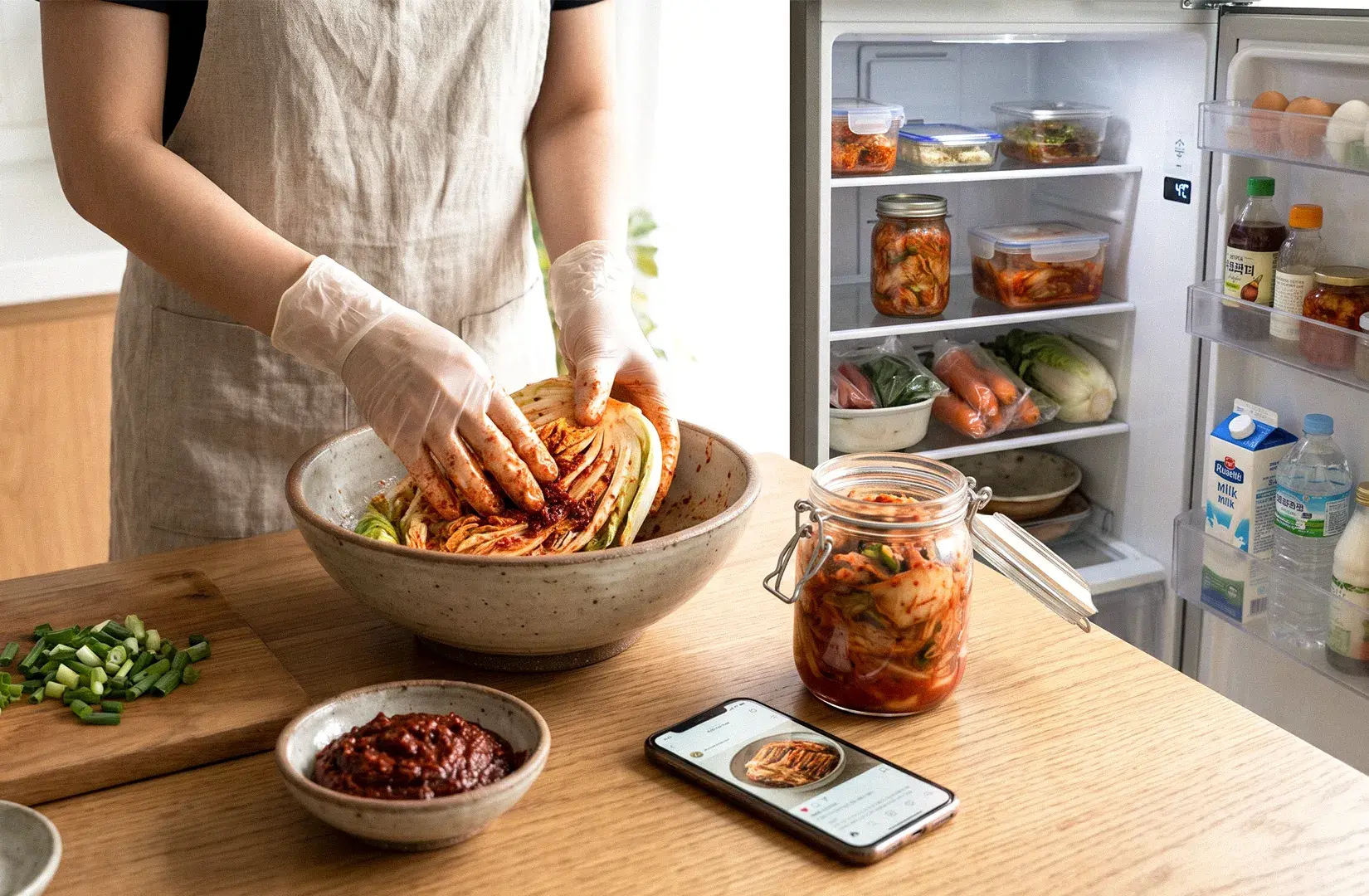
You can absolutely make kimchi here. Napa cabbage, garlic, ginger, and green onions are easy to find. Gochugaru and Korean radish may take a trip to a Korean grocer.
The real challenge is the weather. Many kimchi recipes were written with cooler kitchens in mind, and fermentation moves faster in Singapore's heat. Don't copy room-temperature times blindly, and don't improvise salt levels or fermentation times on your first try. Follow a tested recipe with clear temperature and storage instructions. Maangchi's dongchimi recipe, for example, uses refrigeration during part of the process for cooks in warmer countries.
The Singapore Food Agency recommends keeping your fridge at 4°C or below.
The Small Dish, Seen Differently
Next time that little plate of kimchi arrives, take a second look.
It might be a few days old or a few weeks. It might be cabbage, or radish, or cucumber. Someone may have made it in a big batch with family around them, the way kimjang has been done for generations.
It's still just a side dish. But now you know there's a lot going on in that small bowl.