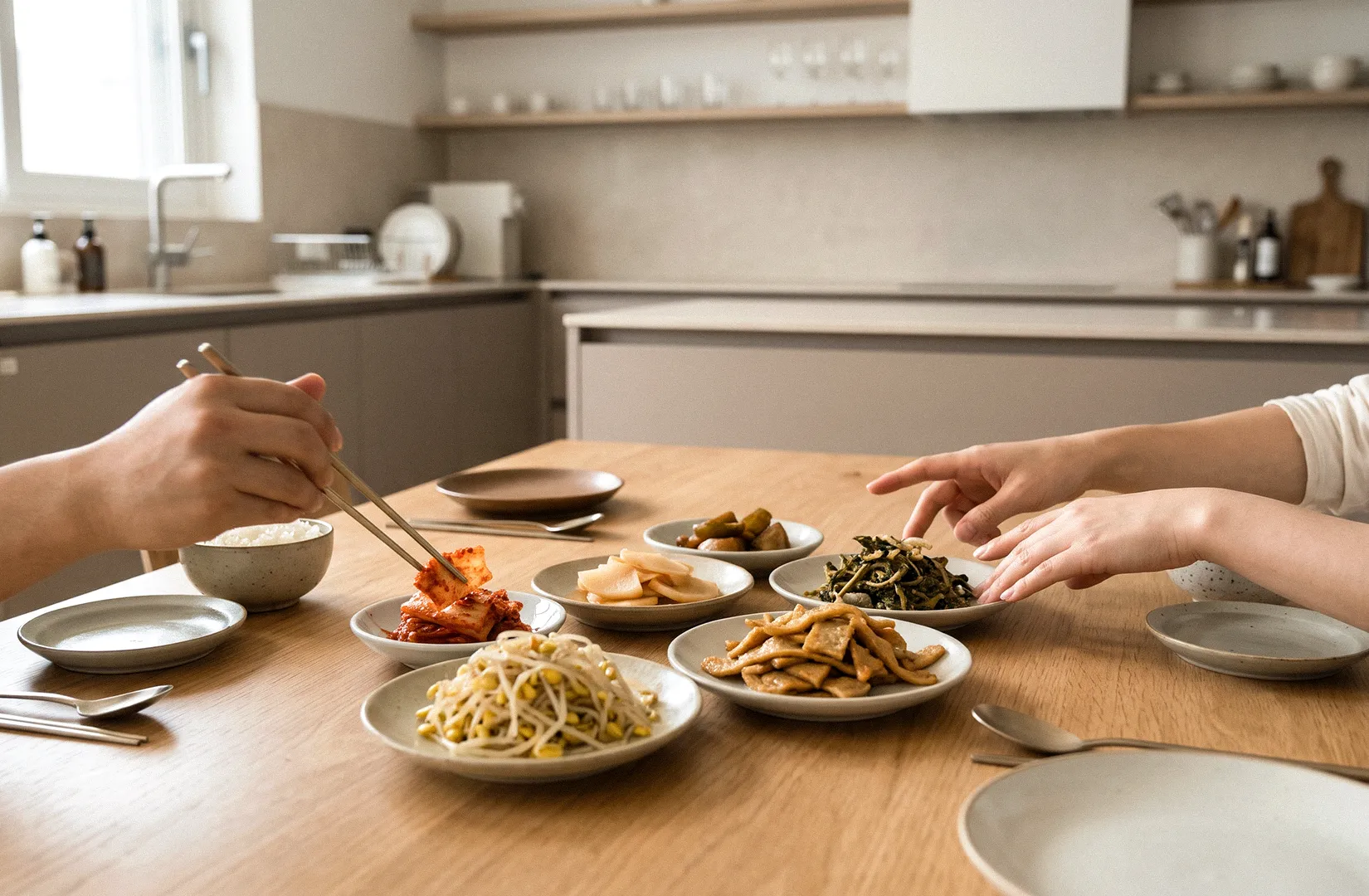
The main dish hasn't arrived, but the table is already filling up.
A small plate of kimchi appears, followed by seasoned bean sprouts, pickled radish, and perhaps some stir-fried fish cakes. Someone reaches for the kimchi almost immediately. Another person examines the unfamiliar vegetables before deciding whether to try them.
Then the Korean BBQ meat arrives, or a bubbling pot of stew takes centre stage, and those little dishes become part of the background.
It's a familiar scene at Korean restaurants in Singapore, and one that makes us wonder whether we're paying attention to the wrong part of the meal.
Banchan might be called side dishes, but they often reveal just as much about a Korean restaurant as the main course. Sometimes, they reveal even more.
The Small Dishes That Set the Tone
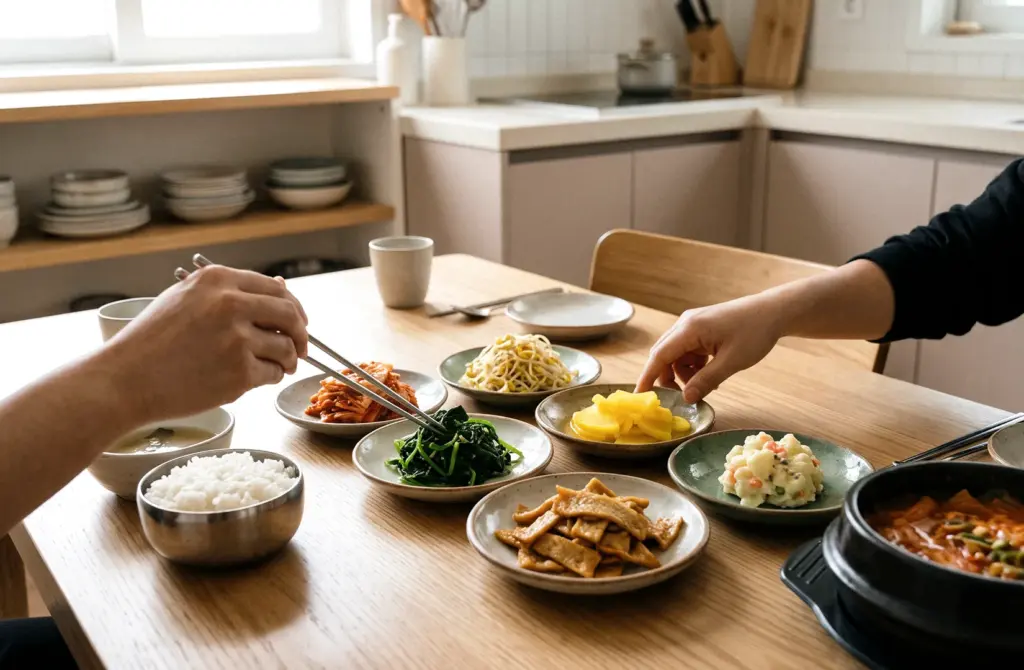
When choosing a Korean restaurant, most of us think about the main attraction. Is the pork belly worth ordering? Is the kimchi jjigae rich enough? Does the fried chicken have that satisfying crunch?
Rarely does anyone suggest a restaurant because its seasoned spinach is particularly good.
Perhaps we should.
Banchan, the small dishes traditionally served alongside Korean meals, are not simply appetisers to keep diners occupied while waiting for their food. They are part of how a Korean meal is structured, offering different flavours and textures to complement what's being eaten.
A spoonful of rice with spicy kimchi tastes different from one paired with lightly seasoned vegetables. Pickled radish can cut through the richness of grilled meat, while a mild potato salad provides a welcome contrast to something heavily seasoned.
These combinations might seem insignificant individually. Together, they influence how the entire meal feels.
Good Banchan Requires More Thought Than We Give It Credit For
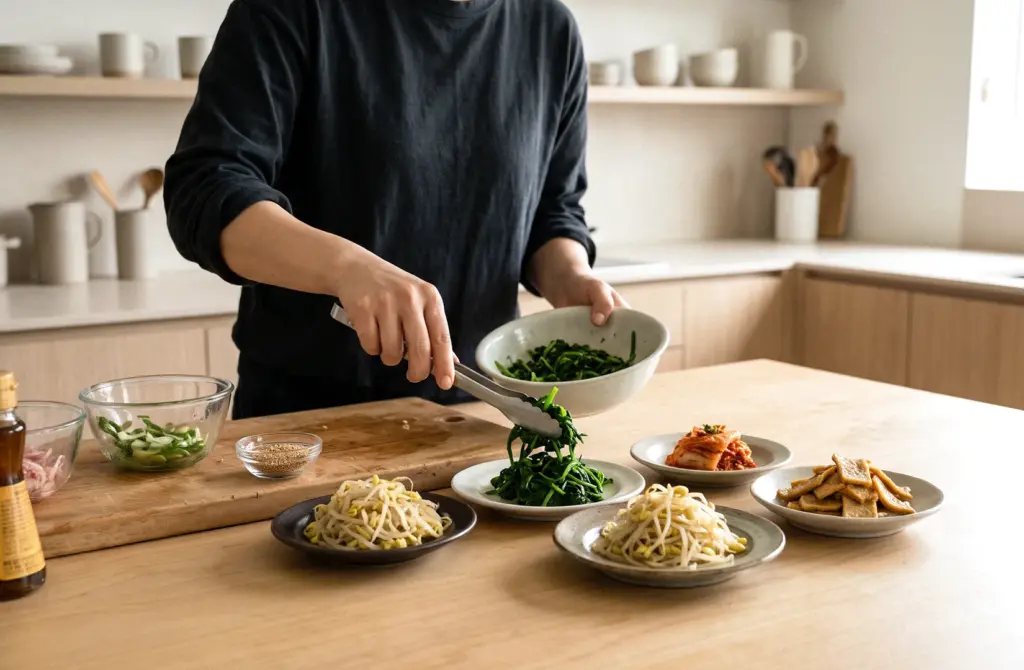
There is a tendency to judge banchan by quantity.
A table covered with six or seven small plates can look generous, especially when compared with a restaurant offering only two or three. But more doesn't necessarily mean better.
A smaller selection of carefully prepared side dishes can be far more satisfying than an impressive spread where everything tastes overly sweet, excessively salty, or strangely similar.
Consider something as simple as sigeumchi namul, Korean seasoned spinach. There is little to hide behind when the dish relies on vegetables, sesame oil, garlic, and seasoning.
The same goes for bean sprouts. Their appeal depends partly on maintaining that pleasant crunch while balancing relatively subtle flavours.
Banchan doesn't need to be complicated to be memorable. It needs to be prepared with care.
And that is precisely why these dishes deserve attention.
Singapore Diners Have an Interesting Relationship With Banchan
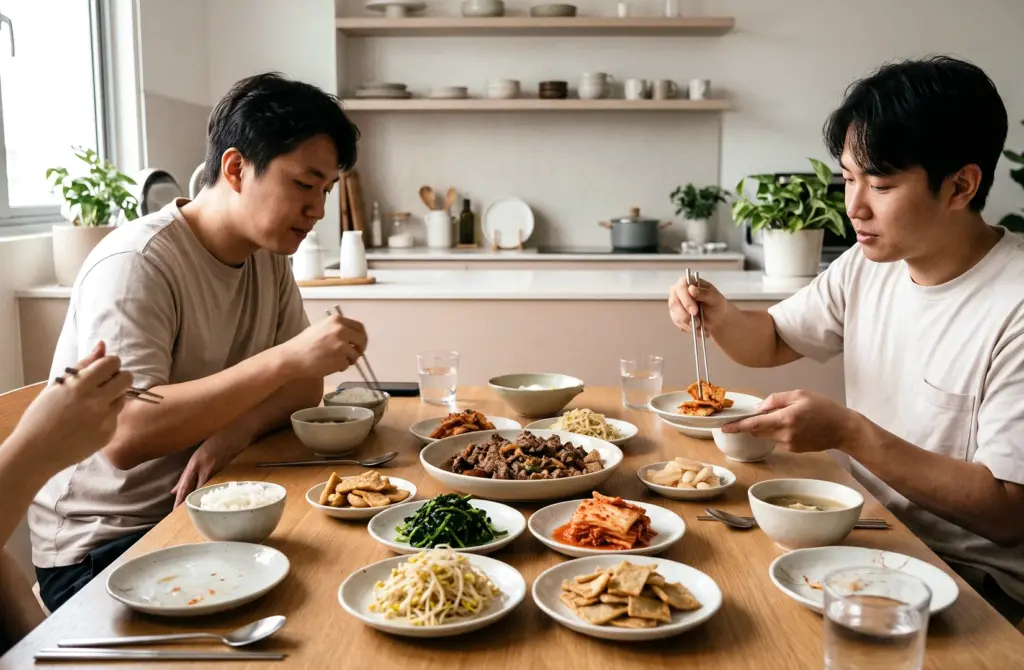
In Singapore, where sharing dishes is already familiar, the concept of banchan feels surprisingly natural.
A Korean dining table filled with small plates isn't entirely unlike a Chinese family meal where several dishes are shared, although the traditions and ways of serving them differ.
Yet there is one expectation worth reconsidering.
Because banchan is commonly included with Korean restaurant meals, diners can sometimes treat it as an unlimited extra rather than food worth appreciating in its own right.
Complimentary refills, where offered, are certainly welcome. But whether a restaurant provides free-flowing banchan shouldn't be the only measure of generosity or quality.
The more interesting question is whether those small dishes make us want another bite.
Perhaps We've Been Calling Them Side Dishes for Too Long
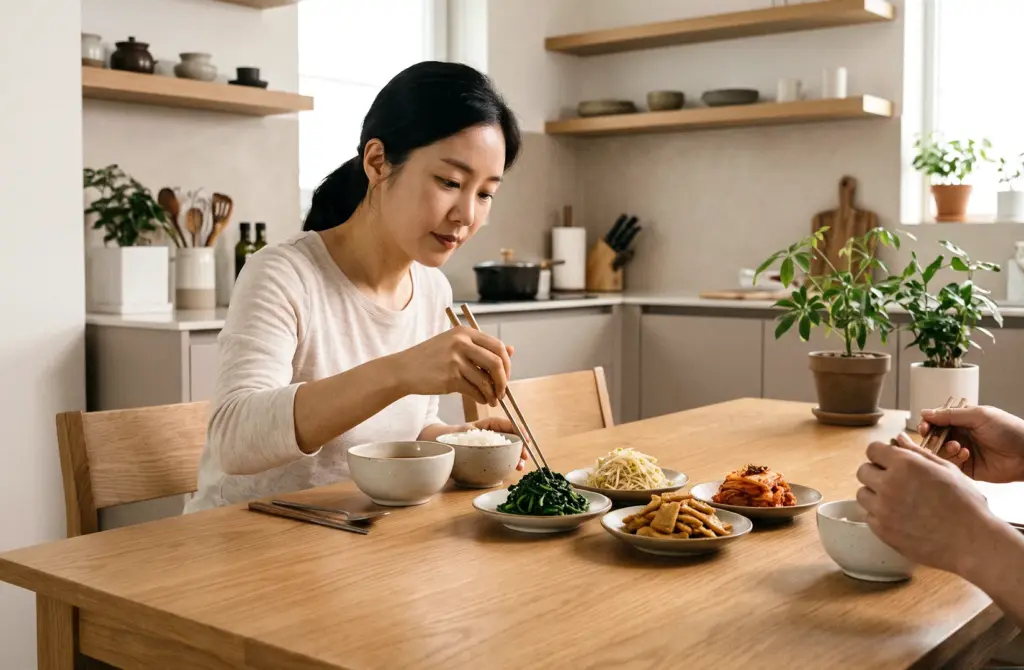
There is nothing wrong with looking forward to a beautifully grilled piece of beef or a comforting bowl of sundubu jjigae.
The main dish deserves its attention.
But banchan has a quieter responsibility. It introduces variety, balances stronger flavours, and gives diners different ways to enjoy the same meal.
It can also reveal something about a restaurant's approach to Korean cooking, particularly when even the simplest vegetables are treated thoughtfully.
The next time a collection of small plates arrives before your Korean meal, perhaps don't rush past them while waiting for the main course.
That modest dish of seasoned spinach might be the thing you remember.