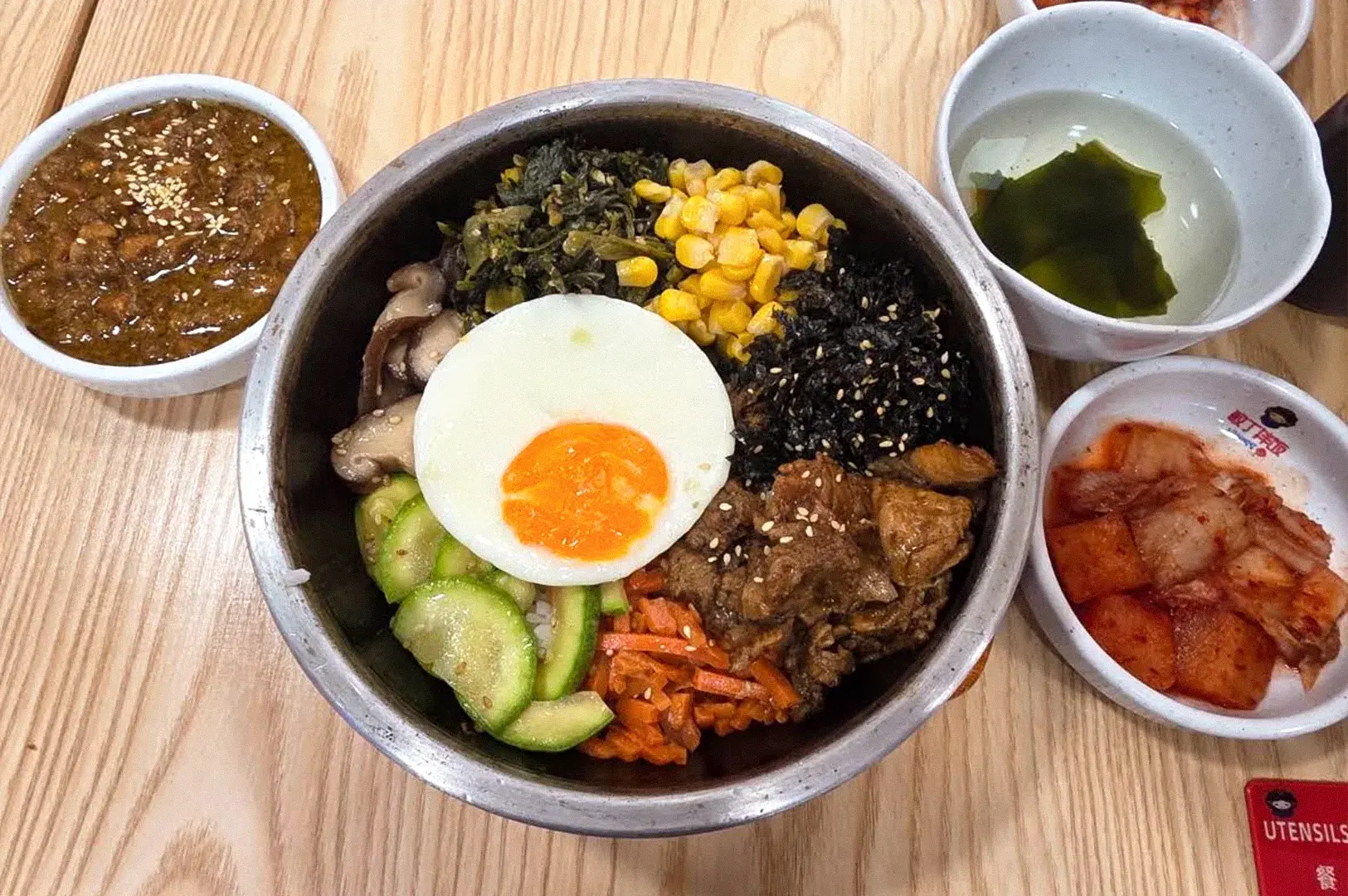
The stone bowl lands, and it is still sizzling. The rice touching the bottom is already turning golden. The egg is still settling, and next to the bowl sit a small dish of kimchi and a cup of seaweed soup you never ordered.
That is the iconic Mincheng Bibimbap pitch in one picture. It is affordable, it comes out hot, and the complimentary offerings of rice, kimchi, and soup keep coming.
What makes it worth a closer look, though, isn't the price. It's where the food comes from.
What Is Mincheng Bibimbap? Chinese-Korean, Not Seoul-Style
Most Korean restaurants in Singapore draw on South Korean dining, especially barbecue. Mincheng goes a different way. The chain describes its cooking as Chinese-Korean ethnic cuisine, inspired by the Yanbian Korean Autonomous Prefecture in northeastern China. Yanbian is in Jilin Province and has a large ethnic Korean community with a rich culinary heritage that shaped its own food traditions over generations.
That background matters. Korean food didn't stop at the peninsula's borders. Communities in China built their own versions, shaped by different ingredients and neighbors. If you walk in expecting a copy of a Seoul bibimbap shop, you'll judge it wrong. Treat it as a related branch of the family, and the menu makes more sense.
According to its official website, Mincheng started in 2008 and now has more than 400 locations worldwide. Those are company figures. In Singapore, it lists outlets at Bugis Junction, Funan, 100AM, AMK Hub, Northpoint City, VivoCity, Tiong Bahru Plaza, and Westgate. Most are located inside malls with an MRT station close by, which is a simple reason it does well with the lunch crowd.
The Room: Casual Mall Dining
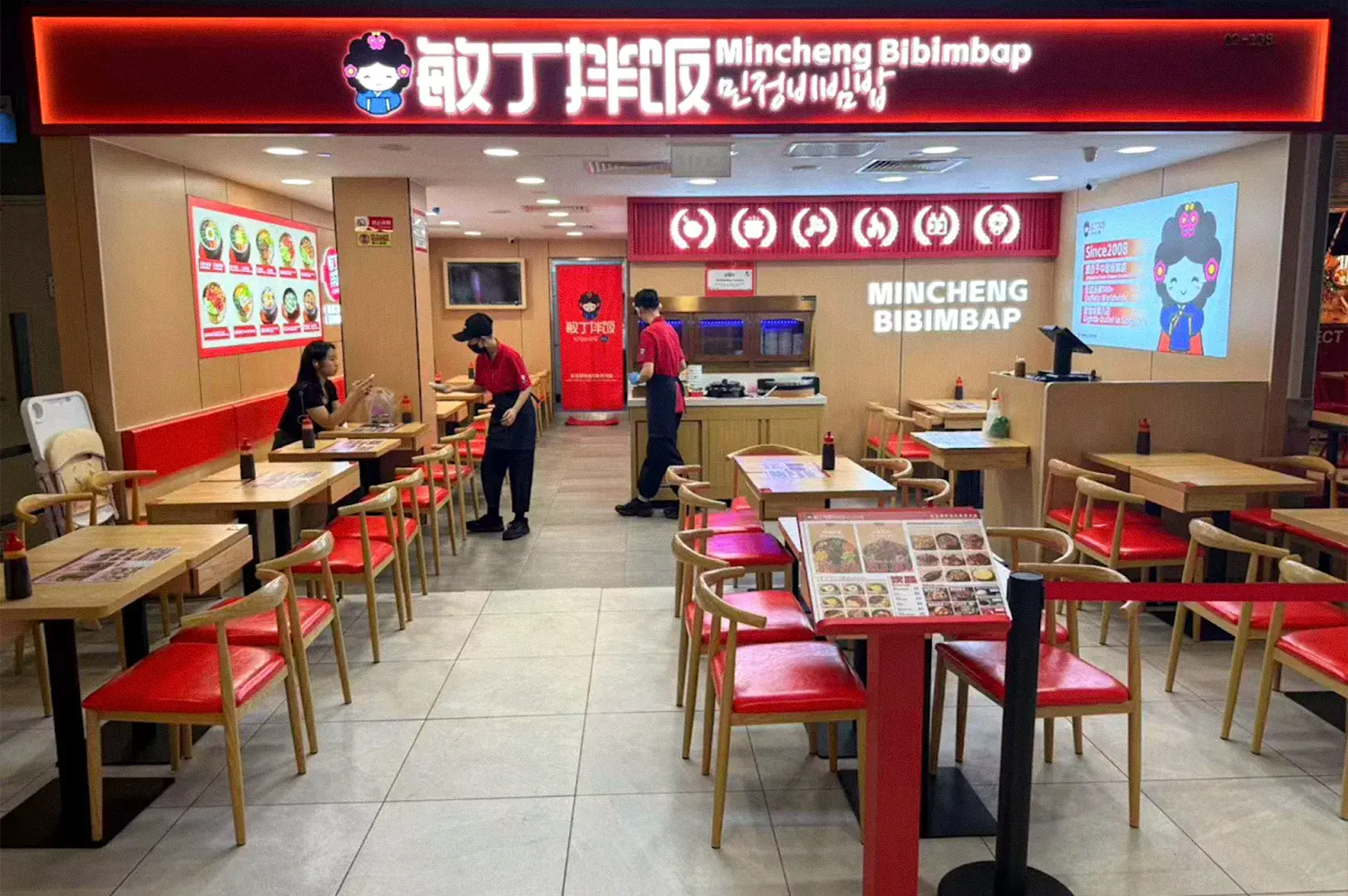
Nobody comes here for the decor. Reviews describe a plain, practical setup built around quick, affordable meals. Some diners say seating can feel cramped, though conditions likely vary between branches.
My take is that it works for a weekday lunch, a solo dinner, or a casual meal for two. Families have described it as a good fit too. If you're planning a long, loud group dinner, check the specific outlet first. The place is built to cater to fast, satisfying meals, not extended gatherings.
The Mincheng Bibimbap Menu: Start With the Stone Bowl
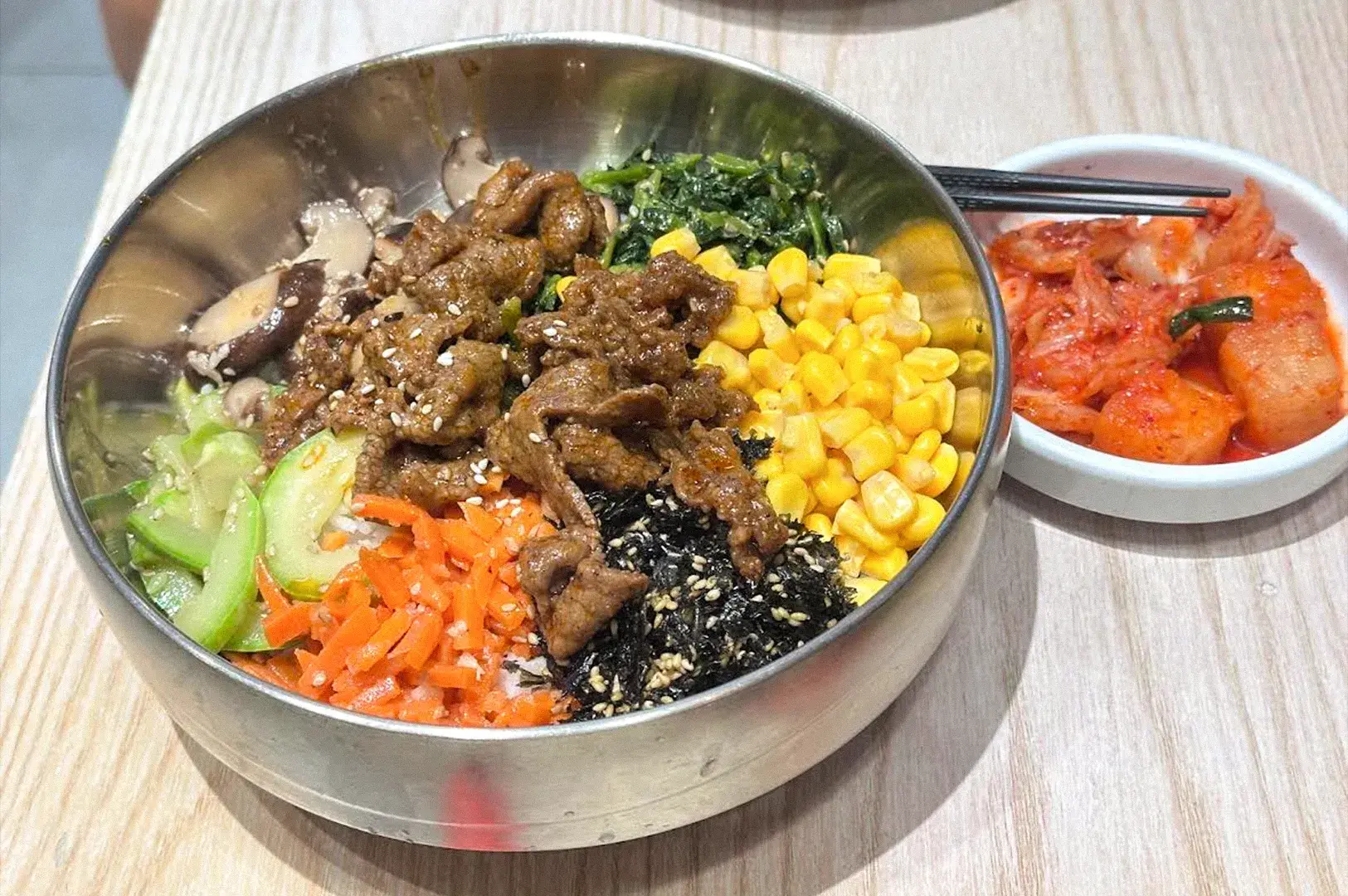
Bibimbap means "mixed rice." Toppings go over rice, then you stir everything together with the sauce. If you want to see how the classic version is built, our guide on how to make bibimbap at home walks through each part.
At Mincheng, many bowls arrive in a heated stone pot, the style Koreans call dolsot bibimbap. That heat changes things. The rice pressed against the stone literally toasts into a crisp layer, so you get soft grains on top and crunchy ones underneath. Some people mix right away. Others let it sit a little longer for more crust. Either way, keep your hands off the bowl.
Beef Bibimbap and Pork Bibimbap
These are the two signature dishes reviewers mention most. The Beef Bibimbap (around S$8.80 in an AMK Hub review) has been praised for its balance of vegetables, beef, and rice. One Westgate diner offered pretty good advice: go easy on the sauce, or it drowns everything else.
Pork Bibimbap shows up at S$7.80 in an April 2025 Funan review. A Hot Stone Pork Bibimbap was listed at S$10.55 at AMK Hub in July 2026, and these may not be the same item. One bowl was described with mushrooms, carrots, cucumber, corn, seaweed, spinach, pork, and a sunny-side-up egg, delivering a complete and satisfying selection of ingredients in one bowl. Recent feedback keeps coming back to that crispy bottom layer.
If it's your first time, I'd start with the pork. It shows off the stone bowl best.
A quick note on the sauce: some diners find it sweeter or saltier than the gochujang-based sauce they know from South Korean restaurants. Others like it more. It's part of the unique blend that comes with Mincheng's Chinese-Korean identity. Add a little, taste, then decide.
The Stone Plate Series and the Hot Plate Egg Question
Mincheng offers a stone plate series, and it's what keeps it from being a one-dish shop. These sizzling plates take center stage for diners who want something beyond bibimbap.
Hot Plate Pork Belly with Sauerkraut (around S$10.80) is the most interesting dish on the menu to me. A detailed AMK Hub review praised the generous pork and the way sour fermented cabbage cuts through the fat, complementing the meat in a way that feels rooted in Korean traditions shaped by northeastern China. Pair it with free-flow rice and you have a complete, satisfying meal.
Hot Plate Squid (around S$11.80) was described on Burpple as tender, in bite-size pieces, and coated in a delicious, savory, spicy sauce with onions. It's a good pick if you like stronger flavors.
Hot Plate Egg with Tofu (around S$8.80) gets mixed reviews. One reviewer found the bottom burnt and the plate too hot to eat from right away. Another liked the generous portion and its spicy finish. I'd treat it as an add-on, not the main event. Some menus also post a cheese corn variation for those who want something richer and milder.
Savory Soups and Korean Food Beyond Bibimbap
The savory soups inspired by Chinese-Korean traditions round out a menu that delivers more than rice bowls.
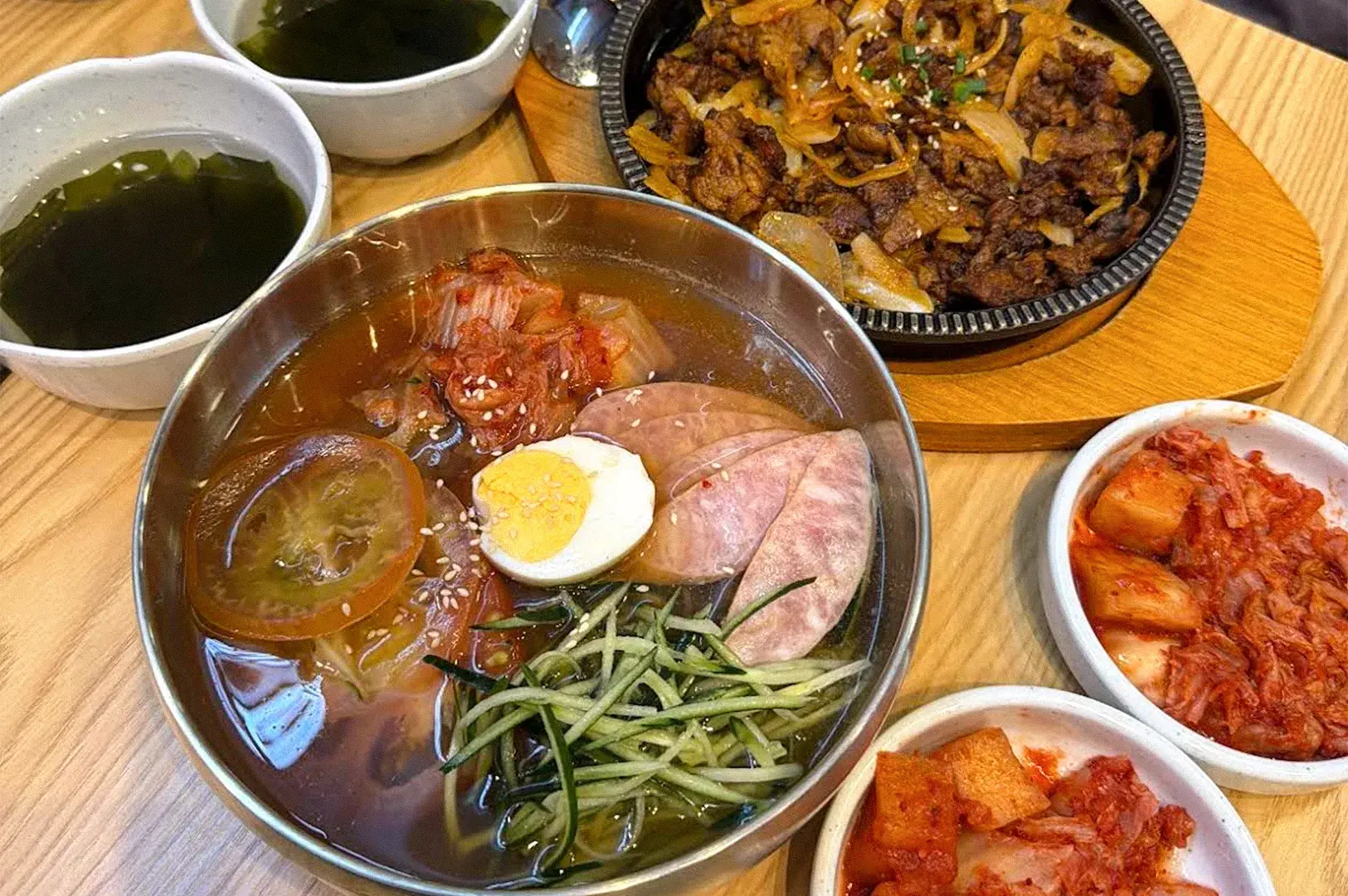
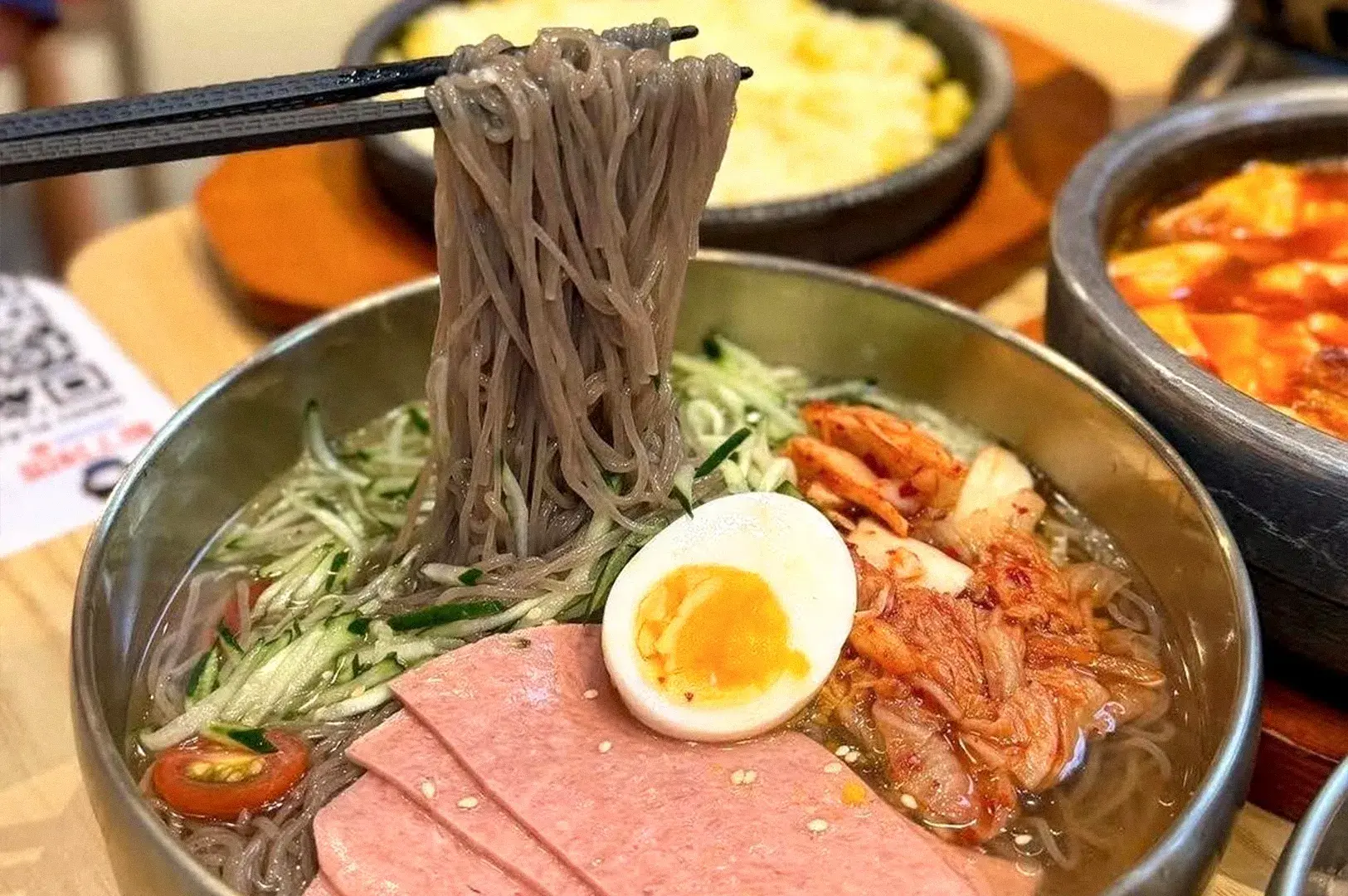
Seafood Tofu Soup (around S$8.80) has been described with soft tofu, egg, shrimp, and clams in a mildly spicy broth. It's a lighter choice when you don't want a sizzling bowl. The menu also includes Chicken Kimchi Soup and naengmyeon (cold noodles), and one recent diner suggests they keep coming back for the noodles.
Free-Flow Rice, Kimchi, and Seaweed Soup
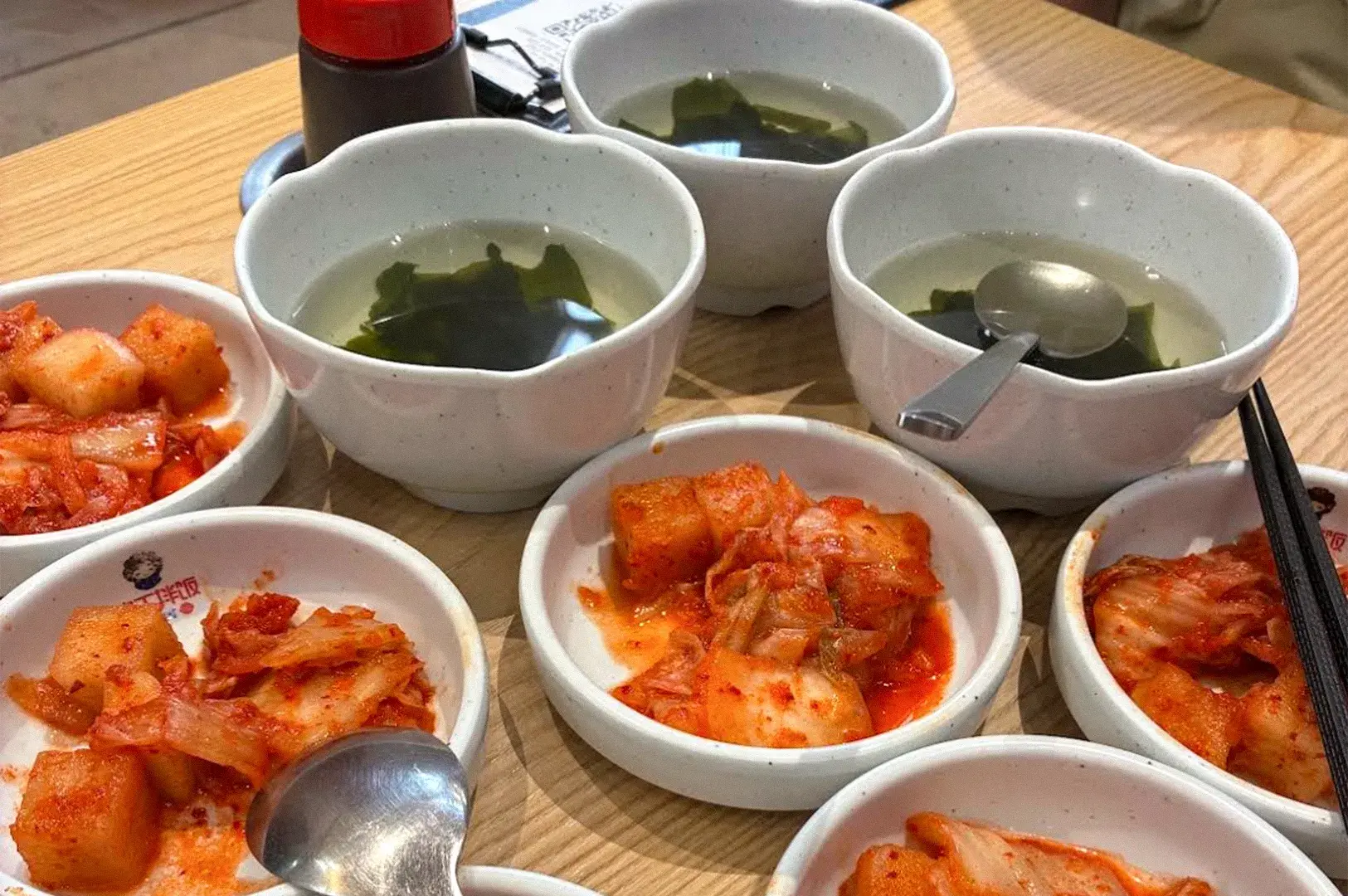
This is why a lot of people return. Multiple reviews describe free-flow rice, free flow kimchi, and seaweed soup for dine-in customers, and the official site lists all three. The exact refill rules aren't spelled out, so ask your outlet.
The kimchi gets mostly good marks, though some find it too sour or too spicy. The seaweed soup splits opinion. Some call it comforting. Others call it bland.
In South Korea, seaweed soup (miyeok-guk) is tied to birthdays and to meals after childbirth, though people eat it any day too. Here it's simply part of the meal, a quiet, mild bowl that sits beside the rice.
Queues, Service, and Practical Notes
Reviews describe staff taking orders and bringing food to the table, with some diners adding sauce themselves. Recent comments praise friendly staff who deliver soup and condiments quickly, though not every account agrees. Queues have formed at AMK Hub soon after opening and during the lunch rush. Going outside peak hours should help.
Hours: 11:00am to 9:30pm daily at Bugis Junction, 100AM, VivoCity, and Tiong Bahru Plaza. AMK Hub has been listed as opening at 11:30am. Check your branch.
Budget: Around S$10 to S$15 per person. Prices above come from past reviews, so confirm them at the counter.
Reservations: No booking system has been confirmed. Plan to walk in.
Dietary: Not halal-certified, and pork is on the menu. Vegetarians should ask, since kimchi and broths can contain seafood.
Is Mincheng Bibimbap Worth the Trip?
Mincheng Bibimbap isn't trying to impress you. It feeds you, and does it well for the price.
Go for the stone-bowl pork or beef bibimbap. Add the pork belly with sauerkraut if you're sharing. Take full advantage of the free-flow rice and free flow kimchi. Skip the hot plate egg unless you're curious, and don't expect a Seoul-style sauce.
What you get is a hot bowl, a cup of soup, and a small look at how Korean cooking took root somewhere else. For this area of casual Korean dining, that's a satisfying thing.