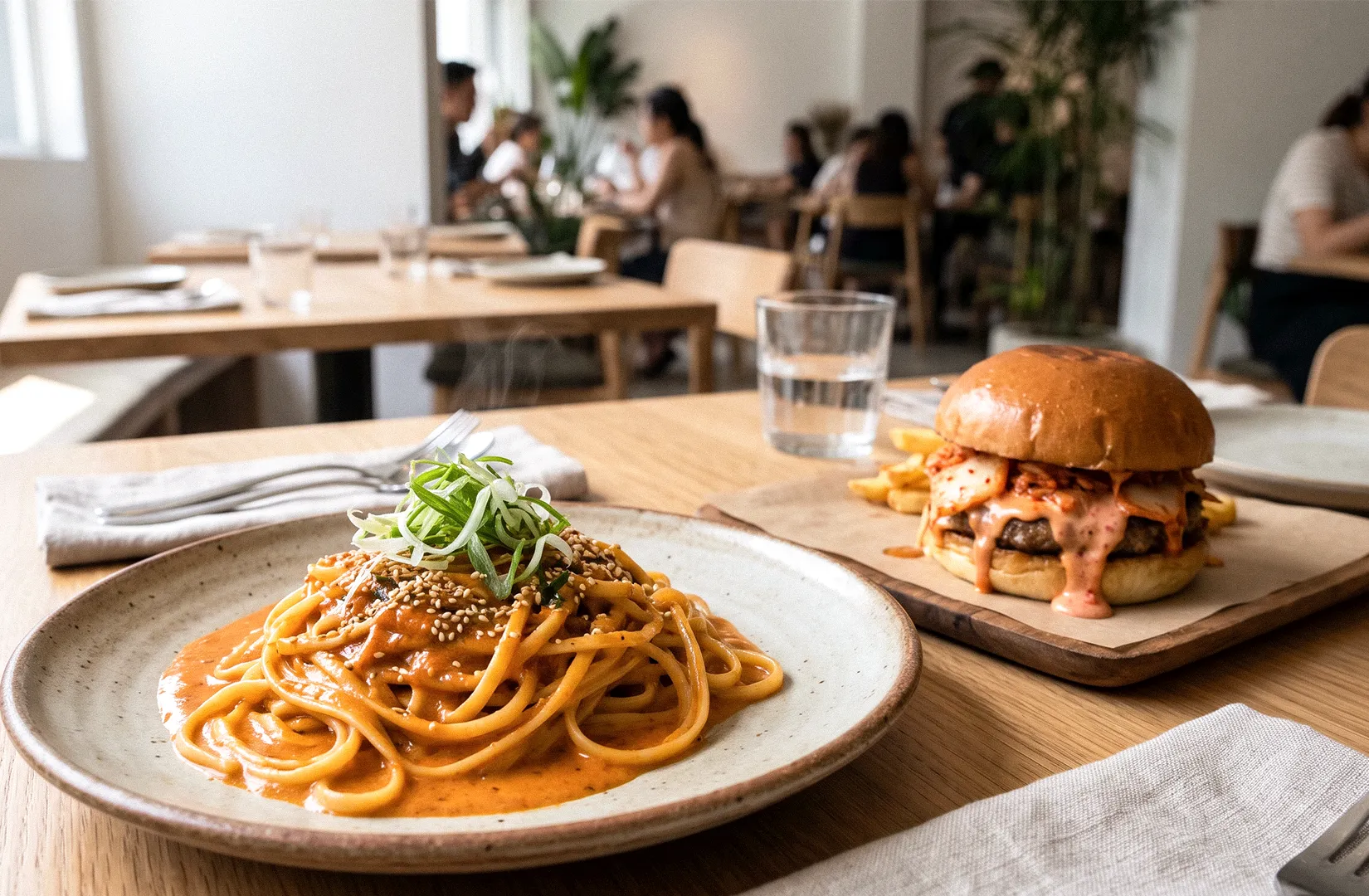
A plate of pasta arrives coated in a creamy gochujang sauce. It looks Italian, smells faintly of fermented chilli, and tastes like something that doesn't quite belong to either cuisine.
On another menu, a burger comes with kimchi and a generous spoonful of Korean-style spicy mayonnaise. Somewhere else, a familiar local dish gets a Korean makeover simply because someone added gochujang.
These combinations are becoming familiar sights in Singapore's dining scene, where experimenting with flavours is hardly unusual.
But they raise an interesting question. When does a dish become Korean fusion, and when is it simply borrowing a little Korean inspiration?
The distinction might sound like something only food writers would worry about. Yet it says quite a bit about how Korean cuisine is understood, adapted, and presented to diners.
Adding Gochujang Doesn't Automatically Make Something Korean
Korean ingredients have become increasingly recognisable outside traditional Korean cooking.
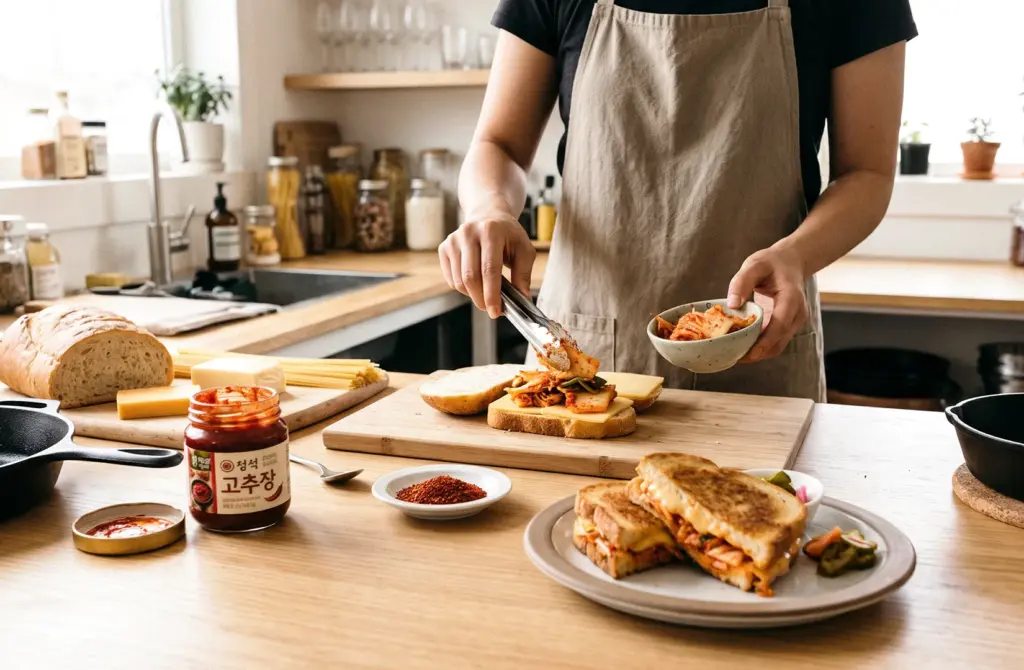
Gochujang, kimchi, doenjang, and gochugaru can introduce distinctive flavours to dishes that have little connection to Korean culinary traditions.
There's nothing inherently wrong with that.
A little kimchi can brighten a grilled cheese sandwich. Gochujang can give a pasta sauce an interesting balance of sweetness, heat, and fermented depth. But using a Korean ingredient doesn't necessarily make the resulting dish Korean fusion.
To us, Korean-inspired food borrows an element of Korean cuisine, while Korean fusion makes a more deliberate effort to bring different culinary traditions together.
The distinction isn't absolute, but intention matters.
A burger topped with kimchi might be Korean-inspired. A dish that thoughtfully combines Korean cooking techniques, flavour combinations, and another cuisine's traditions makes a stronger case for being called fusion.
Neither approach is automatically superior. The problem begins when the label promises more cultural influence than the food actually delivers.
Singapore Is Already Comfortable With Culinary Mixing
Singapore offers an interesting setting for this conversation because diners are accustomed to food shaped by different culinary influences.
Local eating habits have developed through generations of cultural exchange, adaptation, and experimentation.
So a Korean-inspired laksa or a gochujang pasta isn't necessarily surprising.
For some diners, these combinations provide an approachable introduction to unfamiliar Korean ingredients. Someone who enjoys spicy pasta might become curious about gochujang itself. A kimchi-topped sandwich could encourage someone to explore how fermented vegetables appear in traditional Korean meals.
But there's also a risk of reducing Korean cuisine to a handful of fashionable flavours.
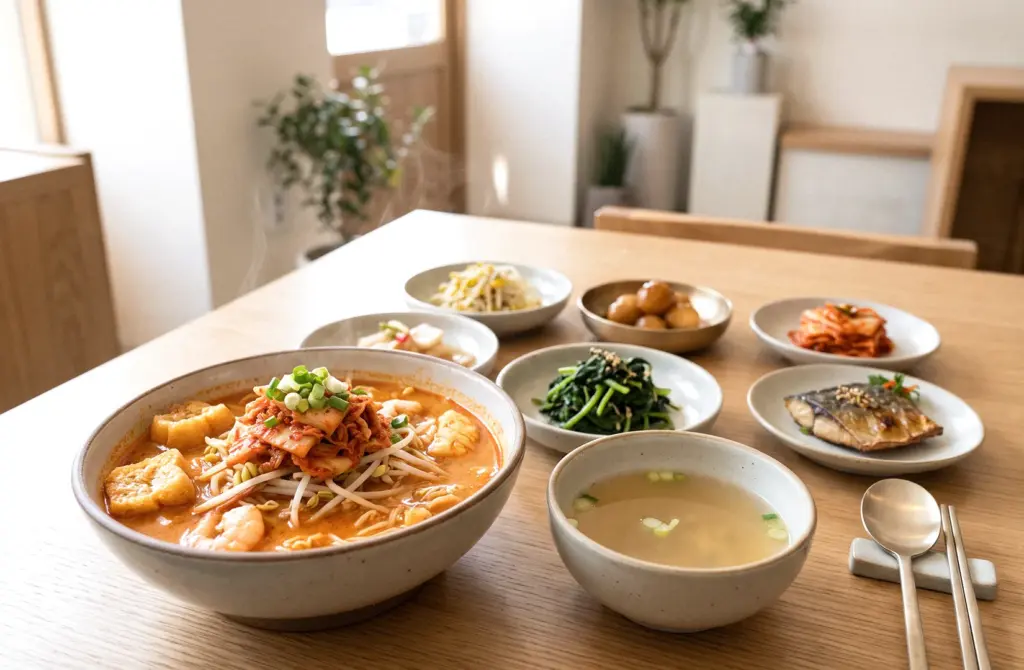
If every Korean-inspired dish relies on gochujang, kimchi, or melted cheese, diners may develop a rather narrow impression of what Korean food actually offers. Korean cooking includes delicate broths, seasoned vegetables, fermented soybean pastes, grilled fish, and dishes where subtlety matters just as much as spice.
Those quieter elements deserve room in the conversation too.
Creativity Still Needs a Point
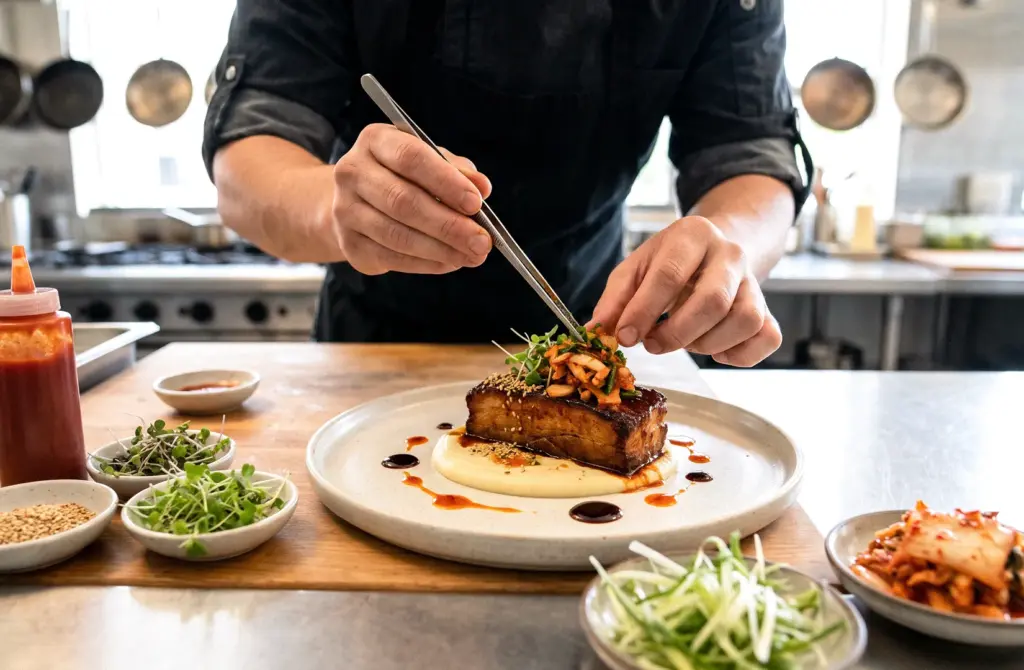
The most interesting fusion dishes usually have a reason for combining their ingredients beyond attracting attention.
Consider the difference between adding kimchi to a dish because it's fashionable and using its acidity to balance something rich. One approach relies on recognition. The other considers how flavours work together.
That doesn't mean every creative dish needs an elaborate cultural explanation. Sometimes an unusual combination simply tastes good, and that's enough.
But restaurants should be reasonably clear about what they're serving.
Calling something Korean-inspired acknowledges an influence without suggesting that the dish represents Korean cooking more broadly. Calling it Korean fusion invites diners to expect a more substantial meeting of culinary ideas.
Perhaps the Label Matters Less Than the Understanding
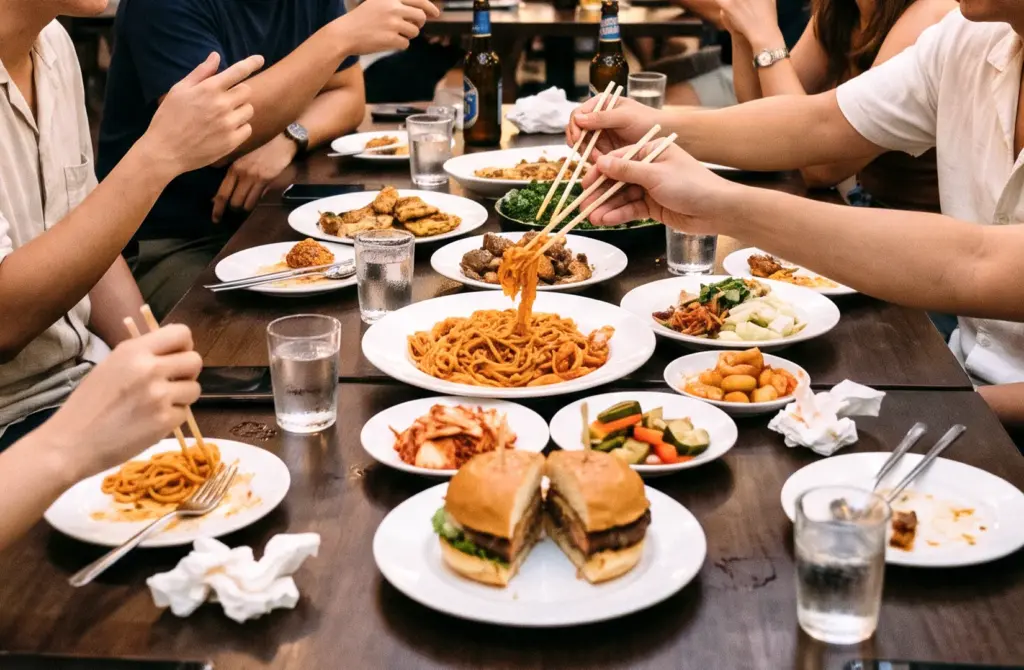
Food traditions have never existed in complete isolation, and Korean cuisine is no exception.
Experimentation can introduce new audiences to familiar ingredients while giving cooks opportunities to develop their own interpretations.
The concern isn't that Korean food is changing.
It's whether those changes encourage curiosity about the cuisine or leave diners thinking Korean food begins and ends with spicy sauces and kimchi.
Perhaps the next time a menu describes something as Korean fusion, it's worth looking beyond the label. Not to decide whether the dish is Korean enough, but to notice what Korean cooking has actually contributed.
Sometimes, that contribution will be an entire approach to flavour and preparation. Other times, it might just be a spoonful of gochujang.