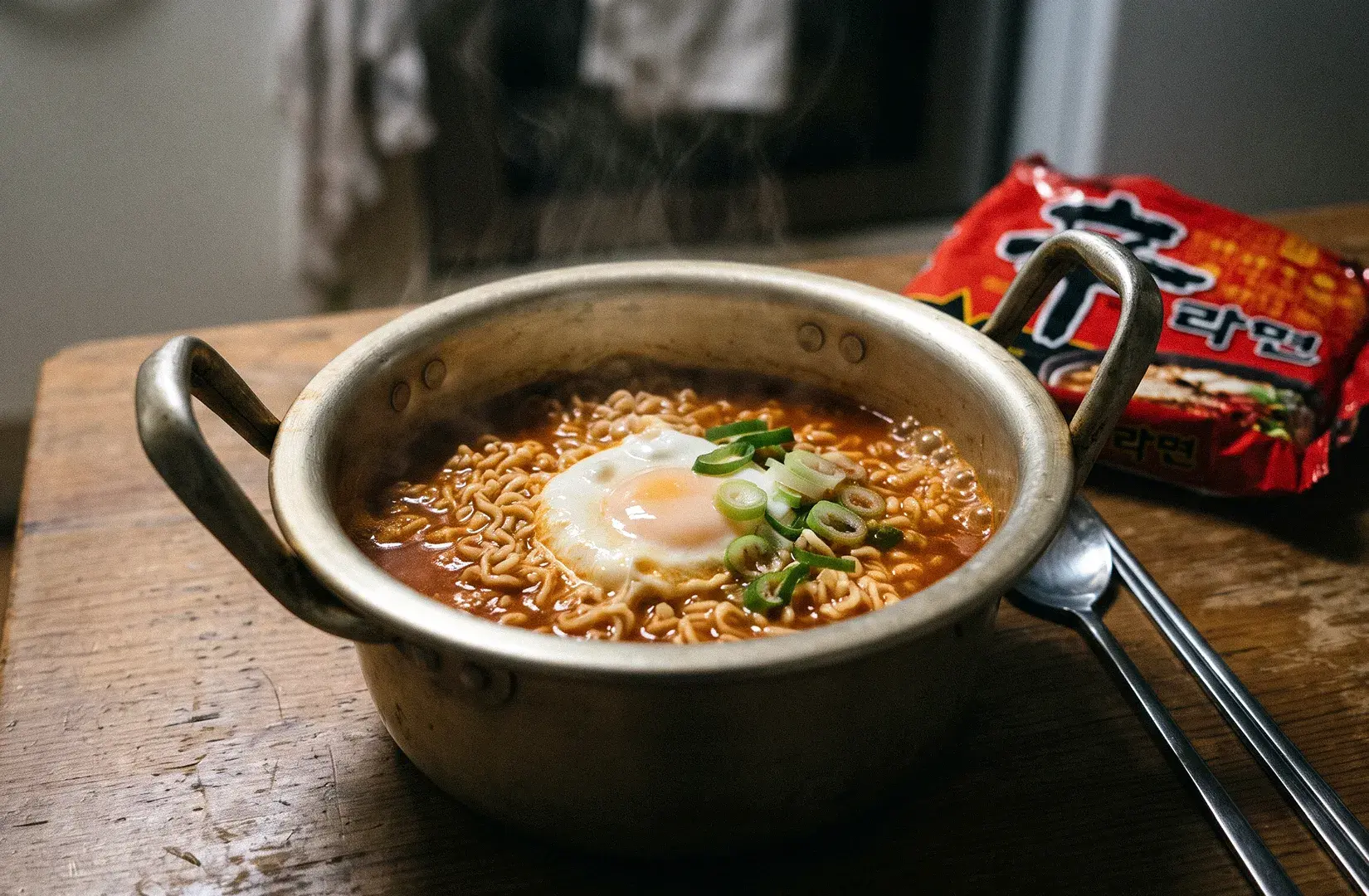
It's late. The fridge has an egg, half a stalk of spring onion, and not much else. In the cupboard sits a red packet with a noodle block inside. Five minutes later, you're bent over a hot bowl, slurping broth that tastes far better than the effort deserves.
That's Korean ramyeon at its most honest. It's cheap, quick, and familiar. But behind that crinkly packet there's a real story: post-war history, a Japanese connection, many styles, and a few ways people often get it wrong.
This guide covers what Korean ramyeon actually is, how it differs from Japanese ramen, where it came from, and how to cook it properly. Let's get into it.
What Is Korean Ramyeon, Exactly?
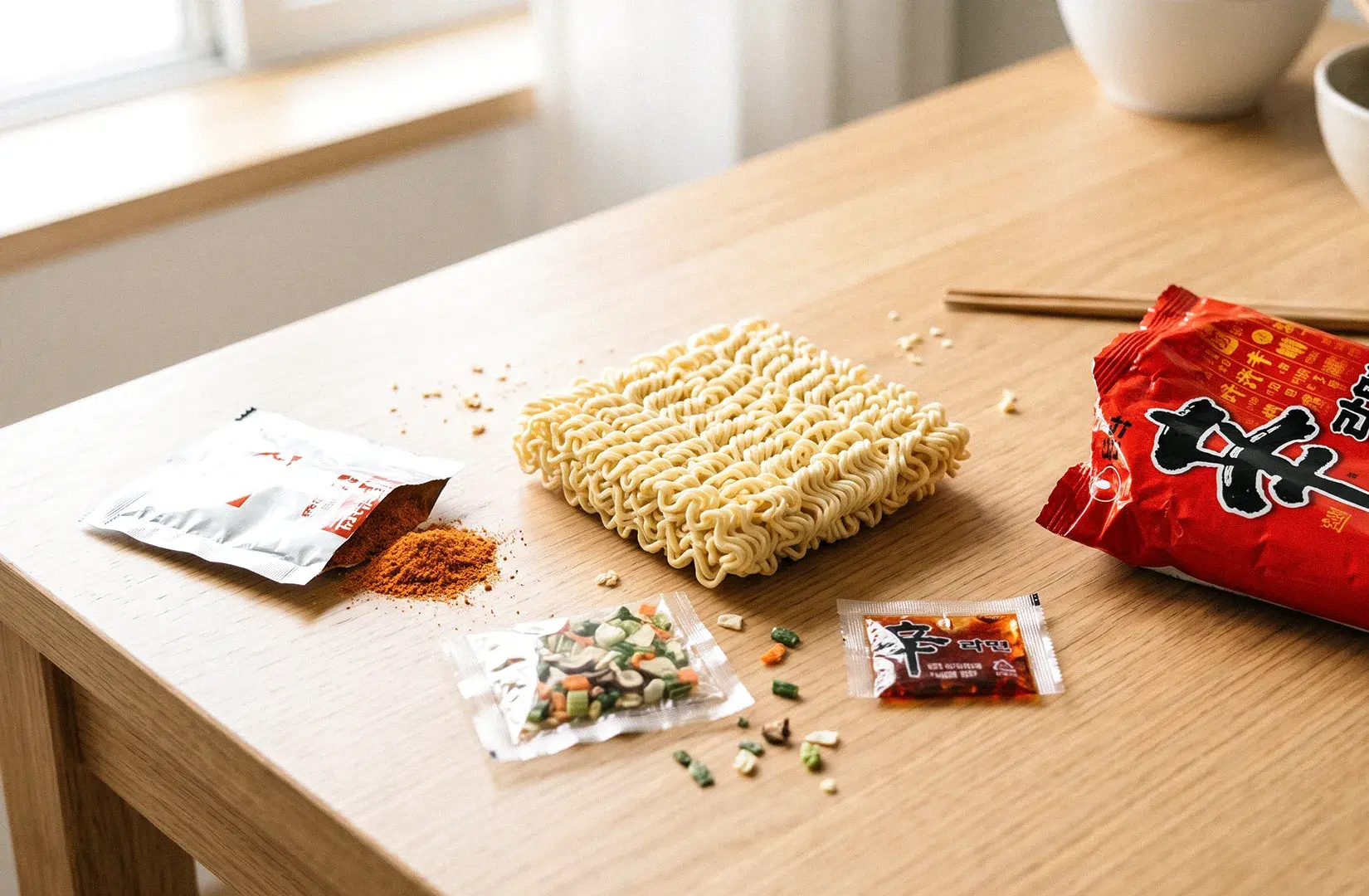
Korean ramyeon (라면) generally means Korean instant noodles. A typical packet holds a dried, wheat-based noodle block and one or more seasoning sachets. Depending on the product, you might get:
Powdered soup base
Dried vegetable flakes
Chili seasoning
Flavored oil
Liquid sauce, common in dry varieties
You'll also see it spelled ramyun, especially on packaging. Both spellings refer to the same thing. Ramyeon follows the official romanization, while ramyun turns up in branding, like Nongshim's Shin Ramyun.
One thing to clear up early: ramyeon isn't a single flavor. It's a whole category that includes spicy soups, mild broths, seafood versions, and dry noodles tossed in sauce. There are so many options, so it helps to start with the style that sounds good to you.
Good to Know: Ever wondered why the noodles are curly? Samyang Foods explains that the wavy shape keeps strands from sticking, helps them cook quickly, and lets them soak up broth. It also packs neatly into those compact noodle blocks.
Korean Ramyeon vs Japanese Ramen
The names sound alike, and they share a history. But in everyday use, they usually mean different things.
Korean ramyeon | Japanese ramen | |
|---|---|---|
Common association | Instant noodles | Freshly prepared noodle dishes |
Noodles | Dried or precooked noodle blocks | Fresh or specially prepared noodles |
Broth | Usually from a packaged soup base | Often built from restaurant stocks |
Where you find it | Homes, convenience stores, casual eateries | Ramen shops, restaurants, homes |
Typical flavors | Spicy beef, seafood, mild broth, dry spicy sauce | Shoyu, shio, miso, tonkotsu |
Of course, there are exceptions. Japan makes plenty of instant ramen, and some Korean eateries dress up ramyeon with lots of extras. The difference is about common usage, not a strict rule. So if a Korean friend says they're having ramyeon tonight, picture a packet and a pot, not a bowl of tonkotsu that took a chef 12 hours.
How Instant Noodles Took Root in South Korea
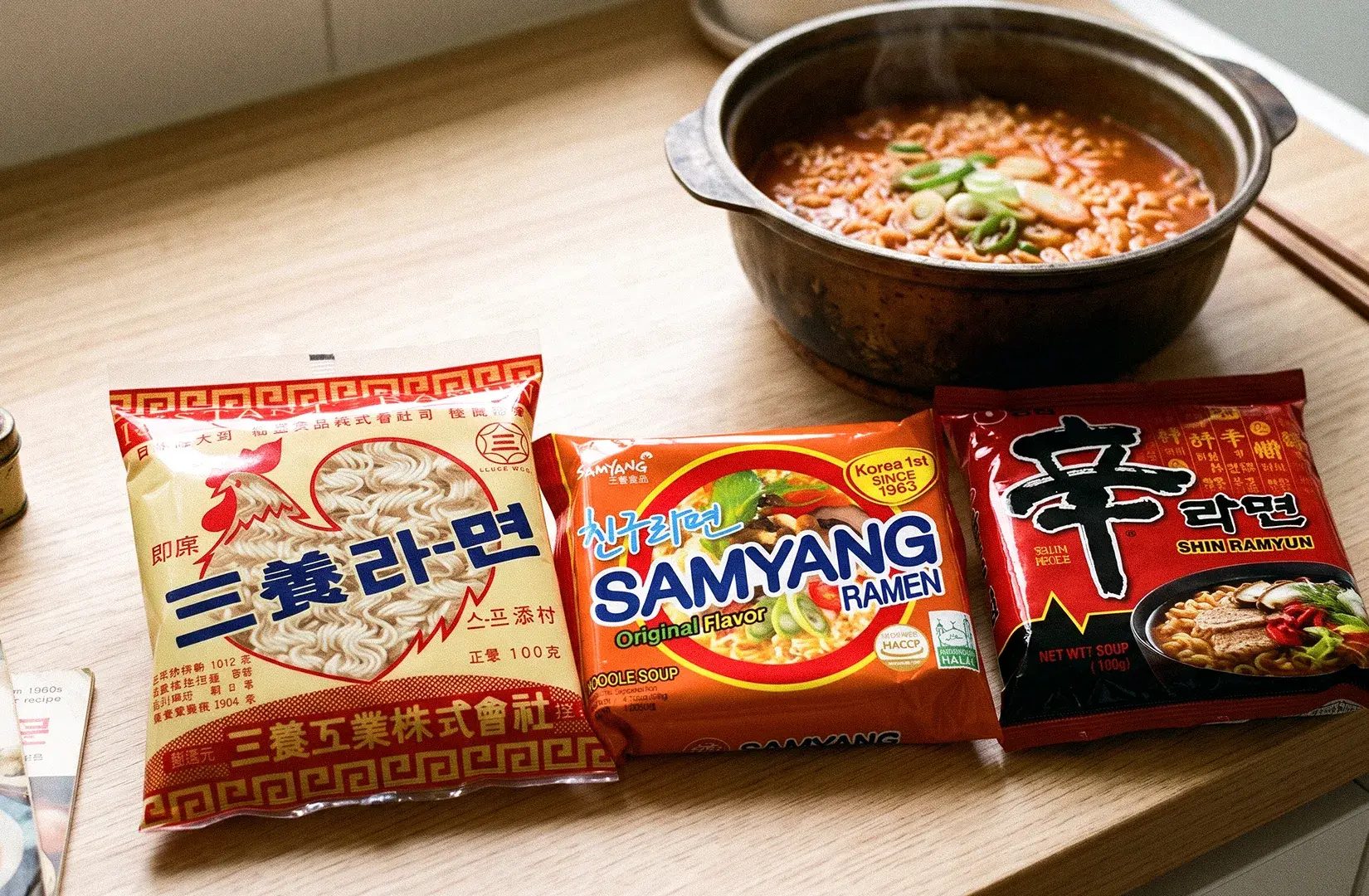
Here's a detail people often get wrong: ramyeon was not invented during the Korean War.
The war ended in an armistice in 1953. A full decade later, on 15 September 1963, Samyang Foods began producing South Korea's first domestically made instant noodles. The country was still dealing with food shortages and economic hardship at the time.
Samyang's founder, Chun Joong-yoon, got noodle-making technology from Japan's Myojo Foods. So Korean ramyeon didn't appear out of nowhere. It began with imported know-how and was then shaped, over decades, to suit Korean tastes.
What came next is what makes it part of Korean cuisine. Manufacturers developed their own signatures, particularly spicy soup styles and boldly seasoned dry noodles. A packet of noodles from a lean post-war period slowly became part of everyday life.
Ramyeon Brands and Flavors: Not All Are Spicy
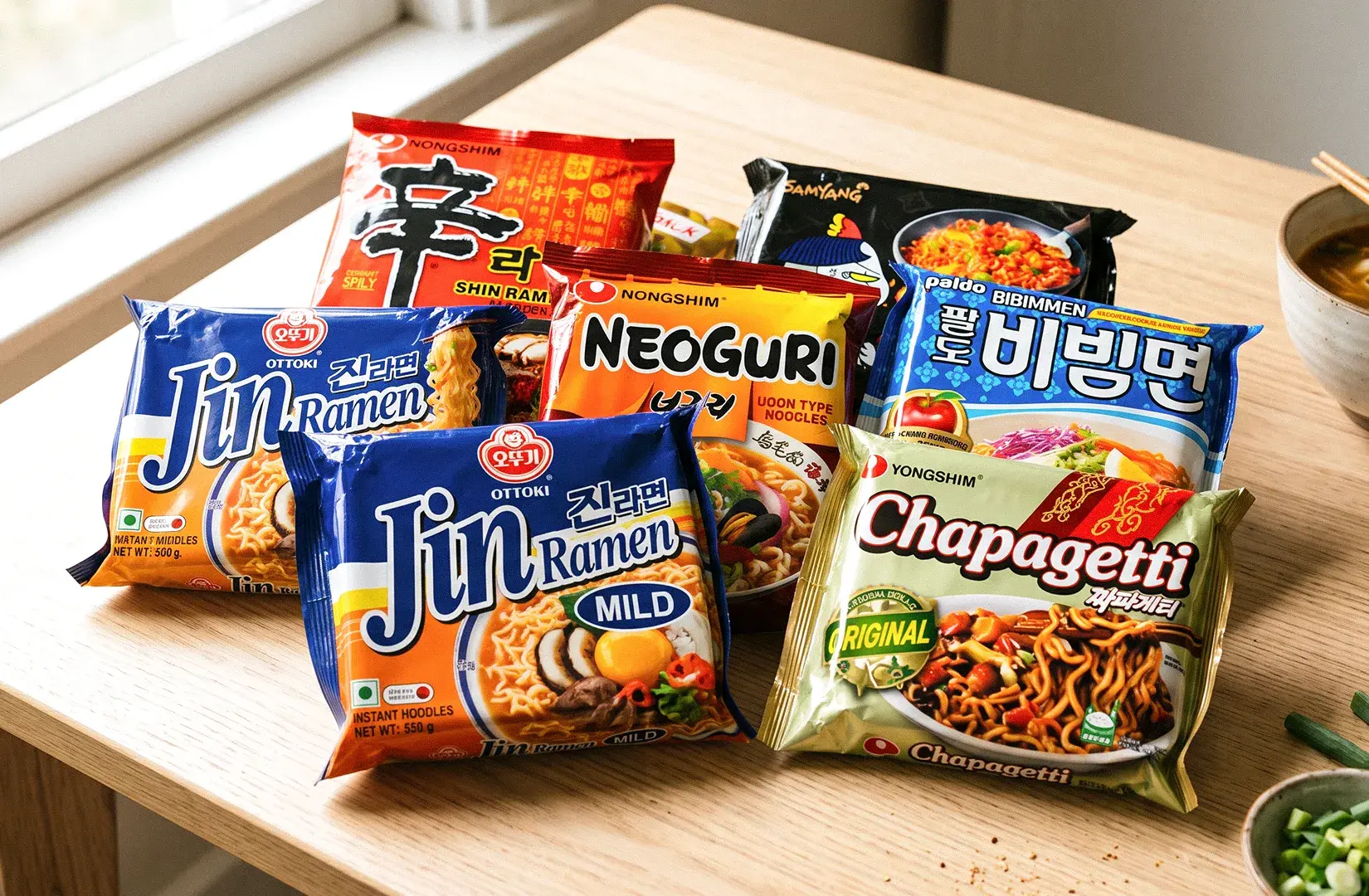
If your only experience is a fiery bowl that made you sweat, fair enough. But Korean instant ramyeon covers more ground than that.
Spicy soup ramyeon: Noodles in a chili-seasoned broth. Shin Ramyun is the classic example.
Mild soup ramyeon: Gentler broth with less heat. Jin Ramen Mild fits here.
Seafood ramyeon: Seafood-flavored soup, like Nongshim's Neoguri. It can be mild or spicy, depending on the product; some seafood varieties include shrimp.
Dry or sauce-coated noodles: You drain most of the water, then toss the noodles in sauce. Samyang's Buldak range and Paldo's Bibimmen work this way.
Black bean sauce noodles: Chapagetti gives you a jjajang-style sauce instead of soup. Its rich sauce has a sweet-savory flavor.
These categories overlap, and you'll also find cup versions and non-fried noodles. The flavor isn't only about heat either. Good ramyeon tends to be savory, garlicky, rich, and salty, with chewy noodles soaking up the broth.
What to Look For: Don't judge spice level by the color of the package. Read the product name and flavor description first.
How to Cook Korean Ramyeon Without Ruining It
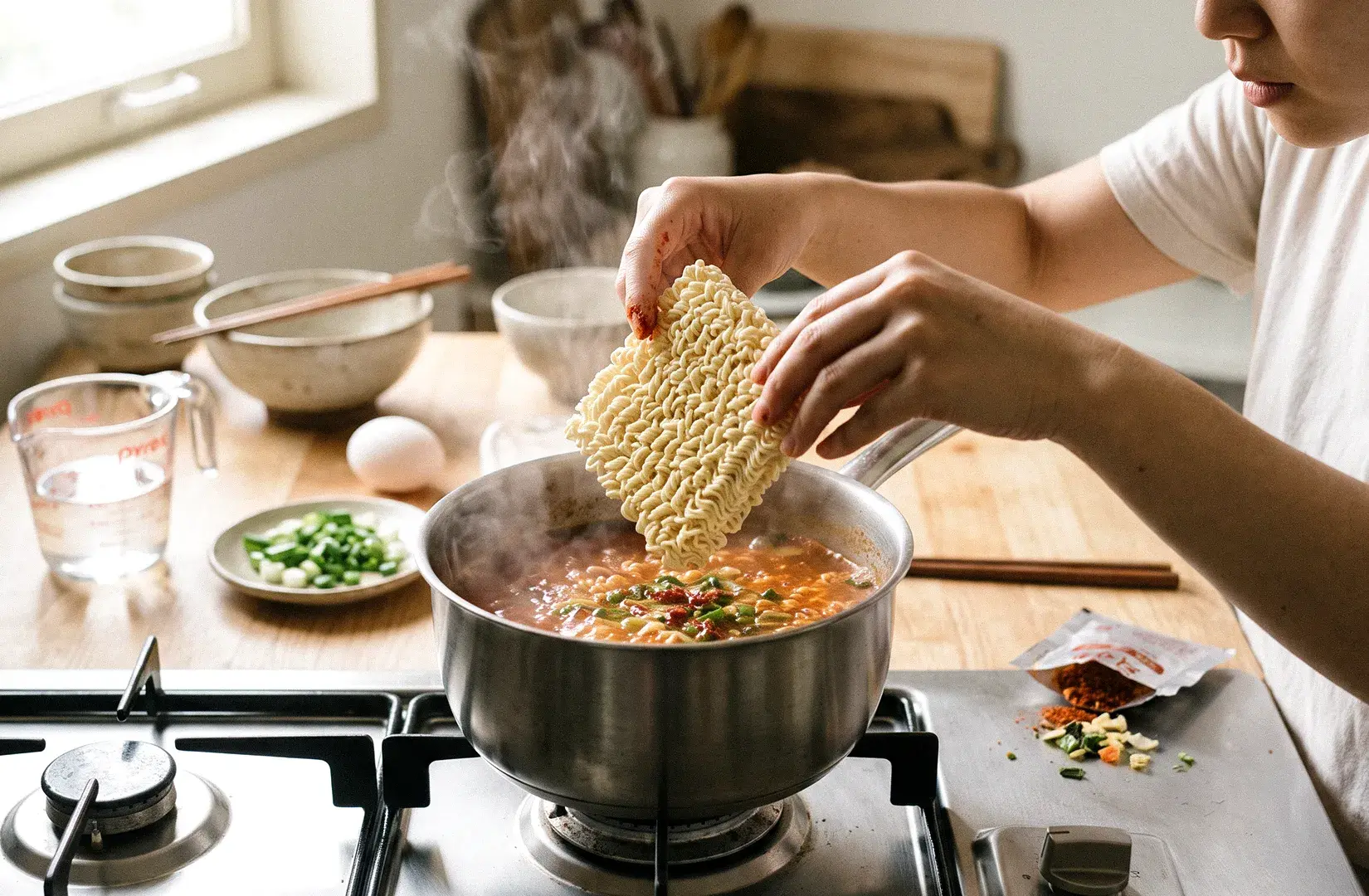
It's instant noodles. How hard can it be? Honestly, most mistakes come from ignoring the packet. Making ramyeon well is mostly about following its timing and keeping an eye on the noodle texture.
For a standard soup-style ramyeon:
Measure the water stated on the package. Put that amount of cold water in your pot.
Bring it to a boil.
Add the noodles, soup base, and vegetable flakes as instructed.
Cook for the recommended time.
Add toppings at the right moment.
Serve right away, while the noodles still have some bite.
Take Shin Ramyun Spicy as sold at FairPrice. The listing calls for 550 ml of water and four to five minutes of cooking. That's specific to that product, so don't apply five minutes to every packet in the cupboard.
Why the water matters: Too much water dilutes the broth. Too little makes it concentrated and salty. Start with the amount on the packet, and adjust only after you've tried it.
Why the timing matters: Overcook it and the noodles go soft. Undercook it and the center stays stiff. If you like firmer noodles, start with the recommended time and adjust from there. The texture should be chewy, not mushy.
Common Mistake: Cooking dry noodles like soup noodles. With Buldak and similar products, you usually drain most of the boiling water before adding the sauce. Skip that step and you end up with a sad, watery mess.
Toppings That Actually Make Sense
Ramyeon is a blank canvas, but start with one or two additions instead of throwing in everything.
Egg: Crack it into the simmering soup, beat it in, or add a fried egg on the side. Cook it through, especially if you're feeding anyone vulnerable.
Chopped green onions: Add a generous amount near the end for freshness.
Kimchi: Brings acidity and fermented depth. Cook it in or serve it on the side.
Processed cheese: Lay a slice of American cheese on top while the soup is hot and let it melt. It's a modern habit, not an ancient tradition, and it makes the broth creamy and rich.
Rice cakes or dumplings: These may need more cooking time than the noodles.
Mushrooms, tofu, spinach, thinly sliced beef, ham, or seafood: Just make sure meat and seafood are fully cooked. Minced garlic is another easy way to add depth.
More ingredients can mean more liquid and more time, so adjust as you go.
How Koreans Eat Ramyeon: Home, Convenience Stores, and Budae Jjigae
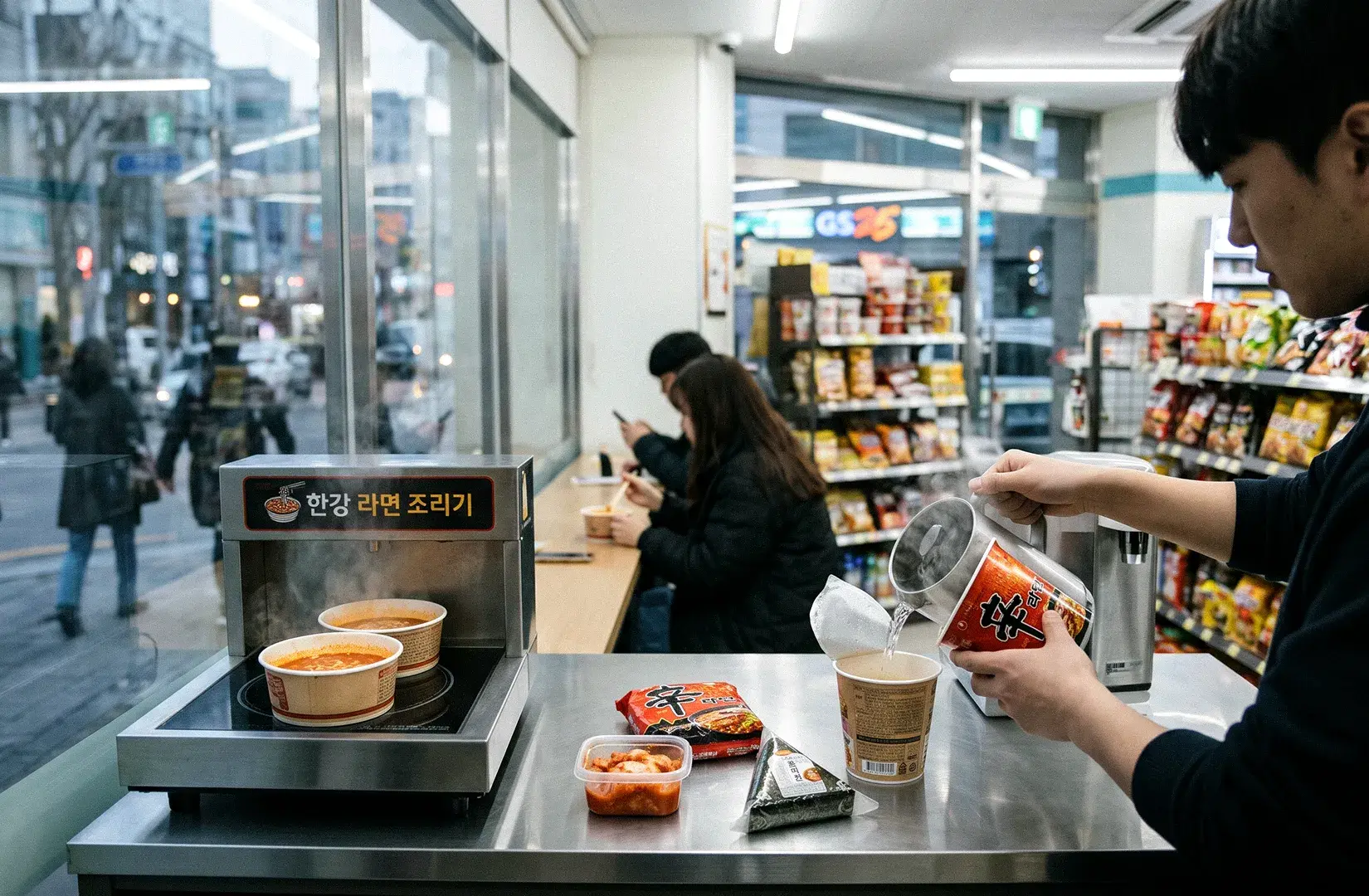
It's tempting to say most Koreans eat ramyeon the same way. They don't. Habits vary by household, age, and mood. Still, a few patterns are worth knowing.
At home: Ramyeon is eaten hot, as a quick meal or late-night snack, often with kimchi on the side. Chopsticks handle the noodles and a spoon handles the broth. Some people tip leftover rice into the remaining soup once the noodles are gone. It's a lovely habit, but nobody's checking whether you do it—or whether you drink the broth.
From the pot: In casual settings, ramyeon may come in a small metal pot. Be careful, because that pot stays very hot.
At convenience stores: This is where the idea of ramyeon "stations" comes from. Some stores in South Korea offer hot water dispensers, seating, or dedicated noodle-cooking equipment. Not every store has them, but where they exist, a hot bowl is only minutes away.
In budae jjigae: Korean army stew is linked to post-war food history and commonly includes kimchi, sausages, luncheon meat, tofu, vegetables, and broth. Instant noodle blocks are often added too, though recipes vary. It's a shared hot pot with ramyeon in it, not just a giant bowl of ramyeon.
Finding Instant Korean Noodles in Singapore
Good news: you don't have to hunt. FairPrice's online catalogue carries several ramyeon brands. Recent listings include:
Nongshim Shin Ramyun Spicy, 5 × 120 g: S$5.50
Nongshim Neoguri, 5 × 120 g: S$5.50
Ottogi Jin Ramen Mild or Spicy, 5 × 120 g: S$6.20 (promotional)
Samyang Buldak Hot Chicken, 5 × 140 g: S$7.50 (promotional)
Prices change with promotions and stock, so treat these as a guide.
Fun label detail: a Korean brand doesn't always mean "made in Korea." FairPrice lists one Shin Ramyun Spicy product as made in China and Jin Ramen Mild as made in Vietnam.
Dietary check: Some products are halal-labelled on retailer listings, including Jin Ramen Mild and Spicy. If you need halal-certified food, check the certification mark on the actual packet rather than assuming the whole brand qualifies. And don't assume a packet is vegetarian. Jin Ramen Mild lists beef extract and cuttlefish, while the Spicy version lists beef bone extract and shellfish. Read the full ingredient list, especially if you have allergies.
On sodium: Nongshim's Australian listing for Shin Ramyun shows 1,840 mg per 120 g serving. Samyang lists 1,930 mg per serving for its Original Ramen. Adding vegetables won't cancel that out. If you eat ramyeon often, compare labels, and some people use half the seasoning packet.
Why Ramyeon Works as Comfort Food
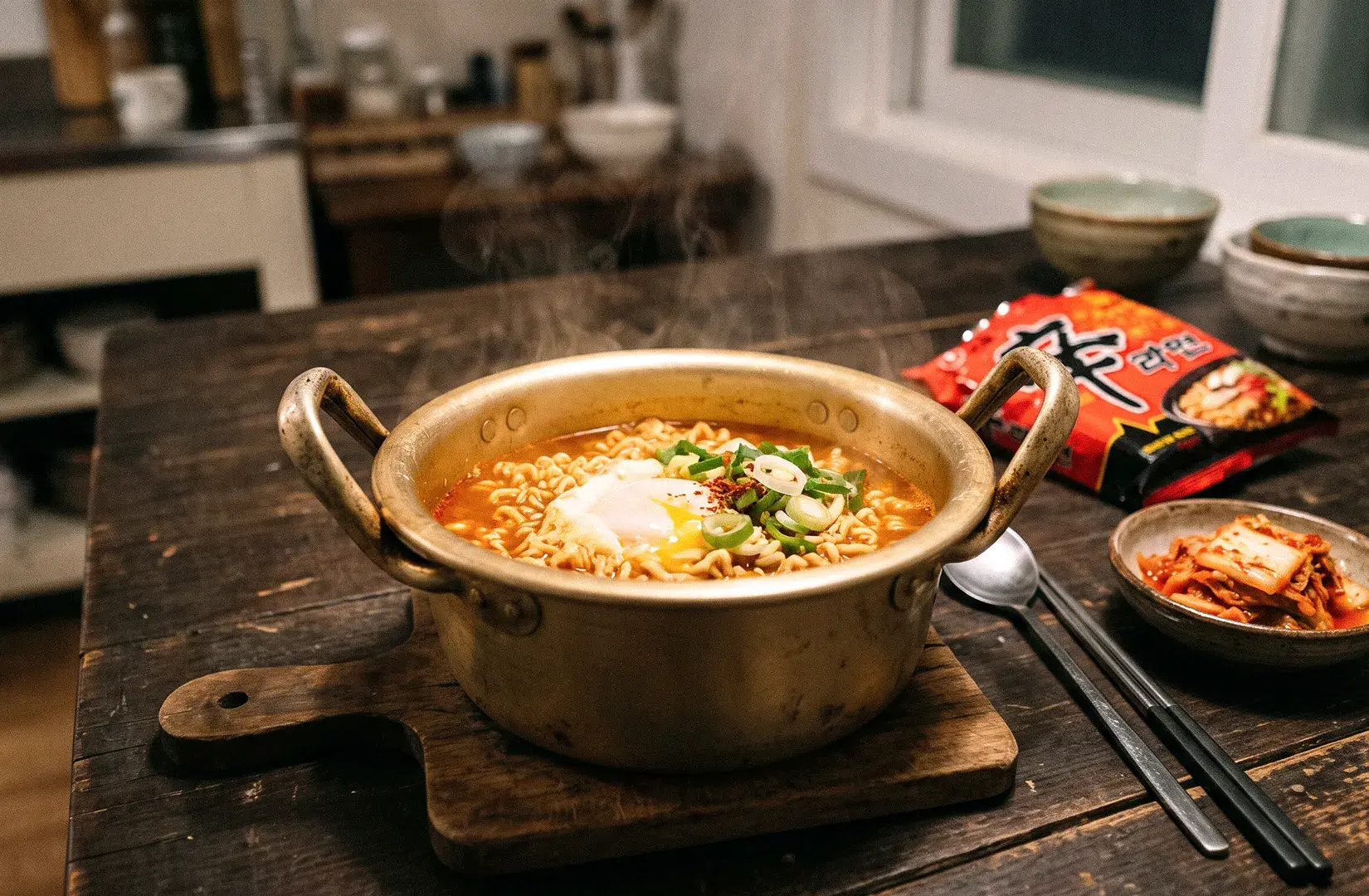
Ramyeon has never pretended to be fancy. It began in a hard decade, grew up in home kitchens and convenience stores, and somehow ended up in pantries all over the world.
That's exactly why it lasts. You don't need a recipe. You need the right amount of water, a watchful eye on the clock, and maybe an egg. So next time you reach for that packet, read the instructions properly, pick a style that suits you, and add one thing you like.
It's still just a bowl of noodles. But now you know there's a bit more in it.